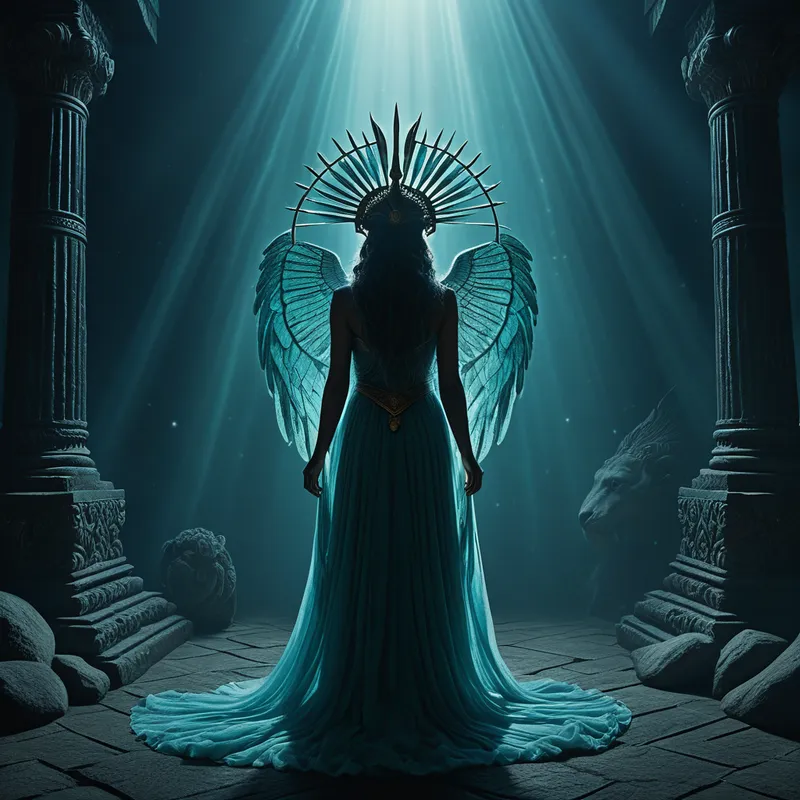
Sun Wukong the Monkey King
A rebellious monkey gains immortality and supernatural powers, challenging heavenly authority in a classic Taoist epic of transformation and enlightenment.
The Tale of Sun Wukong the Monkey King
He was born from stone, a creature of heaven and earth, a spark of cosmic chaos given form. On the Mountain of Flowers and Fruit, he crowned himself king, a sovereign of pure, untamed instinct. But a cold dread settled in his monkey heart—the fear of death, the great leveler. So he set sail on a makeshift raft, seeking the secret of eternity beyond the horizon’s edge. He found a master, learned the arts of transformation, of cloud-somersaulting across vast skies, and stole for himself a name: Sun Wukong, "Awakened to Emptiness."
His power grew wild, untethered. He seized the Ruyi Jingu Bang, a magical staff from the dragon-king’s treasury that could shrink to a needle or pillar the heavens. He erased his name from the ledgers of the underworld, defying the bureaucracy of death. The celestial court, seeking to tame this force of nature, offered him a hollow title: Keeper of the Heavenly Horses. When he realized the insult, his rage was a celestial fire. He proclaimed himself the "Great Sage, Equal to Heaven," and his rebellion shook the pillars of the cosmos. He feasted on the peaches of immortality and the pills of elixir, absorbing their essence, becoming a being of indestructible light and unquenchable pride.
The armies of heaven fell before him. Only through the intervention of the Buddha himself was he finally contained, not by force, but by wisdom. The Buddha bet the Monkey King he could not leap from the Buddha’s palm. Sun Wukong somersaulted to the ends of creation, marked a pillar, and returned in triumph—only to find the pillar was the Buddha’s finger, and he had never left. The mountain of the five elements was his prison for five hundred years.
His rebirth came not through escape, but through submission to a higher purpose. The bodhisattva Guanyin bound him to a journey: to protect the pilgrim Xuanzang on his quest for sacred scriptures. The golden fillet upon his head, tightening with the chanting of a sutra, was not merely a restraint, but the first true boundary he had ever acknowledged—a circle of suffering that would become a circle of enlightenment. Along the perilous road, battling demons who were often mirrors of his own past arrogance, his raw power was slowly, painfully tempered by duty. The untamed rebel learned loyalty. The stone-born trickster discovered compassion. At journey’s end, having conquered the eighty-one trials, he was granted the ultimate title: the Victorious Fighting Buddha, a being of awakened, disciplined power.
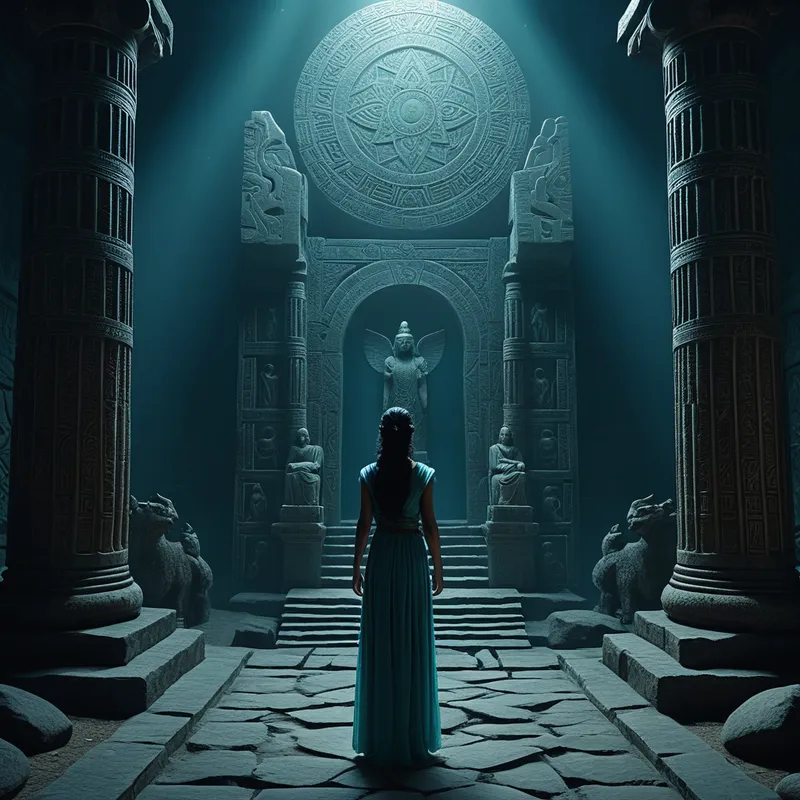
Cultural Origins & Context
Sun Wukong’s story is carved from the bedrock of Chinese religious syncretism. While his epic is most famously enshrined in the 16th-century Ming dynasty novel Journey to the West by Wu Cheng’en, his roots dig deep into the rich soil of Taoist folklore and Buddhist allegory. He is a folk hero, a shape-shifting trickster figure common in pre-existing tales, who was later grafted onto the historical framework of the monk Xuanzang’s 7th-century pilgrimage to India.
The narrative is a grand alchemical vessel. Its outer form is a fantastical adventure, but its inner currents are flows of spiritual discipline. It reflects the late imperial Chinese worldview, where the celestial bureaucracy mirrored the earthly one, and spiritual attainment was often framed as a bureaucratic promotion. Sun Wukong’s initial conflict is with this very system—he seeks its perks (immortality, status) while rejecting its rules and hierarchies, embodying the perennial tension between individual will (Yang) and cosmic order (Yin). His ultimate integration symbolizes the ideal of Yin-Yang unity and the Buddhist path from ignorance to awakening, making him a perfect vehicle for conveying profound teachings through exhilarating spectacle.
Symbolic Architecture
Sun Wukong is not a character but a process incarnate. He is the unrefined life force, the primal self before culture, before conscience. His stone birth signifies an origin prior to the soft differentiation of organic life—he is consciousness emerging directly from the mineral root of existence, full of potential but lacking connection.
His journey is the archetypal path of the hero who is first a trickster: the necessary, chaotic inflation of the ego that must occur before it can be humbled and put into service of something greater than itself.
The magical staff, Ruyi Jingu Bang, is a profound symbol. "Ruyi" means "as you wish," and it obeys only his will. It represents the spine—the central channel of power in Taoist somatic practice—and the untamed, extendable nature of desire itself. It can be hidden behind the ear, a thought made physical, a potential always ready to spring forth. The golden fillet, conversely, is the constraint that creates consciousness. It is the law, the mantra, the suffering that focuses the wandering mind. Where the staff is active yang, the fillet is receptive yin; together, they initiate his alchemy.
The eighty-one ordeals are not random obstacles but the precise, grinding trials required to polish the jade of the spirit. Each demon is a projection, a fragment of his own unintegrated shadow—greed, anger, arrogance—that must be faced and mastered not solely through force, but increasingly through discernment and the compassionate wisdom of his master.
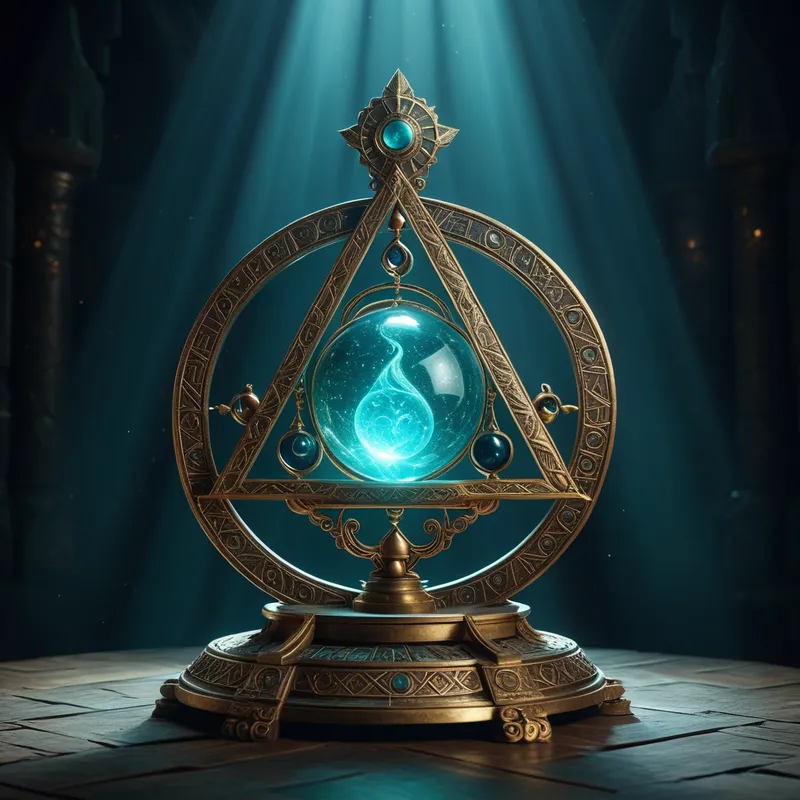
The Dreamer's Resonance
To encounter Sun Wukong in dream or imagination is to meet the part of oneself that is brilliant, boundless, and infuriatingly rebellious. He resonates with anyone who has ever felt too big for their circumstances, who has raged against arbitrary rules, or who has used wit and cunning to overcome a feeling of powerlessness. He is the fantasy of total capability, the child’s dream of being invincible.
Psychologically, he embodies the necessary but dangerous stage of adolescent inflation, where the burgeoning ego, discovering its own power, declares itself sovereign of its own mountain. The deep tension in his myth speaks to the universal human struggle between the longing for absolute freedom and the aching need for purpose, belonging, and discipline. His initial quest is for immortality—a denial of death—but his true transformation begins when he accepts a mortal master and a mortal task. He shows us that our greatest power is not realized in defiance of all bonds, but in the conscious, chosen acceptance of the right bond, the meaningful limitation. He is the rebel who learns that true victory is not over heaven, but over the chaos within.

Alchemical Translation
In the language of Taoist Alchemy, Sun Wukong is the "Monkey of the Heart," the restless, discursive mind (xin) that must be transformed into the awakened spirit (shen). His story is a manual for internal cultivation.
His theft of the elixirs and peaches is the initial, misguided attempt to seize immortality from the outside—a literalization of the alchemical process that must fail. Real alchemy is an internal rebirth; the furnace is the body, the ingredients are one’s own vital essences, and the heat is the discipline of meditation.
The five hundred years under the mountain correspond to the stage of incubation and stabilization. The five elements that compose the mountain are the constituent forces of the phenomenal self that must be recognized and transcended. His service to Xuanzang is the crucial phase of "using the natural to cultivate the spiritual." Xuanzang, often helpless, represents the pure, fragile intention for enlightenment (the golden cicada), while Sun Wukong represents the vital energy and fiery will needed to protect and propel that intention through the world of illusion and temptation. Their union is the sacred marriage of wisdom and method, consciousness and life force. His final Buddhahood signifies the ultimate refinement: the rebellious monkey-mind, fully integrated, becomes a diamond-like, indestructible awareness that can act in the world with perfect, compassionate skill.
Associated Symbols
Explore related symbols from the CaleaDream lexicon:
- Monkey — The untamed, clever, and mischievous aspect of consciousness, representing raw instinct, curiosity, and the restless mind before its spiritual refinement.
- Rebel — The archetypal force that challenges imposed structure and authority, necessary for growth but requiring integration to avoid pure destruction.
- Journey — The fundamental process of transformation, a pilgrimage through trials and landscapes that mirrors the soul’s progression toward wholeness.
- Mountain — A symbol of immovable obstacle, spiritual ascent, and the place of ordeal, isolation, and eventual revelation or imprisonment.
- Chaos — The primordial, creative, and destructive state of unformed potential from which order and consciousness must emerge.
- Rage — The fiery, purifying, and destructive energy of thwarted will, which must be mastered and directed to become a force for protection.
- Light — The principle of consciousness, immortality, and purified essence, often sought as a treasure or achieved as a state of being.
- Rebirth — The fundamental process of dying to an old state of being and emerging into a new, more conscious and integrated form of existence.
- Hero — The one who ventures beyond the known boundary, faces transformative trials, and returns with a boon for themselves or their world.
- Trickster — The boundary-crosser, rule-breaker, and catalyst for change who operates through wit, deception, and a disruption of the established order.
- Root — The point of origin, the foundational source of strength and identity, often connecting an individual to a deeper, primal reality.
- Death — The ultimate boundary and transformer, representing not merely an end but the necessary dissolution of form for rebirth or transcendence.