Yin-Yang Myth Meaning & Symbolism
The primordial story of the undivided Dao birthing the dance of complementary opposites, Yin and Yang, from which all life, rhythm, and consciousness emerges.
The Tale of Yin-Yang
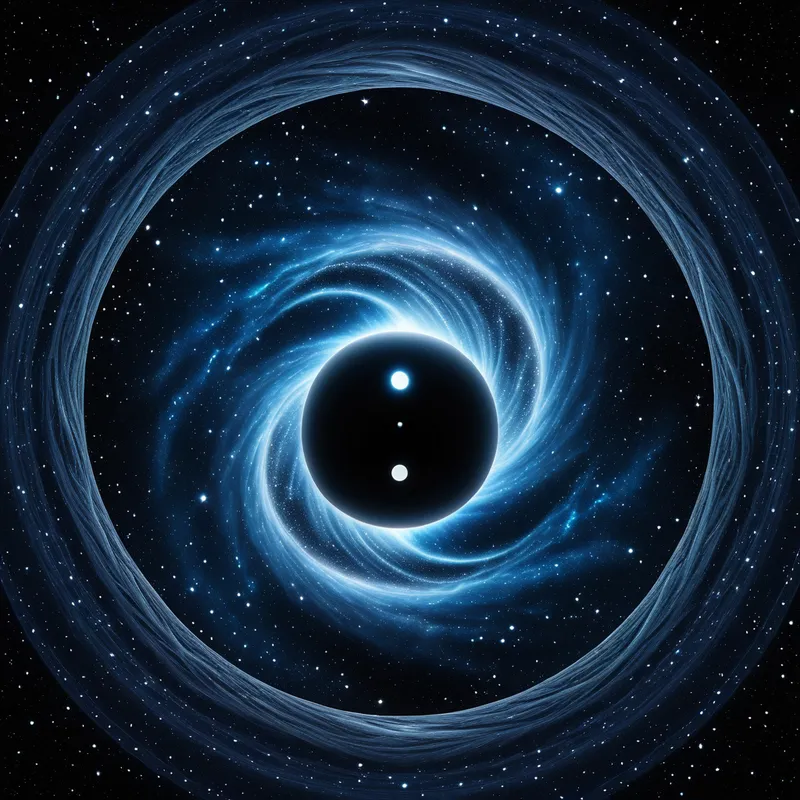
Before the Beginning, there was the Dao. It was not a place, nor a thing. It was the great Uncarved Block, the perfect, silent, and undifferentiated Potential. No name could hold it, no thought could conceive it. It was the breath before the first breath, the dream before the first dreamer.
And within this profound stillness, a movement stirred. Not a movement through space, for there was no space. Not a movement through time, for there was no time. It was the first inclination, the first whisper of a thought: the possibility of otherness. From the womb of the formless Dao, a vibration emerged—a single, resonant pulse that contained within it the seed of all rhythm.
From this pulse, two breaths were born. One was cool, deep, and yielding. It flowed downward and inward, gathering itself into a presence of profound receptivity. This was Yin. It was the shadow cast by the first light, the valley that cradles the mountain, the quiet patience of the moon. The other breath was warm, bright, and active. It surged upward and outward, a force of radiant expression. This was Yang. It was the crest of the wave, the peak that defines the sky, the fervent clarity of the sun.
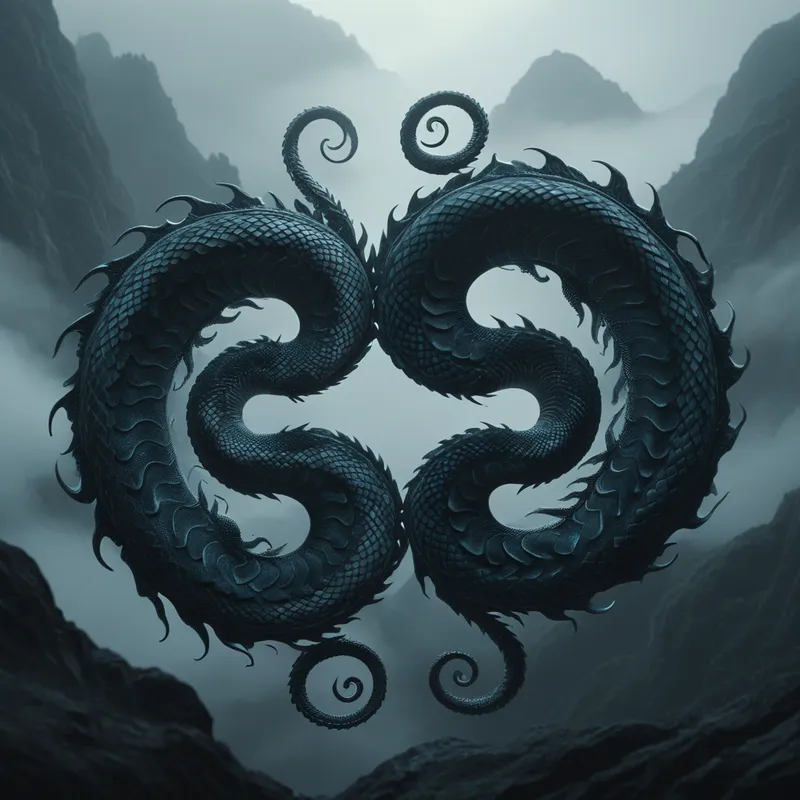
They did not emerge as enemies, but as lovers; not as rivals, but as dancers destined for the same floor. Yin, feeling the radiant heat of Yang, naturally curved to embrace it. Yang, sensing the deep coolness of Yin, naturally bent to complement it. They began to move, a slow, cosmic waltz. Where Yin expanded, Yang contracted. Where Yang ascended, Yin descended. Their dance was not a battle for dominance, but a mutual seeking of balance—a gravitational pull of opposites.
As they swirled, the friction of their interaction—the tender resistance of Yin meeting the gentle insistence of Yang—generated the Ten Thousand Things. From the moist, dark embrace of Yin coalesced the earth, the waters, the night, and the flesh. From the fiery, bright ardor of Yang sprang the heavens, fire, the day, and the spirit. Each thing born carried the imprint of both: the mountain (Yang) rooted in the earth (Yin); the river (Yin) powered by the sun’s heat (Yang); the human, a vessel of conscious spirit (Yang) and embodied blood (Yin).
Their dance became the very engine of existence, the great Taiji. They chased each other’s tails in an eternal circle, each containing, at its heart, a seed of the other—a drop of Yang in the deepest pool of Yin, a speck of Yin in the brightest flame of Yang. For one to exist, the other must also be. This was the First Agreement, the primordial covenant written not in words, but in the very pattern of becoming. And so the world breathed, in and out, dark and light, forever.
Cultural Origins & Context
The concept of Yin-Yang is not a single, authored myth from a specific text, but the foundational cosmological principle of Chinese thought, crystallized in the philosophical system of Taoism and integral to Yijing (I Ching) cosmology. Its origins are shamanic and agrarian, emerging from ancient observations of the natural world—the alternation of day and night, the cycle of seasons, the relationship between hill and valley, male and female.
It was passed down not by bards of heroic epics, but by sages, astronomers, and farmers. Its primary "texts" were the sky and the earth. Philosophers like Laozi, in the Daodejing, and later systematizers during the Han dynasty, gave it its elegant philosophical form. Its societal function was profoundly practical: it was a guide for medicine (TCM), statecraft, martial arts, and personal cultivation. It taught that health, harmony, and efficacy came not from conquering one's opposite, but from understanding its necessity and flowing with its cyclical changes.
Symbolic Architecture
The myth of Yin-Yang is the archetypal blueprint of relational reality. It symbolizes the fundamental truth that all existence is constituted by dynamic, complementary pairs. It is the ultimate model of non-dualistic thinking, where opposites are seen not as irreconcilable enemies, but as mutually generative and defining partners.
The mountain does not scorn the valley; it is the valley that gives the mountain its height.
Psychologically, Yin represents the unconscious, the shadow, the receptive, the intuitive, the body, and the feeling function. Yang represents consciousness, the persona, the active, the rational, the spirit, and the thinking function. A psyche dominated solely by Yang becomes brittle, dogmatic, and disconnected from the instinctual wellspring of life. A psyche flooded by Yin becomes passive, formless, and lost in undifferentiated mood or inertia. The symbol’s swirling motion shows that these are not static compartments, but fluid processes in constant exchange.
The small dot of opposite within each half is the most profound psychological insight: within our brightest conscious conviction (Yang) lies a hidden, germinal doubt (Yin). Within our deepest depression or withdrawal (Yin) sleeps a seed of transformative will (Yang). This denies the possibility of psychological purity and insists on the inherent complexity of every state of being.
The Dreamer's Resonance
When this myth activates in the modern dreamer’s psyche, it often manifests as dreams of compelling duality seeking reconciliation. One might dream of two animals—a tiger and a dove—circling each other warily before lying down together. Or a dream of a house with a bright, orderly upper floor and a dark, cluttered, yet strangely inviting basement, with the dreamer discovering a staircase connecting them.
Somatically, this can feel like a tension between expansion and contraction in the body, or a pull between social engagement (Yang) and a need for restorative solitude (Yin). Psychologically, the dreamer is likely navigating a life situation where two opposing forces—career vs. family, logic vs. emotion, assertion vs. submission—feel irreconcilable. The myth emerges in the dream to illustrate that the conflict itself is the generative principle. The dream is not urging the dreamer to choose one and destroy the other, but to find the rhythm that allows both to exist in a productive, alternating dance. It is the psyche’s attempt to restore a natural balance that conscious attitude has polarized into war.
Alchemical Translation
The individuation process, the alchemical opus of becoming whole, is perfectly modeled by the Yin-Yang dynamic. It is the work of psychic transmutation where conscious and unconscious are brought into a living relationship.
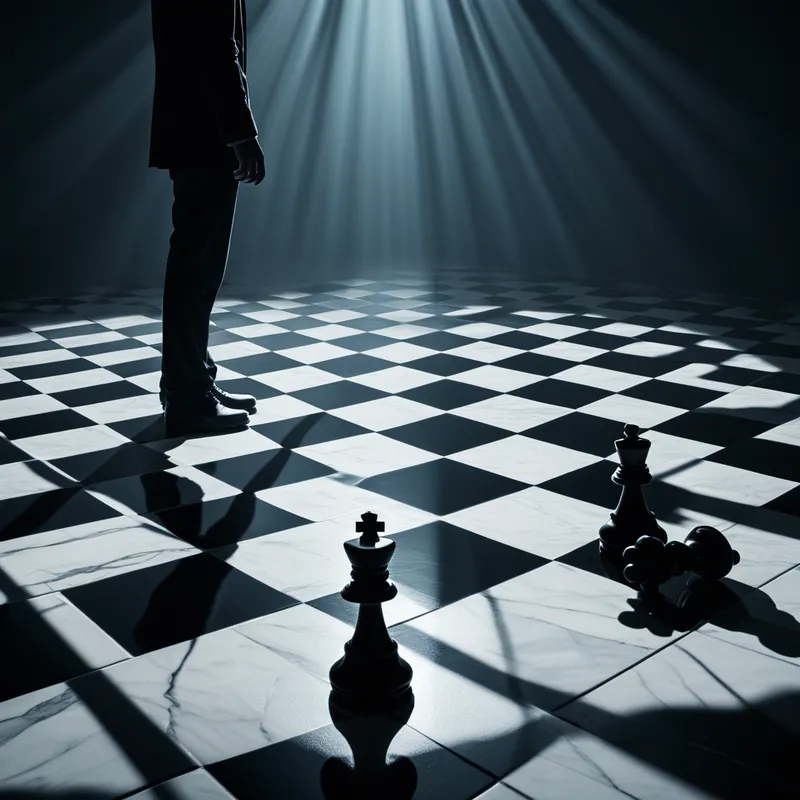
The initial state is often one of identification with Yang: the conscious ego, with its goals, judgments, and bright light, sees the unconscious (Yin) as a threatening "other," a shadowland to be controlled or illuminated away. The first alchemical step is the descensus, the descent into the Yin. This is the confrontation with the shadow, the engagement with emotion, body, and all that has been deemed dark, weak, or unacceptable. It feels like a loss of light, a dissolution.
The gold is not found in the light, but forged in the embrace of the dark.
But within this darkness, one finds the seed of Yang—the transformative insight, the latent strength. Integrating this brings forth a new consciousness that is more flexible and inclusive. Conversely, in owning one’s power and light (Yang), one must acknowledge the speck of Yin within it—its limitations, its dependence on the unseen. The goal is not a bland, static middle ground, but the capacity to flow fluidly between poles as the situation demands, like a dancer who knows both the lead and the follow.
The completed symbol represents the Self, the mandala of the psyche. Here, the ego is no longer the sole ruler but becomes the aware center of the dynamic circle, witnessing and participating in the eternal dance of opposites within. One becomes, in a sense, the Dao that holds the dance—no longer identified with either Yin or Yang, but grounded in the still point from which both arise and return, in perfect, generative balance.
Associated Symbols
Explore related symbols from the CaleaDream lexicon:
- Though
- Curve
- Condition
- Although
- Balancing on a Tightrope
- Abstract Embrace
- Harmonious Dissonance
- Chaotic Harmony
- Harmonious Discord
- Temperature Change
- Ametrine Gem
- Ametrine Stone
- Ametrine Prism
- Bellflower Harmony
- Harmony in Chaos
- Mystery in Monochrome
- Inverted Colors
- Paradoxical Prose
- Unicycle
- Hybrid Electric Car
- Light-up Yo-Yo
- Harmony Symbol
- Cosmic Balance
- Paradoxical Path
- Mobius Strip
- Angel Number 222
- Harmony
- Wave Interference
- Chaotic Attractor
- Uncertainty Principle
- Thermodynamic Equilibrium
- Valency
- Concord
- Consonance
- Nuance
- Convergence
- Homeostasis
- Oscillator
- Juxtaposition
- Oscillating
- Swaying
- Imbalance
- Nutation
- Sway
- Wobble
- Contrast