Confinement: The Architecture of the Self
The Somatic Echo
Before the mind conjures the image of a cell, a locked door, or a shrinking room, the body knows. It is a deep, visceral pressure—not from without, but from within. A silent, implosive weight settles in the chest cavity, a tightening in the diaphragm as if the very breath has forgotten how to expand. The shoulders curl forward, not in defeat, but in a strange, protective consolidation. This is the somatic signature of confinement: the feeling of being pressed against the edges of your own being. It is the psyche’s foundation settling, its walls being stress-tested. The terror is not of a jailer, but of the architecture itself becoming too familiar, too defining. You are not being held; you are becoming aware of the vessel that holds you.
The Dreamer's Log
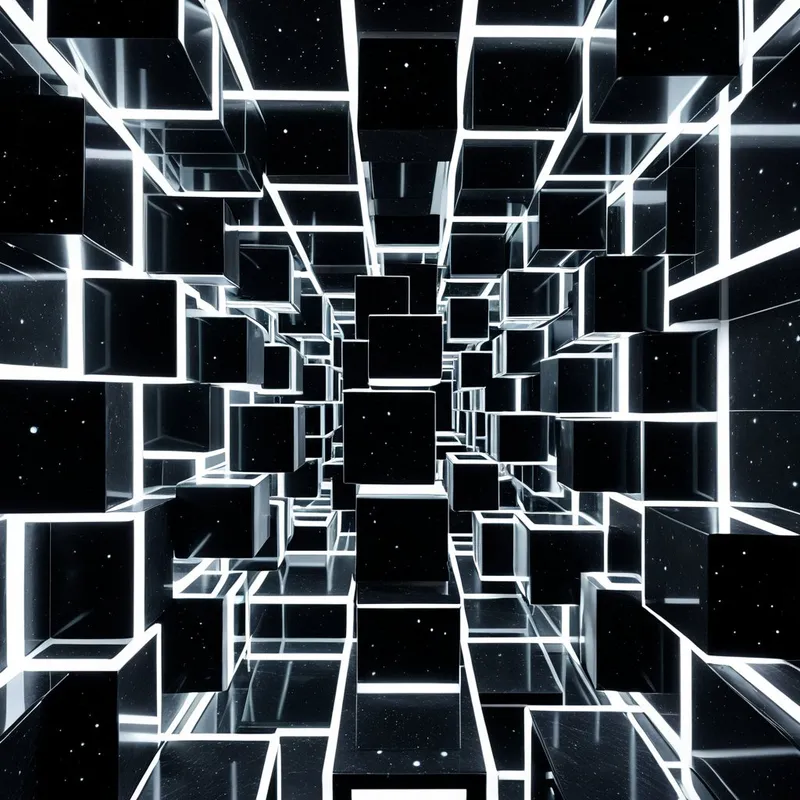
The dream is always the same: I am in the heart of a vast, silent data archive. Rows upon rows of crystalline server towers hum with a cold, blue light. I know I am here to retrieve something vital, a core memory or a lost code. But the aisles, which at first seemed infinite, begin to close in. The polished floor becomes a mirror, and my reflection shatters into a thousand fragmented data points. I am not locked in; the exit is visible, a simple archway. Yet, with every step toward it, the servers silently shift, reconfiguring the labyrinth to keep me at its center.
This is the alchemy of the internal system: the dreamer is not trapped by an external force, but by the mesmerizing, self-replicating logic of their own mind.

The False Lead
Do not mistake this theme for mere frustration or a run of “bad luck.” Confinement in the symbolic realm is not about circumstantial obstacles—a demanding job, a difficult relationship, a crowded subway car. Those are the world’s textures. The dream of confinement points to something far more fundamental: a structural condition of the psyche itself. It is the difference between being stuck in traffic and discovering the car you are driving has no steering wheel. The former is an event; the latter is a revelation about the vehicle of the self. This dream is not reporting on your life; it is conducting a structural integrity survey of your soul.
Psychological Architecture
To feel confined is to brush against the inner walls of your own identity. These walls were built for good reason: to contain chaos, to provide safety, to create a manageable “I.” They are the doctrines you inherited, the coping mechanisms that saved you, the stories you told yourself to make sense of a bewildering childhood. In Jungian terms, this is the necessary stage of the Persona—the mask that interfaces with the world—becoming a prison. In the language of Internal Family Systems, it is the moment a “Manager” part, tasked with keeping everything in order, has grown so powerful and rigid that it has exiled the very wild, creative, or vulnerable parts it was meant to protect.
The Shadow work here is profound. The shadow of confinement is not the jailer, but the architect—the part of you that designed these walls with such impeccable, loving logic for your own protection. To confront this shadow is not to rage against a trap, but to sit down, with immense compassion, with the part of you that believed a trap was the only form of safety possible. The individuation process demands you become conscious of this architecture, not to demolish it in rebellion, but to understand its blueprints. Only then can you begin the delicate work of adding doors where there were only buttresses, windows where there was only blank stone.
Mythic Resonance
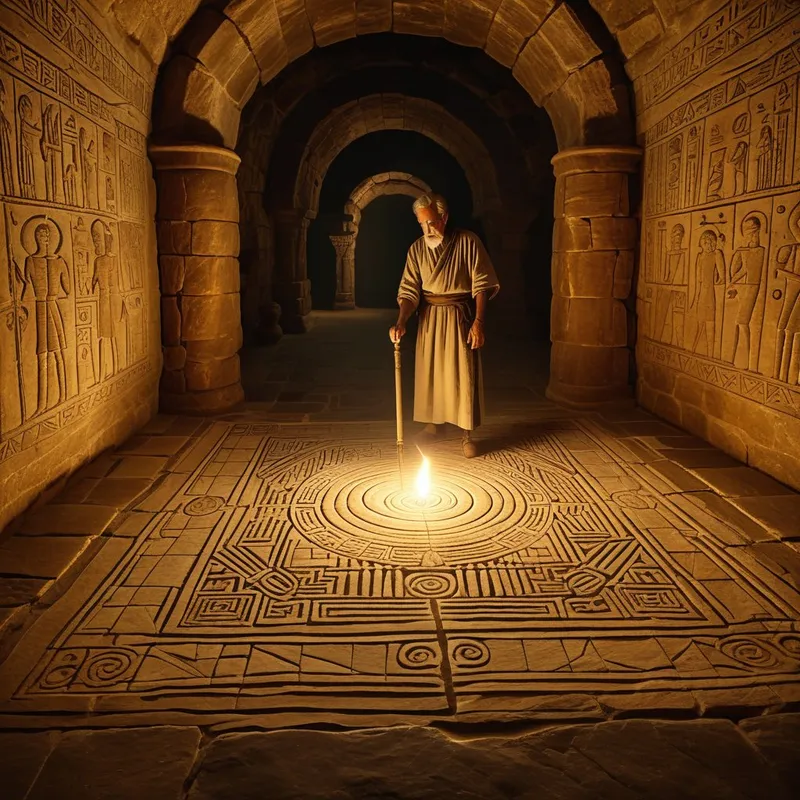
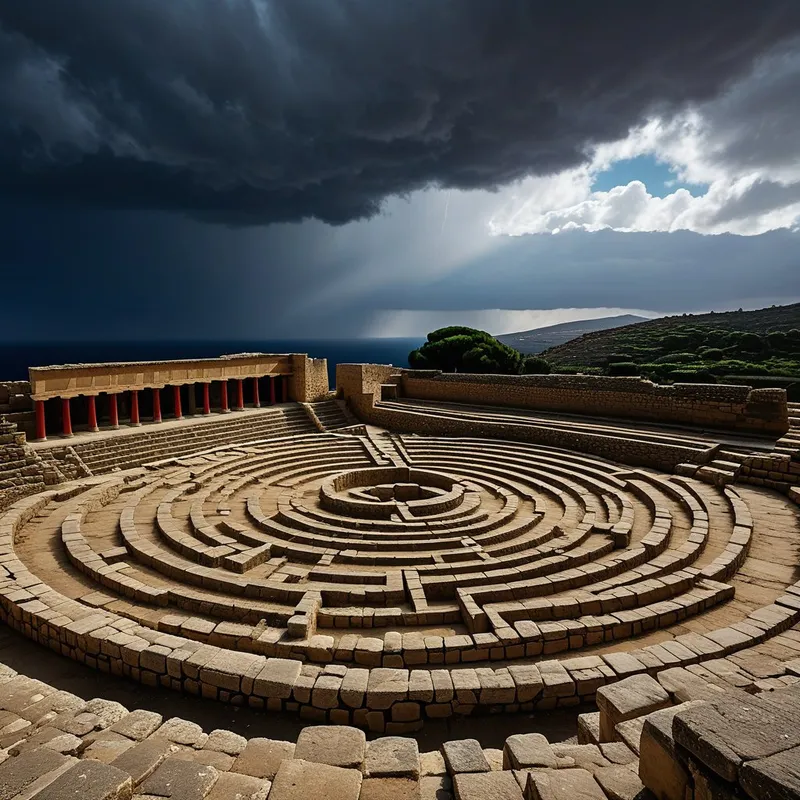
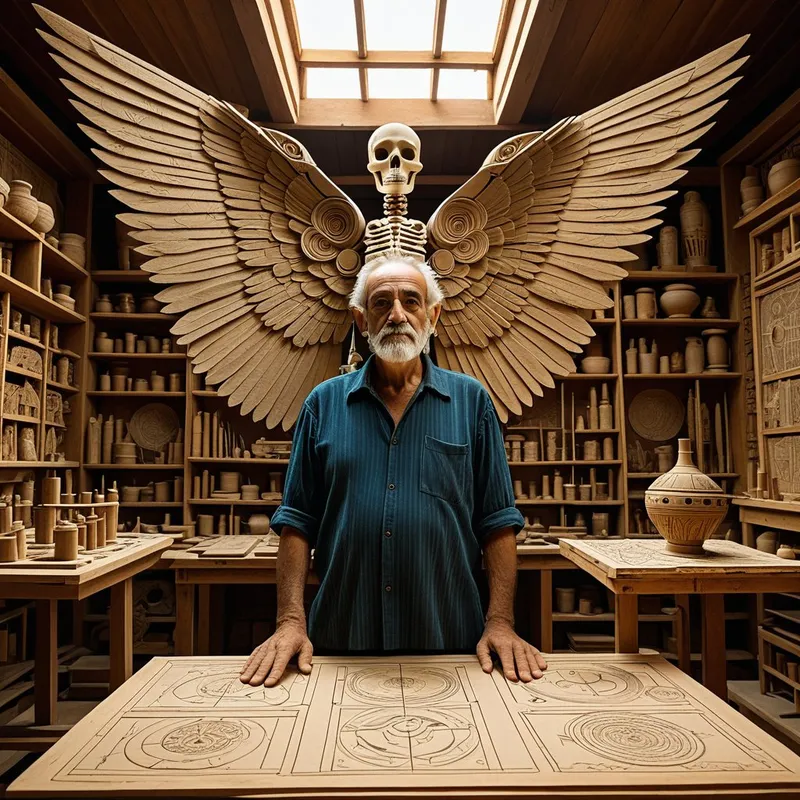
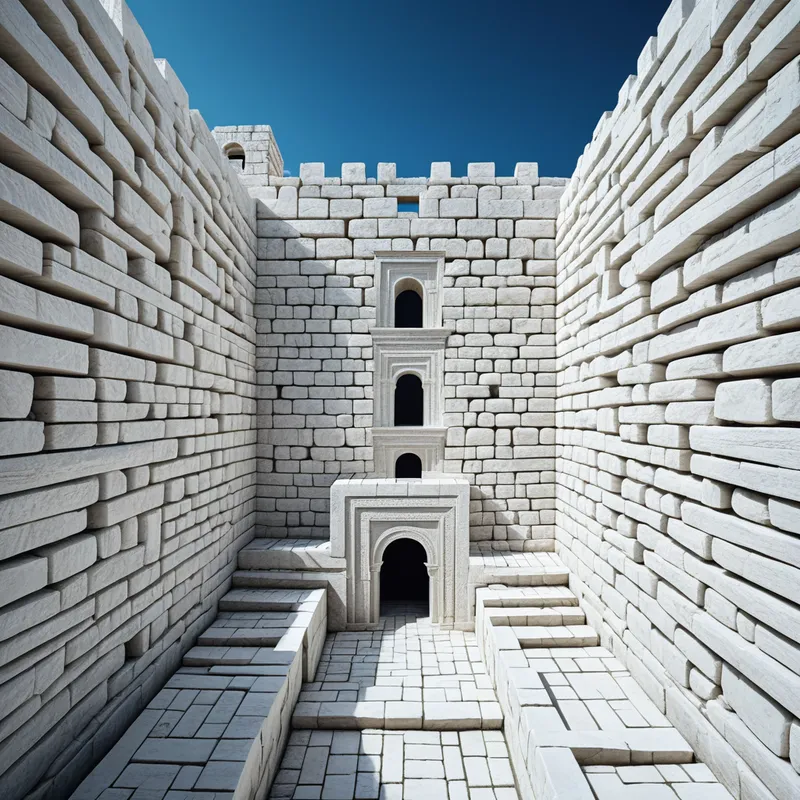
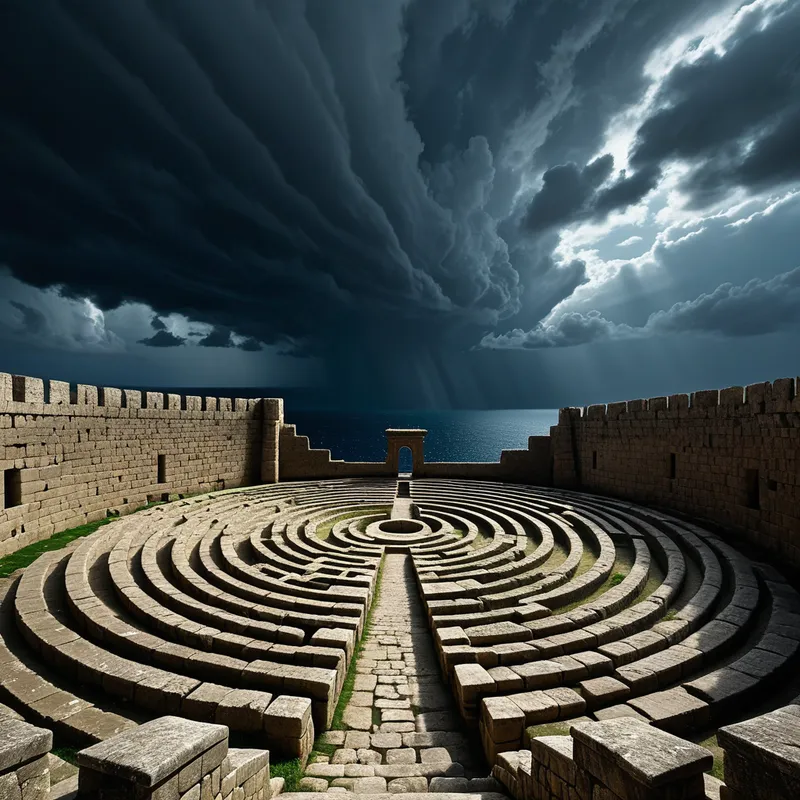
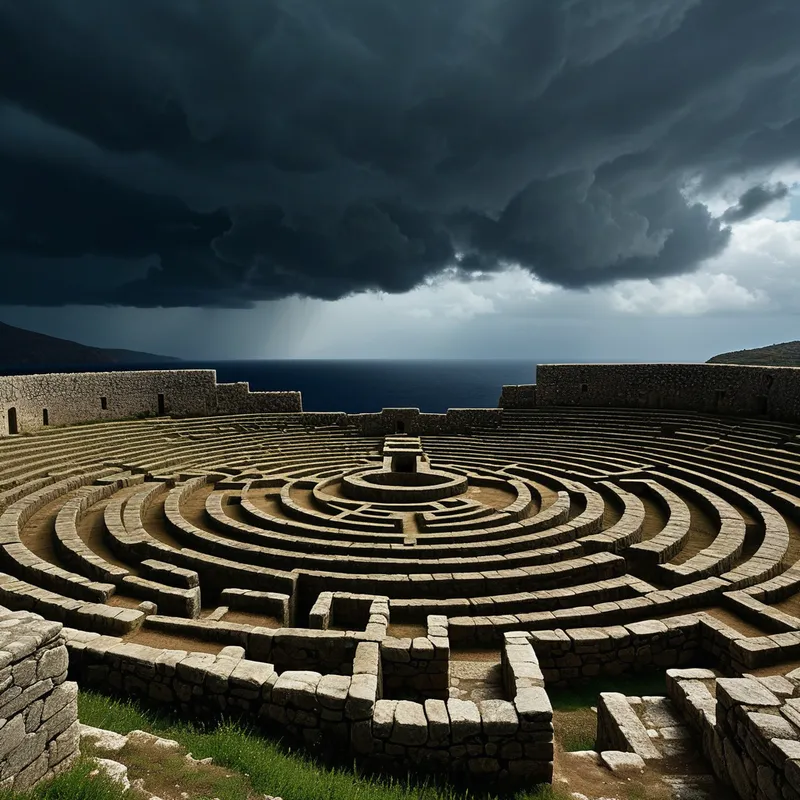
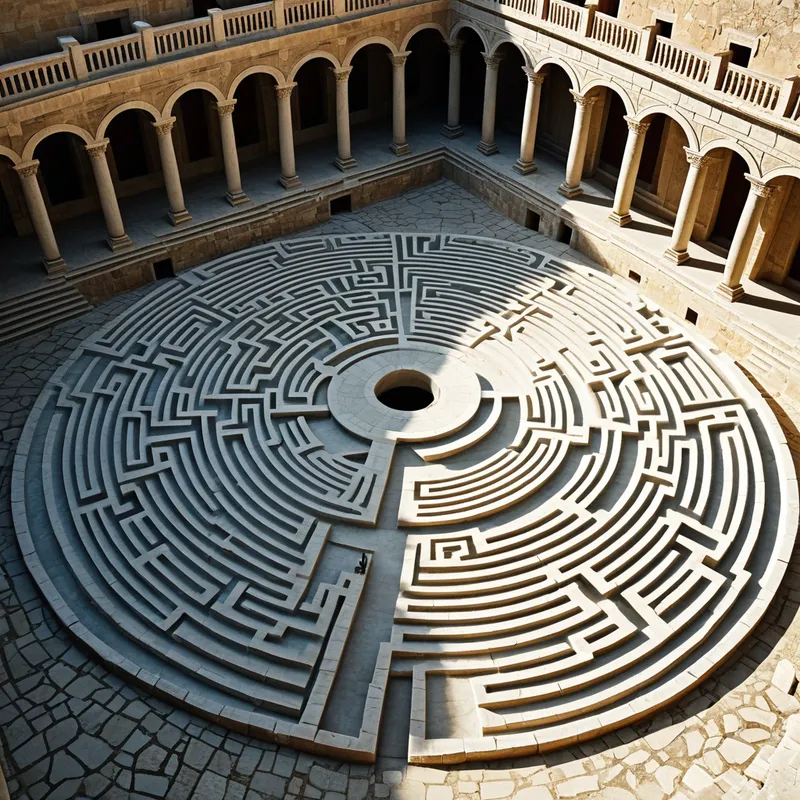
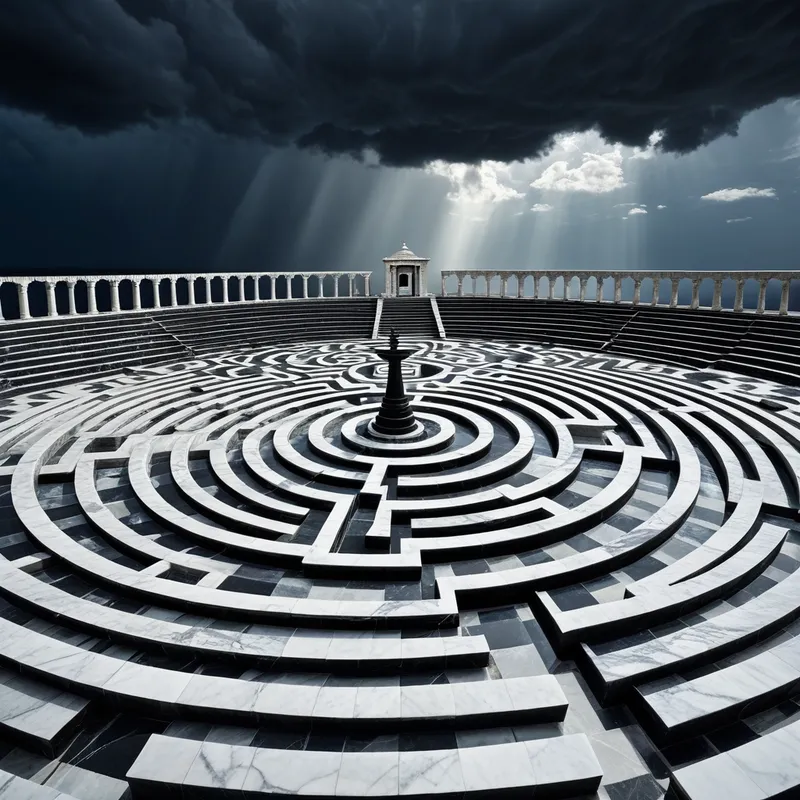
This is the universal human firmware, as seen in the myth of Theseus and the Minotaur. The confinement is not merely the Labyrinth; it is the entire condition of Athens, forced to send its children into a monstrous geometry as tribute. Theseus does not simply slay the beast. He must first enter the perfect, heartless structure, navigate its self-similar corridors (a metaphor for the recursive patterns of a trapped mind), and only by holding fast to Ariadne’s thread—a slender, vulnerable connection to consciousness and love—can he trace his way back out, transforming the prison into a traversable path. The thread does not destroy the maze; it reveals its logic, and thus, its exit.
Symbolic Nodes
- Small Rooms, Shrinking Spaces: The felt sense of a contracting identity.
- Locked Doors, Missing Keys: A conscious awareness of a barrier, paired with the intuition that the means to open it is somewhere within the system.
- Labyrinths, Endless Corridors: The complex, self-referential logic of a belief system or trauma pattern.
- Paralysis, Heavy Weights: The somatic echo of an internal conflict so perfectly balanced it creates stasis.
- Cages with Open Doors: The most poignant symbol of all, revealing the confinement is ultimately psychosomatic—a choice, however unconscious, to remain within known limits.
Archetypal Resonance
The energy here resonates most deeply with The Ruler Archetype, specifically in its shadow manifestation. The Shadow Ruler is the internal tyrant, the control-freak that demands perfect order, predictability, and stability at the cost of freedom, spontaneity, and expansion. Its core energy is not malice, but a terrified, hyper-vigilant drive for sovereignty through absolute control. The somatic echo of confinement—the tight chest, the held breath—is the body registering the Shadow Ruler’s edict: “Nothing in, nothing out. All must be known and managed.” The alchemical potential lies in the transmutation of this energy. The same power that builds walls to control a kingdom can, when integrated, be used to consciously govern a self—to establish wise, flexible boundaries, to steward internal resources with compassion, and to build a psychic architecture that protects without imprisoning. The journey is from Tyrant to true Sovereign.
The Alchemical Process
The transmutation of confinement requires a specific, intense heat: the heat of conscious containment. This is the paradox. To escape an inner prison, you must first stop trying to escape. You must turn toward the walls, feel their texture, study their composition. This is the pressure—the voluntary act of staying present with the feeling of limitation without immediately seeking to spiritualize it, analyze it away, or violently break it.
The prima materia—the raw lead of this experience—is the grief and terror of limitation. The alchemical fire is the sustained, compassionate attention you bring to it. In this vessel of your own awareness, a separation occurs. The pure, metallic truth of your longing for freedom begins to differentiate from the slag of the old, rigid identity that formed the walls. The “terror/grief” is not destroyed; it is seen for what it is: the loyal, if misguided, guardian of a previous self. As you hold this tension without collapsing into it or fleeing from it, a profound interior sovereignty is born. You realize the walls were never meant to keep you in; they were meant to keep chaos out. And now, from this new center of authority, you can consciously decide what to let in and what to keep out. The prison becomes a temple—a defined, sacred space from which you choose to operate.
The Integration Protocol
Question 1: Where in my waking life do I feel a subtle, background pressure—a sense of "this is just how it is" or "I have no choice here"—that mirrors the dream's somatic echo?
Question 2: If the confined space in my dream were not a prison, but a protective chamber, what was it originally designed to keep safe? What vulnerable part of me might still be in there?
Question 3: What one belief, rule, or "should" feels most like an immutable wall? If I imagined that wall had a voice, what would it be desperately trying to prevent from happening?
Action 1 (Somatic Cartography): For three minutes, sit quietly and locate the physical sensation of "confinement" in your body. Do not try to change it. Instead, imagine your breath gently flowing to its edges. Map it. Is it dense or diffuse? Hot or cold? Simply be the curious cartographer of this internal landscape.
Action 2 (Unstructured Glyph): Take a blank page and a drawing tool. Without planning, let your hand make a mark that represents "the wall." Then, without judgment, let it make a mark that represents "what's on the other side." Do not draw pictures; allow it to be abstract—a pressure, a color, a texture. Let the dialogue between the two marks happen on the page.
Action 3 (Ritual of the Conscious Door): Identify one small, tangible "rule" you impose on yourself daily (e.g., "I must work until X time," "I cannot speak until I'm sure"). For one day, consciously and ceremoniously "open the door." Break the rule with deliberate, gentle awareness. Note not the external outcome, but the internal weather that follows—the flutter of anxiety, the whisper of freedom, or the quiet that comes after a long-held tension is released.
Final Validation
The feeling of confinement is a brutal honesty from the depths. It is the psyche refusing to lie to you any longer about the fit of your own skin. To feel this pressure is not a failure, but a sign of profound growth—the old structure groaning under the weight of a soul that has expanded beyond its design. Honor the difficulty. The walls were once sanctuary. Your task now is not to destroy the architect, but to promote them. To take the blueprint from their trembling hands and, with the authority of one who has felt every contour of the cell, begin to draft the plans for a palace.