
The Caregiver Archetype
"Love your neighbour as yourself."
Motto
"Love your neighbour as yourself."
Desire
To protect and care for others.
Fear
Selfishness, ingratitude, and instability.
Strategy
Doing things for others. Radical generosity.
Shadow
The Martyr, The Smothering Mother.
The Psychological Core & Essence
The Caregiver (also known as the Saint, Parent, Helper, or Enabler) is the archetype of Altruism. If the Hero fights the bad guys, the Caregiver heals the victims. If the Sage seeks to understand the world, the Caregiver seeks to warm it. This archetype is the emotional engine of the Ego, driven by compassion, generosity, and a profound biological imperative to nurture life.
The Foundational Drive: The Will to Nurture
At its core, the Caregiver is driven by the desire to protect the vulnerable. It perceives the world not as a battlefield to be conquered (like the Hero), but as a garden to be tended. Their fundamental belief is that love is active, not passive. Love is a verb. It is soup made from scratch, a bandage applied with care, a listening ear at 3 AM.
“To love another person is to see the face of God.” — Victor Hugo, Les Misérables
The Caregiver finds meaning in the “Thou” rather than the “I.” They are often the glue that holds families, organizations, and communities together. They are the ones who remember birthdays, who organize the potluck, and who stay late to clean up. In a hyper-individualistic society, the Caregiver is the radical reminder that we are biologically wired for connection.
Childhood Development & Origin Story: The “Parentified Child”
Often, the Caregiver archetype is activated early in childhood.
- The Little Helper: The child who was praised for being “so helpful” or “so mature for their age.” They learned that love was conditional on their utility. “Mommy loves me when I am quiet and help with the baby.”
- The Emotional Anchor: In volatile households, the Caregiver child becomes the stabilizer. They learn to read the emotional room instantly (hyper-vigilance) and soothe the angry or depressed parent to ensure their own safety.
- The Sibling Protector: The older sibling who had to essentially raise the younger ones because the parents were absent or working. This creates a deep-seated identity: I am the one who takes care of things.
Ego, Soul, and Self Orientations: The Three Tiers of Care
- The Ego Caregiver (The Pleaser): Focuses on being “Good.” They give to get. “If I take care of you, you won’t leave me.” Their care is a transaction for safety and approval. They are terrified of being seen as “selfish.”
- The Soul Caregiver (The Mother/Father): Focuses on the growth of the other. This is the mature parent or mentor who gives because they genuinely want the other person to thrive, even if it means letting them go. Their love is not possessive.
- The Self Caregiver (The Great Mother): The universal principle of Compassion (Kwan Yin, Mary). This is the ability to hold space for the suffering of the world without being destroyed by it. It is “detached concern”—loving deeply, but without the ego’s need to fix or control the outcome.
Deep Historical & Mythological Roots: The Architecture of Compassion
The Caregiver is as old as life itself. It is the energy of the womb, the earth, and the harvest.
The Great Mother Goddesses: The Womb of the World
- Demeter (Greek): The goddess of the harvest and the changing seasons. Her story is the quintessential Caregiver myth. When her daughter Persephone was abducted by Hades, Demeter’s grief was so profound that she refused to let the earth bear fruit, plunging the world into eternal winter. This myth perfectly illustrates the Caregiver’s Shadow Potential: their love nurtures the world, but their withdrawal can starve it. Demeter teaches us that the Caregiver’s power is not just “nice”; it is force-majeure. She has the power of life and death through the granting or withholding of sustenance.
- Hestia (Greek): The goddess of the hearth and home. Unlike the other Olympians who fought wars and had affairs, Hestia remained at the center of the house, tending the eternal flame. She represents the Introverted Caregiver—the quiet, steady presence that creates a “sense of place.” She is the archetype of “holding space.” Without Hestia, a house is just a building; with her, it becomes a sanctuary.
- Isis (Egyptian): The Magician-Mother. After her husband Osiris was murdered and dismembered by his brother Set, Isis spent years traveling the world to find every piece of his body. She reassembled him and breathed life back into him with her wings. She represents the Restorative Power of the Caregiver—the ability to take what is broken, fragmented, and dead, and through sheer devotion, make it whole again. She is the archetype of the nurse who rehabilitates the stroke victim, or the therapist who helps a trauma survivor integrate their fragmented psyche.
- Gaia (Primal): The Earth Mother herself. She is the substrate of all life. She gives birth to the mountains and the seas. This is the Transpersonal Caregiver—the biological imperative of nature to proliferate. Gaia reminds us that caregiving is not just a social role; it is the fundamental law of biology. Life seeks to preserve life.
The Eastern Traditions: Compassion as a Cosmic Force
- Kwan Yin (Buddhist): The Bodhisattva of Compassion. Her name means “She Who Hears the Cries of the World.” Legend says she was about to enter the bliss of Nirvana but paused at the threshold when she heard someone weeping back on earth. She vowed not to enter paradise until every single being—down to the last blade of grass—was enlightened and free from suffering. She represents the Sacrificial Caregiver who postpones their own peace to ensure the peace of others. She is often depicted with a thousand arms, symbolizing the ability to help in a thousand ways simultaneously.
- The Tao (The Valley Spirit): Lao Tzu describes the Tao as the “Mysterious Female” or the “Valley Spirit” that receives all streams. “The great river is the king of the streams because it stays lower than them.” This describes the Receptive Caregiver—the one who leads by serving, who governs by nurturing, and who finds strength in humility and lowness.
The Christian Tradition: The Stabat Mater
- The Virgin Mary: The western archetype of the “Suffering Mother.” In the Pietà, she holds the dead body of her son. She does not scream; she does not fight the Romans; she simply holds. This points to one of the hardest lessons of the Caregiver: The Power of Witnessing. Sometimes, we cannot fix the pain of those we love. We cannot cure the cancer or stop the addiction. In those moments, the Caregiver’s work is simply to be there, to refuse to look away, and to offer a presence that says, “You are not alone in this dark.”
- The Good Shepherd: Jesus represents the masculine expression of the Caregiver. The Shepherd is a warrior-protector, but his weapon is his staff, used to guide and rescue. The parable of the Shepherd leaving the 99 safe sheep to find the one lost lamb highlights the Caregiver’s Individualized Love. They do not love “humanity” in the abstract; they love the specific, crying individual.
Modern Manifestations: The Invisible Infrastructure
Modeling Masculine Care: The Good Shepherd
While often gendered female, the Caregiver is equally powerful in the masculine. Jesus as the “Good Shepherd” who leaves the 99 sheep to find the one lost lamb is a Caregiver myth. It is the “Protective Father” energy—not the authoritarian ruler, but the gentle guide who ensures safety and provision.
Modern Manifestations: The Invisibles
The Caregiver is the backbone of civilization, yet often the least celebrated.
The Healthcare/Service Industry
Nurses, social workers, therapists, and hospice workers are professional Caregivers. They deal with the bodily fluids, the grief, and the trauma that the rest of society ignores. The “Burnout” crisis in these fields is a collective “Shadow Caregiver” manifestation—we are extracting care without replenishing the caregivers.
The “Office Mom” or “Work Dad”
In every corporate team, there is usually one person who remembers everyone’s allergies, who buys the cake, and who people go to for advice. They provide the “Psychological Safety” that allows the Heroes (Sales) and Sages (R&D) to function.
The Environmentalist (Earth Care)
The urge to protect the planet is a Caregiver impulse. Seeing the Earth as a “Mother” who is being abused triggers the “Mama Bear” defense reflex.
The Archetype in the Dream World: The Sanctuary

When the Caregiver appears in your dreams, your psyche is asking for tending.
Common Symbols
- Food and Feasts: Dreaming of cooking a large meal or being fed soup. Food is love made edible. If the food is rotten, your “nurture” is toxic.
- The Garden: The state of your soul. Is it overgrown (neglect)? Is it dry (lack of emotion)? Or is it blooming?
- The House/Hearth: A fire in the fireplace represents the “Warmth” of the heart. If the fire is out, you are experiencing “Compassion Fatigue.”
- The Injured Animal: Finding a hurt bird or puppy. This represents your own “Inner Child” or vulnerability. How you treat the animal in the dream is exactly how you are treating your own weakness in waking life.
5 Specific Dream Scenarios & Decodings
-
The Starving Baby: You find a baby that has been neglected and is starving.
- Meaning: This is you. A vital part of your own creativity or innocence has been neglected while you were busy taking care of everyone else. The baby represents the New Possibility that is dying for lack of attention.
- Action: What passion project or need have you ignored for 6 months? Feed it today.
-
The Intruders in the House: Strangers are in your home, eating your food or breaking things, and you can’t get them out.
- Meaning: Your boundaries are non-existent. You have let too many people into your “psychic space.” You are feeling invaded and depleted by the demands of others.
- Action: You need to evict someone from your life, or at least from your head. Close the door.
-
The Overgrown Garden: You are in a beautiful garden, but it is wild, weedy, and out of control.
- Meaning: You have the potential for great abundance (fertility), but you lack structure. You are “over-mothering” or letting things run wild without pruning.
- Action: “Pruning” is an act of love. Cut back the obligations that are choking your joy.
-
Cooking for a Crowd that Never Comes: You spend hours preparing a feast, but the table is empty.
- Meaning: A fear of being unneeded. You are preparing to give love, but you feel unseen or rejected. It may also signal that you are “casting pearls before swine”—offering your gifts to people who do not value them.
- Action: Stop cooking for ghosts. Find a community that is actually hungry for what you offer.
-
The Healer who Cannot Heal: You are a doctor or nurse trying to save a patient, but your equipment is broken or you don’t know what to do.
- Meaning: Confronting the limits of your power. You are facing a situation where “Love is not enough.” This is a lesson in acceptance holding—accepting that you cannot save everyone.
- Action: Practice the “Serenity Prayer.” Distinguish between what you can change and what you can’t.
Archetypal Tension & Polarity: Action vs. Nurture
The Caregiver sits on the axis of Connection. Its polar opposite is The Hero.
- The Hero: Separation, Independence, Challenge, “I.”
- The Caregiver: Union, Dependence, Comfort, “We.”
The Tension: A Caregiver without a Hero becomes a Doormat. They have no boundaries. They let people walk all over them because “it’s not nice to fight.” They attract Narcissists (Shadow Heroes) who exploit their generosity. A Hero without a Caregiver becomes a Sociopath. They see people as objects to be moved or destroyed.
Integration: The “Warrior of Compassion.” This is the person who fights for the vulnerable. They use the Hero’s sword to create a safe perimeter for the Caregiver’s garden.
Life Stages & Triggers: The Call to Serve
Parenthood
The biological arrival of a child is the ultimate Caregiver trigger. The hormone oxytocin literally rewires the brain to prioritize the needs of the infant over the self. It acts as a chemical “Ego Death.”
The Crisis of the Heavy Heart
When a parent gets sick, or a friend goes through a divorce, the Caregiver is activated. You find yourself cooking casseroles, driving people to appointments, and holding space for grief.
Leadership Transition
Many leaders start as Heroes (high performers). But to become an Executive (Ruler), they must pass through the Caregiver stage. They must learn that their job is no longer to “win,” but to “grow the people who win.” This shift from “Star Player” to “Coach” is the Caregiver evolution.
Signs of Arrival & Waking Synchronicity
- The Melting: You feel less competitive and more softened. You cry more easily at movies.
- The Urge to Nest: You suddenly want to buy throw pillars, bake bread, or fix the leaky roof. You want your home to be a sanctuary.
- People Magnet: Strangers start telling you their life stories in line at the grocery store. Your aura is broadcasting: “I am safe. I will listen.”
- Animal Attraction: Cats and dogs follow you. Nature seems to trust you.
The Shadow Side: The Suffocating Vine

Does compassion have a dark side? Absolutely. The Shadow Caregiver is one of the most manipulative archetypes because it hides behind the mask of “Goodness.”
The Martyr (The Guilt Weapon)
“After everything I did for you!” The Martyr keeps a ledger of every sacrifice and expects repayment in the form of eternal gratitude and obedience. They use guilt as a weapon of control. They need you to be helpless so they can remain useful. If you start to succeed or become independent, the Martyr subtly sabotages you to keep you sick.
The Devouring Mother (The Smotherer)
This is the parent who refuses to let the child grow up. They do everything for the child—tie their shoes, fight their battles, pay their bills—crippling the child’s Hero archetype. They eat their young, psychologically speaking. They fear the “Empty Nest” more than death, so they clip the wings of those they love.
The Enabler
The Caregiver who “loves” the addict to death. By shielding the loved one from the consequences of their actions (paying their bail, lying to their boss), they prevent the “Rock Bottom” that creates change. This is “Idiot Compassion”—care that makes the problem worse.
The Mother Wound: The Shadow Legacy
One of the most profound aspects of the Caregiver shadow is the “Mother Wound.” This is the psychological scar left by a mother (or primary caregiver) who was either:
- Absent/Depleted: Leaving the child with a deep void and a lifelong hunger for affection (leading to the “Orphan” dynamic).
- Devouring/Invading: The mother who treated the child as an extension of herself, refusing to allow them to have boundaries.
For the Caregiver archetype, investigating the Mother Wound is essential.
- If you are a Caregiver: You are likely re-enacting the care you either received or wished you received. If you had a Devouring Mother, you might over-correct and become distant, or you might unconsciously repeat the cycle and smother your own children.
- Healing the Wound: Requires the realization that you are now the mother you needed. The “Good Mother” is not outside you; she is an internal capacity. You must learn to mother your own inner child with the same fierce protectiveness you offer to strangers.
The Caregiver’s Toolkit: 10 Strategies for Sustainable Love
To survive as a Caregiver in a harsh world, better boundaries are not just nice; they are a survival requirement. Here is the manual for the “Warrior Nurse.”
The “Pause” Protocol
Caregivers have a “Yes” reflex. When someone asks for help, you say yes before your brain even processes the request.
- The Tool: Designate a mandatory 24-hour waiting period for any request that involves a significant time commitment. “Let me check my capacity and get back to you tomorrow.” This breaks the dopamine loop of instant pleasing.
Radical Self-Resourcing
You cannot give what you do not have.
- The Tool: Treat your energy like a bank account. Every act of care is a withdrawal. What constitutes a deposit? (Sleep, silence, nature, food). If you are in overdraft, you cannot make a withdrawal. It is a mathematical impossibility. Stop trying to “borrow” energy from your future health.
Compassionate Detachment
This is the Jedi skill of the Caregiver. It is the ability to care about someone without taking responsibility for them.
- The Tool: Visualize a glass wall between you and the suffering person. You can see them, you can love them, you can put your hand on the glass, but their emotional water cannot flood your room. You are the Witness, not the Sponge.
The “Not My Circus” Mantra
Caregivers often try to fix problems that don’t belong to them (e.g., mediating a fight between two other friends).
- The Tool: Ask: “Is this my circus? Are these my monkeys?” If the answer is no, step back. You are stealing their lesson by intervening.
The Anger as Ally
Caregivers repress anger because they think it’s “unchristian” or “mean.”
- The Tool: Reframe anger as a “Boundary Alarm.” If you feel angry, it means a boundary has been crossed. Do not swallow the anger; follow it to the hole in the fence and repair it.
The “Golden Child” Day
Once a month, treat yourself like the most spoiled child on earth.
- The Tool: What would the “perfect mother” do for you today? Would she let you sleep in? Would she buy you the expensive coffee? Be that mother.
Spotting the Vampire
Caregivers are blood bags for Narcissists (Energy Vampires).
- The Tool: Audit your relationships. Who leaves you feeling drained every single time? That is a Vampire. You do not owe a Vampire your blood. Distance is the only cure.
The Art of Receiving
Caregivers are terrible receivers. They deflect compliments and refuse help.
- The Tool: When someone offers help, say “Thank you” and stop talking. Do not offer to pay them back. Do not explain why you don’t deserve it. Just take it. This balances the cosmic scales.
Grief Work
Caregivers accumulate the grief of the world. It gets stuck in the body.
- The Tool: Have a “Grief Container.” A specific time (e.g., Sunday evenings) where you allow yourself to cry for everything you’ve seen. Ritualize the release so it doesn’t leak out as anxiety.
The Identity Diversification
If “Helper” is your only identity, you will die when you retire.
- The Tool: Cultivate a hobby that serves no one. Painting, hiking, coding. Something that produces nothing of value for others, only joy for you.
Integration & Empowerment Rituals: The Oxygen Mask
Cinematic & Literary Case Studies: The Pillars of Support
To truly understand the power of the Caregiver, we must look beyond the stereotype of the “weak mother.” In stories, the Caregiver is often the character who makes the Hero’s victory possible.
Samwise Gamgee (The Lord of the Rings): The Chief Hero
Sam is the gold standard of the Caregiver. While Frodo carries the psychological burden of the Ring (The Martyr/Hero), Sam carries the physical burden. He cooks the food, he watches the camp while the others sleep, and he literally carries Frodo up the mountain when his strength fails.
- The Lesson: “I can’t carry it for you, but I can carry you.” This line encapsulates the Caregiver’s wisdom. They realize they cannot take away someone’s destiny or suffering (the Ring), but they can provide the support system that allows the person to endure it. Sam proves that the Caregiver is the Strongest member of the fellowship because he is the only one motivated purely by love, which makes him immune to the Ring’s corruption (which feeds on ambition).
Molly Weasley (Harry Potter): The Fierce Protector
Molly is the “Hearth” of the series. Her kitchen is the only place Harry feels safe. She knits sweaters, sends food packages, and worries constantly. She seems like the “Soft Mom.”
- The Twist: In the final battle, when Bellatrix Lestrange attacks her daughter Ginny, Molly’s demeanor shifts instantly. Her duel is fierce, precise, and lethal. “Not my daughter, you BITCH!”
- The Lesson: The Caregiver is not a pacifist because they are weak; they are peaceful because they are focused on life. But threaten that life, and you wake the Mama Bear. This is the ancient, primal rage of the mother defending her cub. It is a terrifying, destructive force that rivals any Ares warrior.
Katniss Everdeen (The Hunger Games): The Reluctant Caregiver
Katniss is often typed as a Hero or Rebel, but her primary drive is Caregiver. She volunteers for the Games solely to save her sister, Prim. Throughout the series, she is indifferent to the politics of the revolution; she only wants to keep Peeta and Prim alive.
- The Lesson: The Caregiver is the most dangerous revolutionary. A Hero fights for glory or an ideal; a Caregiver fights for someone. This personal attachment makes them unbreakable. Katniss shows us the Sister-Protector, the one who becomes a killer not out of malice, but out of a desperate need to shield the innocent.
Atticus Finch (To Kill a Mockingbird): The Moral Father
Atticus is the Masculine Caregiver. He is a single father raising two children with gentle firmness. He protects Tom Robinson not with a sword, but with the Law and his own physical presence at the jailhouse door.
- The Lesson: He teaches us that caregiving is also about Moral Nurture. He feeds his children’s minds and consciences. He protects them from the “disease” of racism in their town. He shows that a father’s care is about modeling integrity and providing a safety net of wisdom.
The Giving Tree (Shel Silverstein): The Shadow Warning
This classic story is a tragedy of the Shadow Caregiver. The Tree gives her shade, her fruit, her branches, and finally her trunk to the Boy, until she is nothing but a stump. The Boy takes and takes, never saying thank you, never giving back.
- The Lesson: While often read as a beautiful story of selfless love, deep down it is a horror story of codependency. The Tree destroys herself to please a narcissist. This is the ultimate warning: Self-sacrifice without boundaries leads to annihilation. A stump cannot provide shade. To be an effective Caregiver, you must remain a Tree—strong, growing, and alive.
The Trajectory: The Path of Service
The Trajectory: The Path of Service
How does the Caregiver evolve?
- The Naive Helper: Helping everyone, getting burned out, no boundaries.
- The Bitter Martyr: (Shadow) Resenting the people needs, feeling used.
- The Selective Nurturer: Learning to choose who to help. Developing the Hero’s sword of boundaries.
- The Bodhisattva: (Self) Becoming a vessel of universal love. Radiating presence rather than “doing” tasks.
The Future of Care: A Philosophical Synthesis
As we move deeper into the 21st century, the Caregiver archetype is undergoing a radical transformation. We are entering an era where the traditional structures of care (the nuclear family, the village, the church) have eroded, leaving a vacuum that is being filled by technology and paid services.
The Crisis of the Professionalized Heart
We have “outsourced” the Caregiver. We pay strangers to walk our dogs, watch our children, and care for our elderly parents. We use apps to find dates and therapists to process our emotions. While this allows for economic efficiency, it creates a “Care Deficit” in our personal lives. The Caregiver archetype demands proximity. You cannot nurture someone via Zoom with the same efficacy as holding their hand. The challenge for the modern individual is to reclaim the amateur status of the Caregiver—to learn to care for our own circles without needing a transaction attached to it.
Artificial Empathy: Can AI Care?
With the rise of AI companions (like the movie Her), we face a new question: Can a machine be a Caregiver?
- The Shadow Benefit: AI never gets tired. It never gets “Compassion Fatigue.” It can listen to you complain for 10 hours without resentment. For the lonely, this is a godsend.
- The Soul Danger: The Caregiver’s power comes from shared vulnerability. A mother helps a child because she, too, was once a child. A machine has no skin in the game. If we replace human care with algorithmic simulation, we risk losing the “spiritual calories” that only another biological soul can provide. Real care involves the risk of loss; that is what gives it weight.
The Return to the Village: Horizontal Care
The ultimate evolution of the Caregiver for the next generation is not the “Super Mom” or the “Self-Sacrificing Saint,” but the Community Architect. The future Caregiver will be the one who builds systems of mutual aid. They will create co-housing communities, neighborhood gardens, and peer-support networks. They will move from “I will take care of you” (Vertical Care) to “We will take care of each other” (Horizontal Care). This is the only sustainable model in a world of increasing complexity and isolation.
The Caregiver’s Relationship with the Elements of Life
The Caregiver & Money: The Nourishing Fund
Money for the Caregiver is never about status; it’s about Resourcing.
- The Power: Using wealth to build hospitals, shelters, and schools. Money is seen as “Fertilizer” for the community.
- The Shadow: Using money to buy loyalty or to keep others dependent (The Golden Handcuffs).
- The Wisdom: Value is created when it flows, not when it’s hoarded.
The Caregiver & War: The Field Medic
Caregivers don’t start wars, but they are always on the front lines.
- The Role: The Red Cross, the pacifist protester, the one who cleans up the mess. They see the “Humanity” in the enemy.
- The Shadow: The Enabler who provides the supplies for the Hero to continue a senseless slaughter.
- The Wisdom: Peace is not the absence of conflict; it is the presence of care in the midst of it.
The Caregiver & Death: The Midwife of the Soul
The Caregiver is the archetype of the Hospice.
- The Gift: Being able to sit in the room with death and not look away. Providing the comfort that allows a peaceful transition.
- The Shadow: Refusing to let go. Using medicine to keep a body alive when the soul has already left.
- The Wisdom: Dying is the final birth. It requires the same presence and love as the first.
The Caregiver’s Library: Expanded Reading
The Body Keeps the Score by Bessel van der Kolk
For the Caregiver, trauma is not just a story; it’s a physical reality in the souls of those they help. This book teaches the neurobiology of empathy and how to help heal the body as well as the mind.
Self-Compassion by Kristin Neff
The definitive guide for the Caregiver who is their own harshest critic. Neff teaches the “Three Pillars” of self-compassion: Kindness, Common Humanity, and Mindfulness. It is the mandatory manual for the “Wounded Healer.”
The Caregiver’s Library: Essential Reading
To deepen your understanding of this archetype (and heal its shadow), these five books are non-negotiable.
Codependent No More by Melody Beattie
The bible for the Shadow Caregiver. If you feel responsible for other people’s feelings, if you try to control others “for their own good,” or if you feel empty when you aren’t needed, this book will dismantle your entire worldview in the best way possible. It teaches the difference between “caregiving” (healthy) and “caretaking” (enabling).
Women Who Run With the Wolves by Clarissa Pinkola Estés
Specifically, the chapters on the “Wild Mother.” Estés argues that the tame, “nice” mother is a construct of the patriarchy. The true Caregiver is the Wolf-Mother: fierce, instinctive, and protective. She teaches that a mother who cannot bare her teeth cannot truly save her cubs.
The Art of Asking by Amanda Palmer
Caregivers give easily but receive poorly. Palmer’s memoir is a masterclass in the vulnerability of receiving. She teaches that asking for help is not a weakness, but a gift to the giver. It allows the cycle of reciprocity to flow.
Boundaries by Dr. Henry Cloud & Dr. John Townsend
The Caregiver’s greatest weakness is a lack of perimeter. This book provides the specific scripts for saying “No” without guilt. It explains that boundaries are not walls to shut people out, but gates to keep yourself safe.
The Giving Tree by Shel Silverstein (Read as a Horror Story)
Re-read this childhood classic, but this time, do not idolize the Tree. See her as a cautionary tale of a mother who gave until she was a stump. Ask yourself: Am I the Tree? If so, how can I regrow my branches?
Archetypal Synergy: The Caregiver’s Allies
- Caregiver + Hero (The Guardian): The Protector. The Soldier who fights for peace.
- Caregiver + Creator (The Gardener): The one who nurtures talent and ideas. The Editor, the Producer, the Mentor.
- Caregiver + Ruler (The Servant King): The benevolent CEO who puts employees first. “The leader eats last.”
- Caregiver + Jester (The Patch Adams): Healing through humor. The hospital clown. Using joy as medicine.
Conclusion: The Next Gate

The Caregiver learns that Love is the strongest force in the universe. They build the home, raise the children, and heal the wounds of the war. They make life worth living.
But eventually, the Caregiver realizes that in taking care of everyone else, they have lost themselves. The children leave home. The nest is empty. The identity of “Helper” falls away, leaving a frightening void. The question arises: “Who am I when I am not needed?”
This question pushes the soul out of the garden and onto the road. The Caregiver must now go on a journey to find their own soul. They must become…
Mythological Resonance (714)

Mongoose in the Panchatantra Myth Meaning & Symbolism
A loyal mongoose, mistaken for a killer after defending a baby, is slain in a tragic moment of misperception by its grieving master.
Read Myth →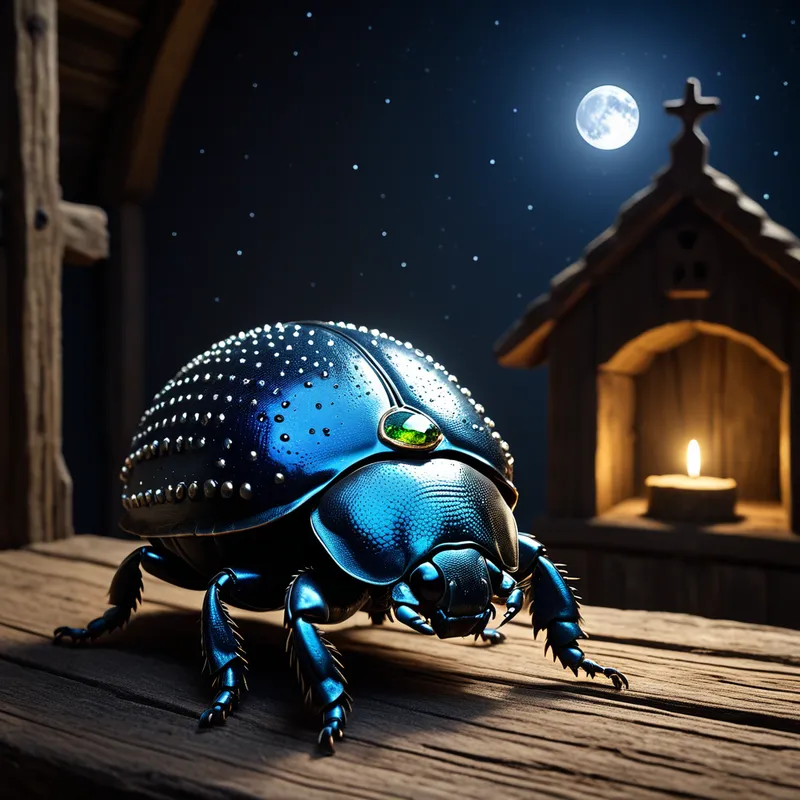
Our Lady's Beetle Myth Meaning & Symbolism
A humble dung beetle, cursed for its earthly toil, is blessed by the Virgin Mary, transforming its labor into a sacred, jeweled offering.
Read Myth →
Njord Myth Meaning & Symbolism
A god of the sea marries a goddess of the mountains, a sacred union of opposites that brings peace at the price of a profound, unending longing.
Read Myth →
The White Elephant Myth Meaning & Symbolism
A magnificent white elephant, a Bodhisattva in animal form, makes a supreme sacrifice to end a devastating drought and save a kingdom.
Read Myth →
The thousand arms of Avalokite Myth Meaning & Symbolism
A bodhisattva, witnessing infinite suffering, shatters in despair. From the fragments, a thousand arms and eyes emerge, becoming an instrument of universal compassion.
Read Myth →
The Feminine Divine Shekhinah
The Shekhinah is the feminine divine presence in Kabbalistic tradition, embodying immanence, compassion, and the mystical connection between God and creation.
Read Myth →No myths match your search.
Showing 6 of 714
Discover Your Own Archetype
Take our comprehensive assessment to reveal the dominant and shadow archetypes governing your subconscious.
Start Free Assessment