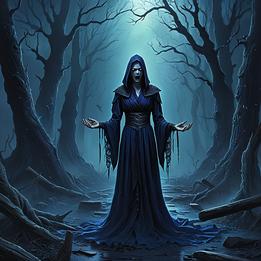
Curse
A supernatural invocation of harm or misfortune, often representing deep-seated fears, guilt, or perceived external malevolence.
Curse Dream Meaning
A supernatural invocation of harm or misfortune, often representing deep-seated fears, guilt, or perceived external malevolence.
Interpretive Themes
Cultural Lenses
Jungian Perspective
View Context →Represents shadow projection—unconscious negative aspects attributed externally. The 'curse' is often one's own unlived life or denied traits manifesting as external persecution.
Freudian Perspective
View Context →Symbolizes repressed guilt or superego punishment for forbidden desires (often sexual or aggressive). The curse is self-inflicted punishment fantasy for unconscious wishes.
Gestalt Perspective
View Context →The curse represents disowned parts of self. Dreamer is both curser and cursed—exploring this polarity reveals internal conflict needing integration.
Cognitive Perspective
View Context →Manifestation of catastrophic thinking patterns or attribution bias. Brain processes perceived threats as supernatural narratives during sleep state.
Evolutionary Perspective
View Context →Adaptive warning mechanism about social ostracization or violation of group norms. Prepares mind for potential exclusion or retaliation scenarios.
Global/Universal Perspective
View Context →Cross-cultural archetype of unexplained misfortune. Historically explains illness, drought, or death; modernly represents anxiety about uncontrollable forces.
East Asian Perspective
View Context →Often involves ancestral spirits or feng shui imbalances. Modern context blends traditional belief with psychological interpretation of 'bad luck' patterns.
South Asian Perspective
View Context →Connected to karma, divine punishment, or tantric practices. Ritual remedies exist alongside understanding as metaphor for life consequences.
Middle Eastern Perspective
View Context →Evil eye (nazar) or jinn-related in Islamic tradition. Modern interpretations balance religious beliefs with psychological understanding of envy or malice.
European Perspective
View Context →Witchcraft folklore blended with Christian demonology. Historically explained epidemics; now represents anxiety about hidden enemies or moral failings.
African Perspective
View Context →Ancestral displeasure or spiritual attack requiring ritual cleansing. Modern context maintains spiritual significance while acknowledging psychological dimensions.
Modern Western Perspective
View Context →Mostly psychological—self-fulfilling prophecies or negative thought patterns. Occasionally appears in New Age contexts as 'energy blockages'.
Want a deeper analysis?
Get a personalized interpretation of your entire dream including this symbol.
Interpret My DreamCommon Appearances & Contexts
| Context | Emotion | Interpretation |
|---|---|---|
| Context Being cursed | Emotion Terror | Interpretation Victimization or deep fear. |
| Context Cursing someone | Emotion Rage | Interpretation Uncontrolled anger projection. |
| Context Breaking a curse | Emotion Hope | Interpretation Overcoming perceived obstacles. |
| Context Inheriting a curse | Emotion Resignation | Interpretation Feeling doomed by fate. |
| Context Lifting a curse | Emotion Relief | Interpretation Resolution of long burden. |
| Context Cursed object | Emotion Apprehension | Interpretation External source of trouble. |
| Context Accidental curse | Emotion Regret | Interpretation Unintended harm caused. |
| Context Public curse | Emotion Shame | Interpretation Social condemnation feared. |
| Context Escaping curse | Emotion Determination | Interpretation Active struggle against fate. |
| Context Cursed place | Emotion Dread | Interpretation Environment feels hostile. |
| Context Prophetic curse | Emotion Anxiety | Interpretation Fear of inevitable doom. |
| Context Negotiating curse | Emotion Cunning | Interpretation Seeking control in powerlessness. |
Interpret Your Full Dream
Beyond this symbol, every dream carries a unique story. Share your dream for a personalized AI-powered interpretation.