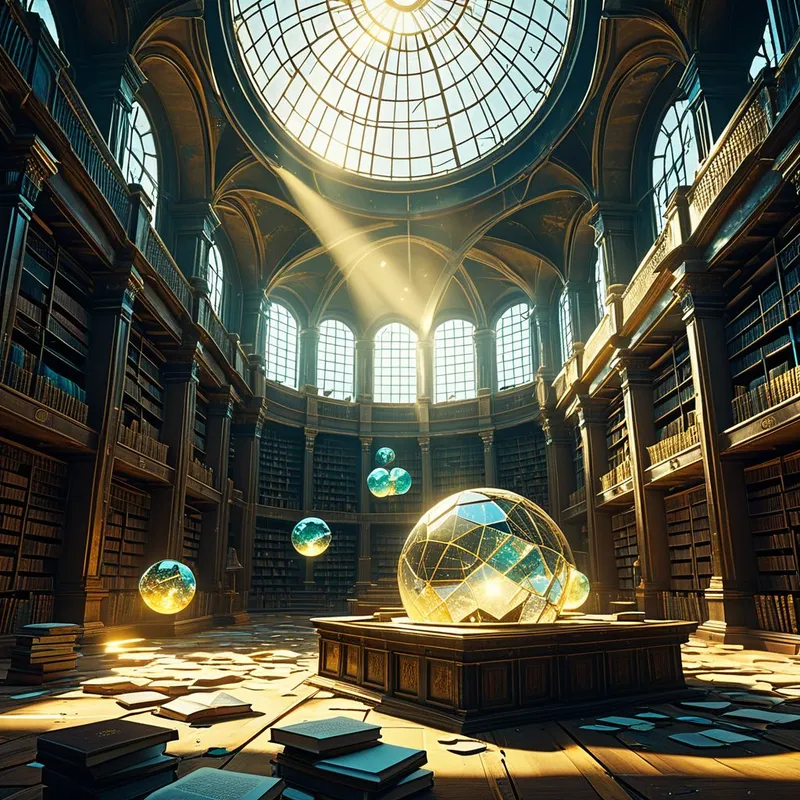
The Sanctuary: Building the Inner Citadel
The Somatic Echo
Before the image forms, the body knows. It is a deep, cellular sigh. A release of tension held so long it had become a structural component of your being—the clench in the jaw unspools, the fortress of the shoulders drops its drawbridge. The breath, often a shallow, tactical thing, finds a forgotten depth in the belly. This is not the euphoria of escape, but the profound relief of a ceasefire declared within. It is the visceral recognition of a boundary that holds, a perimeter that protects not by repelling, but by containing. A warmth spreads from the center, not fiery, but like the slow, even heat of a stone warmed by a sun you can’t see. The mind, that frantic sentry, is the last to know. It arrives to find the body already at rest, humming with a quiet frequency of safety it thought it had forgotten how to broadcast.
The Dreamer's Log
The dream is always the same: a forgotten server room, deep in the sub-basement of a skyscraper that is also my mind. It’s small, humming, lit only by the cool glow of a single terminal. No one knows it’s here. On the screen, lines of elegant, impossible code write and rewrite themselves in a silent, perfect loop. For the first time in years, the noise from the floors above—the board meetings of anxiety, the marketing blitz of desire—cannot reach me. Here, there is only the hum and the code.
This is the alchemy of the forgotten protocol: the psyche retreats to its most fundamental, operational layer to remember the core instruction set of the self, before the world began its endless compilation.

The False Lead
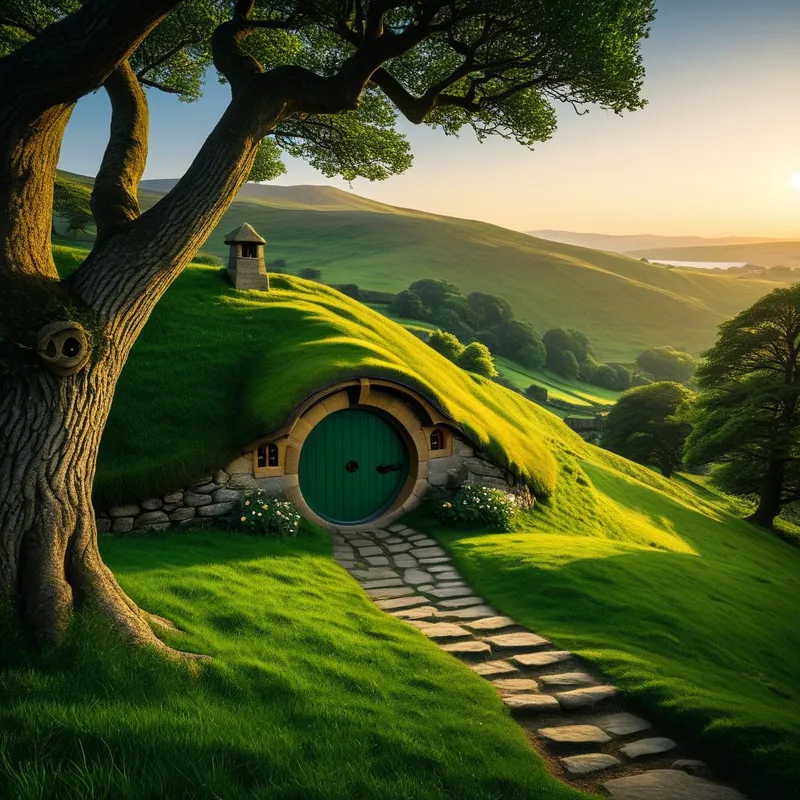
A sanctuary dream is not a fantasy of permanent retreat, nor is it the psyche’s endorsement of escapism. To mistake it for such is to commit a grave error of interpretation. This is not the Innocent’s wish for a womb to crawl back into, but the Magician’s need for a temenos—a sacred, bounded workspace. The longing it evokes is not for a life without pressure, but for a vessel strong enough to contain pressure, to transmute it. It is not the absence of conflict, but the creation of a space where conflict can be met without annihilation. The false sanctuary is a sealed vault where things go to die in quiet; the true sanctuary is a dynamic cell where things are allowed to be reborn.
Psychological Architecture
To understand the sanctuary is to map the psyche’s own internal refugee crisis. We are not unitary beings, but ecosystems. Parts of us—the vulnerable child, the furious rebel, the ashamed failure—are often exiled for the crime of disrupting the consensus narrative of the “functional self.” They are locked in basements, silenced in attic rooms, cast out into the psychic hinterlands. The conscious ego, playing the role of a harried city planner, believes it has achieved peace through this segregation.
But exiled parts do not vanish; they gather in the shadows, form alliances of resentment, and their whispers become the background static of anxiety, the unexplained aches in the body, the sudden storms of emotion. The dream of sanctuary is the first sign of a sovereign intervention. It is the psyche’s own declaration that the civil war must end, not with a victor, but with a repatriation. The sanctuary is the embassy built in neutral territory, the first secure location where these exiled ambassadors of the self can be invited to return, to state their terms, to be heard without judgment. This is the architecture of integration: not a flattening into sameness, but a designing of a commonwealth where every part has a recognized seat at the table, protected by the same, unwavering law of compassion.
Mythic Resonance
We see this eternal blueprint in the myth of the Hospice of the Wounded King. The Fisher King, ruler of a blighted land, resides in his castle, himself afflicted with a wound that will not heal. His kingdom mirrors his inner state: barren, infertile, stuck in a perpetual, sorrowful stasis. The sanctuary here is not the castle itself—it is a poisoned chalice—but the Grail Castle that appears only to the worthy quester. It is a temporary, transcendent space that emerges when the right question is asked—not “Whom does the Grail serve?” but the deeper, sanative inquiry: “What ails you?”. The myth tells us the true sanctuary is not a location one possesses, but a relational, revelatory space that appears when compassionate attention is directed toward the core wound. It is the vessel that makes healing possible.
Similarly, in the Norse cosmos, Idavollr is the sacred, shining field at the very center of creation. After the gods fight their first war and establish order, they gather here, in this pristine, enclosed plain, to build their halls and forge their treasures. It is the primordial sanctuary within the world of action, the secure foundation from which all culture, law, and artistry can arise. It is the mythic affirmation that creation requires a cleared, protected space at its heart.
Symbolic Nodes
- Walled Gardens, Hidden Rooms, Private Libraries: Bounded, fertile spaces for growth.
- Lighthouses, Watchtowers on Cliffs: Isolated vantage points for clarity and warning.
- Deep Caves, Root Cellars, Underground Springs: Retreat to the foundational, the ancestral, the source.
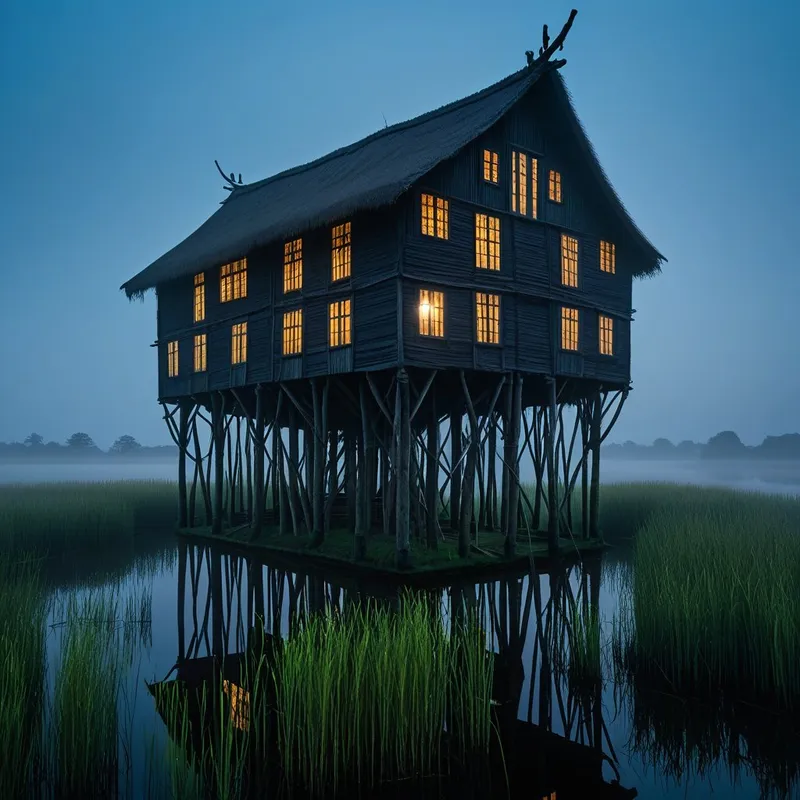
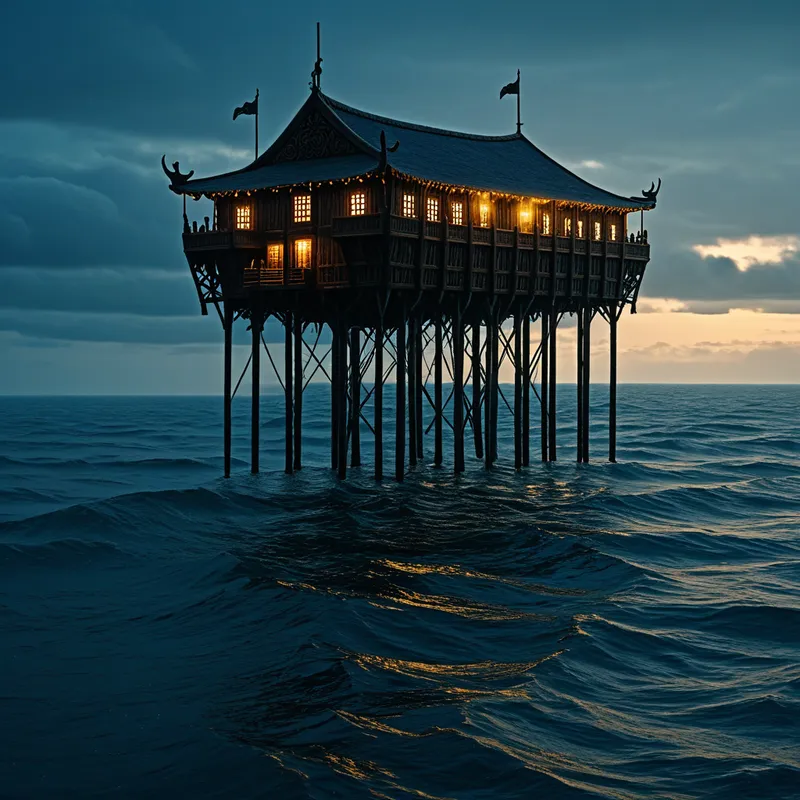
- A Single Lit Window in a Vast, Dark Building: The pinpoint of consciousness holding against the unconscious.
- A Soundproofed Room, A Dome of Silence: The need for auditory and psychic containment.
- A Vault, A Secure Terminal, An Encrypted File: The protection of core identity or vulnerable truth.
Archetypal Resonance
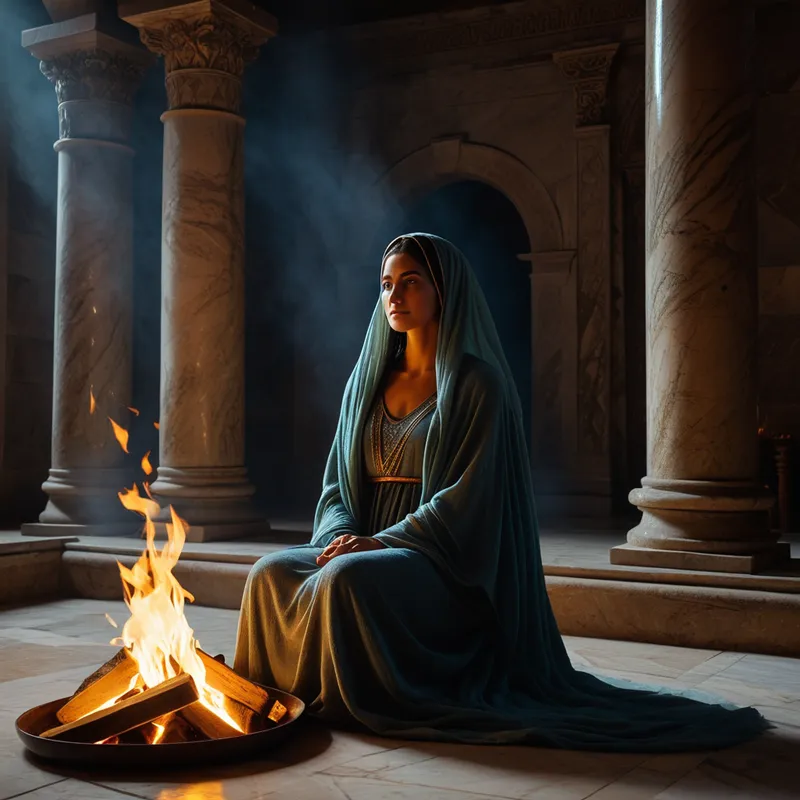
The energy of the Sanctuary is most purely channeled through The Magician Archetype. The Magician’s core power is the conscious manipulation of the unseen frameworks of reality—the codes, the symbols, the energies that underlie the visible world. The sanctuary is the Magician’s temenos, the sacred circle drawn not to keep the world out, but to create a different set of rules within. Its somatic echo—the deep, centered calm—is the feeling of the Magician standing at the axis point, where will, imagination, and the raw materials of the psyche align. The alchemical potential lies in this archetype’s ability to transform the base metal of chaotic, internal conflict into the gold of integrated sovereignty. It does not flee the shadow; it constructs a laboratory where the shadow can be safely examined and transmuted.
The Alchemical Process
The alchemy of sanctuary is the Calcination and Solution of the Inner Fortress. Our initial, ego-driven defense system is a brittle, reactive structure built of old fears—walls of "should," moats of shame, battlements of cynicism. The first heat, the Calcination, is applied by life itself: a crisis, a burnout, a grief so large it cannot be managed. This fire burns away the illusion that this old fortress is protecting us; it reveals it as a prison of our own making, isolating us from our own wholeness.
Then comes the Solution, the dissolving waters. This is the often-terrifying act of letting those rigid defenses melt. It feels like vulnerability, like exposure. It is the dream of the sanctuary appearing precisely in this liquefied state, offering not another rigid wall, but a membrane—permeable, discerning, alive. The transmutation is from brittle stone to resilient, living tissue. The sovereignty gained is not the sovereignty of the impregnable castle, but of the cell that knows how to selectively intake nourishment and release waste, maintaining its integrity through dynamic exchange. The sanctuary is not built; it is grown from the ashes of the old defenses, fed by the waters of self-acceptance.
The Integration Protocol
Question 1: In your waking life, where or when do you experience even a fleeting echo of that somatic sigh of safety? Is it a physical corner, a specific time of day, a state of mind, or the presence of a certain person?
Question 2: Which exiled part of you—what emotion, memory, or version of yourself—most needs an invitation to this sanctuary right now? What is it afraid would happen if it came into the light?
Question 3: If your inner sanctuary had a single, central law—one immutable rule for all who dwell within—what would that law be? (e.g., "No part shall be shamed for its truth," or "Rest is not a reward for work; it is a fundamental right.")
Action 1 (Somatic Anchoring): For one minute, place your hands gently over your lower abdomen. Breathe deeply into that space, imagining your breath filling a small, warm, and utterly secure chamber within you. With each exhale, mentally whisper the word "contained." This is not about changing anything, but about sensing the vessel that already exists.
Action 2 (Cartography of Exile): Take a blank page. In the center, draw a simple circle to represent your sanctuary. Around it, in the margins, write single words or brief phrases representing the feelings, memories, or "parts" that feel outside the circle, looking in. Do not analyze. Simply map the perimeter of your current inner commonwealth.
Action 3 (Ritual of the Threshold): Create a simple, physical marker for your sanctuary. This could be lighting a specific candle when you need internal quiet, placing a particular stone on your desk, or playing a short, instrumental piece of music. As you initiate this ritual, state clearly (aloud or in your mind): "This marks the boundary. Within this space, I am the sovereign of my own experience."
Final Validation
It is a wearying thing, to have lived so long as a conflict zone. To feel the ache of self-betrayal in the very walls you built for safety. This exhaustion is not a failure, but the prerequisite fuel for the alchemical fire. The dream of sanctuary is proof that the deepest intelligence within you has not given up. It is drafting blueprints for peace. It is calling the exiles home. Your task is not to build a paradise, but to heed that call—to clear a space, to light a lamp, and to begin the slow, courageous work of welcoming yourself back, piece by sacred piece, into the citadel of your own being.