The Somatic Echo of Honor
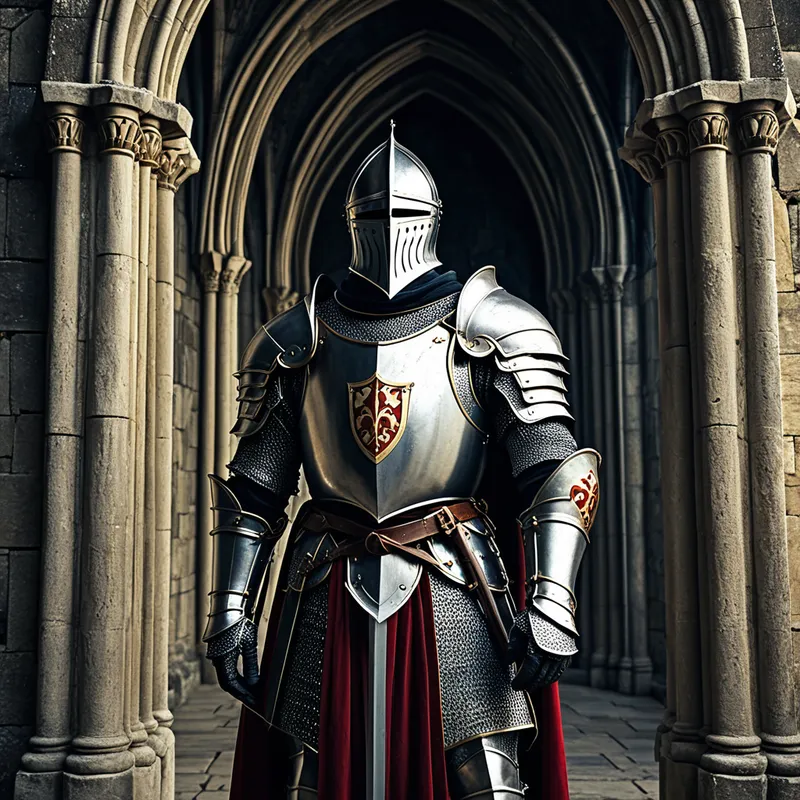
Before the mind can parse the word, the body knows the theme of Honor. It is not a swelling of pride in the chest, but a deep, resonant hum in the solar plexus—a tuning fork struck against the bedrock of your being. It is the weight of a perfectly balanced sword, the cool solidity of a forgotten oath held in the palm. It can feel like a suit of armor you’ve outgrown, its plates constricting your breath, or like a sudden, vertiginous emptiness where a foundational pillar was supposed to be. This is the somatic echo: a visceral, non-negotiable knowing of alignment or its profound, aching absence. It is the gravity of a personal truth that pulls at your bones before it ever reaches your lips.
The Dreamer's Log
She stands in a library of ash and memory. The books are blank, their spines crumbling at her touch. A single, leather-bound volume lies open on a stone altar. As she reads the glowing, indecipherable script, a tear falls from her cheek, landing on the page. The ink dissolves, not into ruin, but into a pool of liquid silver that holds a reflection not of her face, but of a long-forgotten, steadfast promise.
Alchemical Interpretation: The dream reveals the dissolution of an old, intellectual contract (the blank books) to make way for the transmutation of grief (the tear) into a new, living covenant of integrity (the liquid silver).

The False Lead
Honor is not social reputation, external validation, or the brittle performance of righteousness. It is not the armor of the ego, polished for the crowd. To mistake it for these is to chase a ghost, a hollow echo of the true form. A dream of dishonor is rarely about a public shaming; it is about the private, gut-wrenching moment when you feel the silent fracture within your own code. The terror is not of being seen as flawed by others, but of knowing you have betrayed a silent, internal sovereign. This theme’s shadow is not in failure, but in the self-deception that allows you to live comfortably with the fracture.
Psychological Architecture: The Shadow’s Covenant
The deep work of Honor is the most intimate form of shadow integration. It is the process of retrieving the exiled parts of yourself that you deemed "dishonorable"—the rage, the need, the fear, the selfish desire—and not just accepting them, but negotiating a treaty with them. Your psyche is not a kingdom to be ruled by a single, shining ideal, but a council. The Shadow Orphan who feels cheated, the Shadow Rebel who scorns all rules, the Shadow Hero who fights dirty to survive—they are not enemies to be vanquished. They are dissenting voices in your internal parliament, and their grievances are legitimate. Honor, in its profound sense, is the sovereign act of hearing their testimonies. It is granting these exiled factions a seat at the table and forging a new, integrated constitution for your being. The individuation here is the move from a fragile, monolithic identity (which must constantly defend itself) to a resilient, complex sovereignty (which can hold its own contradictions without collapse).
Mythic Resonance
We see this not in the knight who never falters, but in the myth of The Fisher King, guardian of the Grail. His kingdom is a wasteland, mirroring his own unhealed wound—a wound of dishonor, of a past transgression or failure that festered in secrecy. The land does not heal when a perfect hero arrives, but when a naive fool, Parzival, asks the simple, compassionate question: "What ails you?" The healing is in the courageous exposure of the wound, the end of its silent, shameful reign. The Grail itself is not a trophy for the flawless, but a symbol of the restorative covenant that becomes possible only when the hidden fracture is acknowledged and integrated.
Symbolic Nodes
- Broken Shields or Swords: Not symbols of defeat, but of an outmoded code or defense mechanism that must be reconstituted.
- Forgotten or Unreadable Texts: The internal covenant you have lost touch with or can no longer comprehend in its old form.
- Empty Thrones or Council Chambers: The abdication of your own inner authority, or the need to convene your internal parts.
- Weights, Chains, or Perfectly Balanced Scales: The somatic feel of obligation, burden, or the pursuit of deep, internal justice.
- Liquid Metal (Mercury/Quicksilver): The alchemical agent of transmutation, representing the fluid, living truth that can reshape solid but outgrown forms.
Archetypal Resonance
The theme of Honor resonates most powerfully with The Ruler Archetype, specifically in the labor of integrating its shadow to achieve true sovereignty. The Shadow Ruler is the internal tyrant or control-freak, the voice that demands perfection and order through fear, rigidity, and the exile of any part that threatens its brittle rule. The somatic echo of dishonor is often this Tyrant’s panic at losing control. The alchemical potential lies in the Ruler’s highest calling: to move from tyranny to benevolent sovereignty. This is not about controlling your inner kingdom, but about responsibly stewarding its complex ecosystem—establishing just laws (internal values), providing stability (self-trust), and creating a legacy of authentic order from the chaos of your full humanity. The dream of Honor is the Ruler’s call to depose the inner tyrant and claim the throne not through force, but through wise, compassionate, and integrated governance of the self.
The Alchemical Process: The Forge of the Real
The transmutation of Honor requires the heat of unflinching self-confrontation and the pressure of sustained ethical tension. The prima materia—the raw lead of your experience—is that moment of internal betrayal, the gnawing feeling of a broken promise to yourself. The alchemical fire is lit when you stop justifying it, stop blaming circumstance, and simply hold the reality of the fracture in full awareness. This is the nigredo, the blackening. The pressure is applied by living in the question: "How do I act from integrity now, while carrying this wound of past dishonor?" You do not erase the fracture. You apply the relentless, patient heat of new, conscious choices. Slowly, the lead of shame begins to gleam with the silver of accountability, and then, under continued heat, melts into the gold of a new, more resilient integrity—forged not in the fantasy of perfection, but in the reality of repair. The sovereign is not born flawless; they are tempered in the honest acknowledgment of their own flaws.

The Integration Protocol
Question 1: In the quiet of your own heart, what is the one unspoken promise or personal code you have fractured, and what part of you did you exile to maintain the illusion that it was still intact?
Question 2: If your sense of honor were not a shield against criticism, but a living covenant with all parts of yourself, what would its first new clause be?
Question 3: Where in your life right now are you being offered a chance to choose a difficult integrity over a convenient falsehood, and what ancient, internal voice fears that choice?
Action 1 (Somatic Grounding): Stand with your feet firmly planted. Place one hand on your solar plexus. Breathe deeply into that space, and on each exhale, silently repeat: "My worth is not a verdict. My integrity is a practice." Feel the statement not as a thought, but as a vibration settling into your body’s core.
Action 2 (Creative Council): Take a large sheet of paper. In the center, draw a symbol for your core self. Around it, using different colors or shapes, draw the "exiled" or "dishonorable" parts of you (The Angry One, The Coward, The Selfish One, etc.). Draw lines from each to the center. On each line, write one sentence that part needs the core self to hear and acknowledge. Do not analyze, just let them testify.
Action 3 (Ritual of Reconstitution): Find a small, discarded object—a stone, a piece of broken pottery, a dead branch. This represents the old, fractured code. Sit with it and speak aloud one specific, small way you will act with integrity in the coming day that is different from your past pattern. Then, place the object somewhere in nature, not as discard, but as a return of raw material to be reconstituted by a larger, slower, wiser process.
Final Validation
To dream of Honor is to feel the profound and terrifying weight of your own potential for sovereignty. It is a difficult, relentless theme because it refuses the easy outs of blame or grandiosity. It asks you to govern the ungovernable within. Honor this difficulty first. The very ache of dishonor you feel is the proof of your inner sovereign’s existence—it would not hurt if the throne were empty. Your task is not to become perfect, but to become whole. To move from a kingdom of exiles to a sovereign state of integrated being. The covenant you forge in that silent, internal chamber, with all parts of yourself present, will echo in your life with a authority that no external validation can ever grant or take away.