The Alchemy of Emptiness: When the Psyche Dissolves to Reassemble
The Somatic Echo
It begins not as a thought, but as a sensation. A hollow resonance in the solar plexus, a quiet, expansive ache behind the sternum. It is the feeling of a room after the guests have left, when the laughter has evaporated and only the echo of its shape remains. The body registers it first: a subtle drop in internal pressure, as if a vital, unnamed organ has been temporarily removed. There is a lightness, yes, but it is the terrifying lightness of zero gravity, where every familiar tether has been cut. The mind rushes in to label it—loneliness, depression, meaninglessness—but these are clumsy translations. The somatic echo of emptiness is more primal. It is the system sensing its own deconstruction, the visceral prelude to a rewrite of the core code.
The Dreamer's Log
I am standing in the heart of a colossal, abandoned data center. Rows of monolithic server racks stretch into infinite darkness, every status light extinguished. The hum of existence has ceased. I walk for what feels like lifetimes, my footsteps the only sound. On a central console, a single terminal screen flickers to life, displaying only a pulsating, unfamiliar symbol before it, too, fades to black.
This dream is not about loss of data, but the cessation of processing; the alchemical moment when the old operating system shuts down completely, making space for a firmware that does not yet exist.

The False Lead
Do not mistake this emptiness for mere absence or failure. It is not the hollow aftermath of a breakup, the burnout from overwork, or the generic "bad luck" of a stagnant period. Those are events that happen to a self that still feels solid. The emptiness we speak of is more fundamental. It happens within the self. It is the disorienting realization that the roles you played, the passions that drove you, the very narratives you called "I" have, like stage sets, revealed their backside of plywood and paint. This is not deprivation; it is de-identification. To misinterpret it as simple sorrow is to apply a bandage to a chrysalis.
Psychological Architecture
Here, Shadow work is not about battling hidden monsters, but about presiding over the quiet dissolution of an entire internal government. You are not integrating exiled parts; you are witnessing the peaceful surrender of the cabinet. The Minister of Achievement files its final report and dissolves. The Secretary of Belonging turns off the lights and leaves the building. This is the Individuation process at its most austere: the ego, that diligent city-planner of the psyche, finds its blueprints are for a city that no longer needs to exist. The profound grief that arises is not for what was lost, but for the architect who is now without a project. The psyche is clearing the ground not for a better version of the old structure, but for a new principle of organization to emerge from the fertile void.
Mythic Resonance
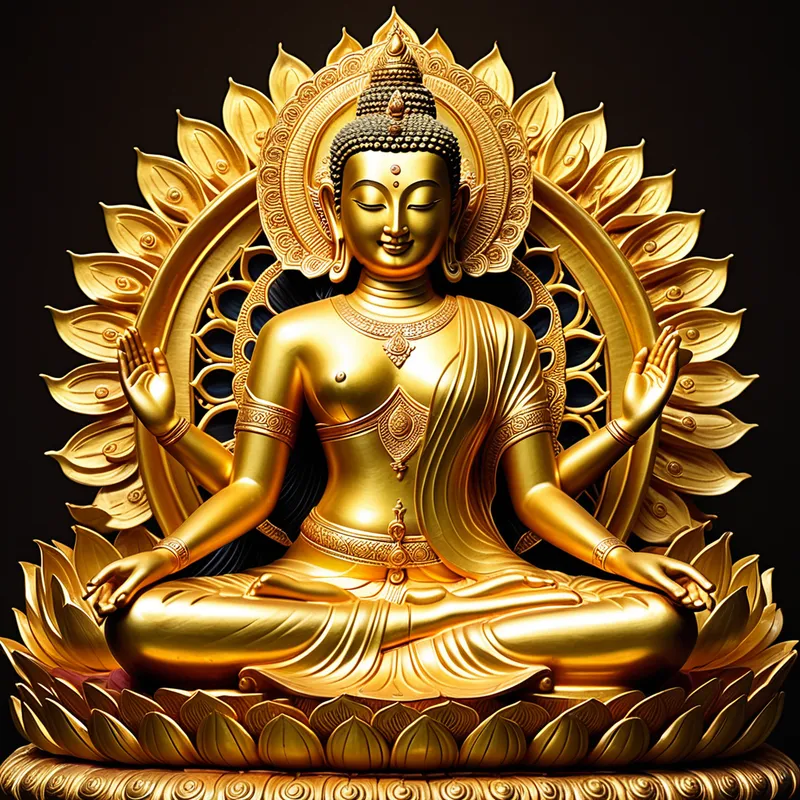
We see this in the myth of Inanna’s Descent. The Queen of Heaven does not go to the underworld to fight or conquer, but to submit. At each of the seven gates, she is stripped—of her crown, her lapis beads, her royal robe—until she arrives naked and prostrate before her sister, Ereshkigal. This is not a defeat, but a necessary, brutal un-becoming. The emptiness is the cumulative space left by all that was removed. Only through this total reduction could she later be resurrected. Similarly, the Buddhist concept of śūnyatā—often translated as emptiness—points not to nihilism, but to the liberating truth of interdependent origination; things are empty of a separate, permanent self. The dream of emptiness invites you to the gate where your own insignias must be surrendered.
Symbolic Nodes
- Vast, silent landscapes (deserts, tundras, empty plains).
- Abandoned, cavernous interiors (warehouses, stadiums, empty houses).
- Deactivated technology (blank screens, dead machinery, silent vehicles).
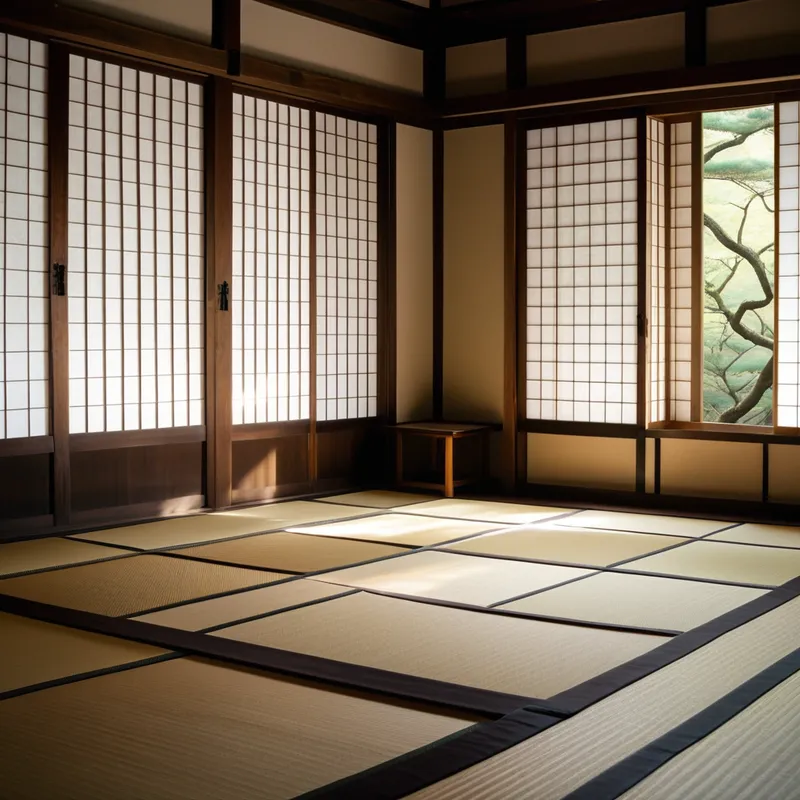
- Clear, empty containers (vases, bowls, rooms devoid of furniture).
- Transparent or invisible barriers.
Archetypal Resonance
The Shadow Sage is the primary archetype activated in this theme. The Sage seeks knowledge, understanding, and truth. Its shadow emerges when the pursuit of meaning hits the void—when all frameworks, philosophies, and systems of thought are seen as ultimately provisional, leaving the mind in a state of pure, unmediated perception that feels like a desert. The somatic echo is the Shadow Sage’s cold clarity, the chill of a truth too vast to hold. Its alchemical potential lies precisely in this crisis of meaning; it is the pressure that forces wisdom to drop from the head into the bones, transforming knowing into being, and dogma into a direct, humble encounter with the mystery.
The Alchemical Process
The transmutation of emptiness is the alchemy of the vacuum. Nature abhors a vacuum, the old axiom says, and so does the panicked ego. It will rush to fill the space with old stories, new distractions, or spiritual bypassing—anything to restore the familiar pressure. The alchemical heat is found in the conscious, courageous resistance to this filling. It is the pressure of containment, of holding the sacred void open. This is the nigredo, the blackening: the dissolution of all form. The grief and terror are the fires that burn away the dross of false identity. Sovereignty is not claimed here by building a new castle, but by becoming the sovereign of the empty plain itself—the one who can stand in the center of the dissolution and declare, “This, too, is my domain. I will not colonize it prematurely.” The gold is the unshakeable peace that comes from no longer needing to be something in order to feel real.

The Integration Protocol
Question 1: What familiar part of my identity—a role, a belief, a source of pride—has most recently begun to feel like a costume I am wearing, rather than my own skin?
Question 2: If this emptiness is not a lack, but a space, what is the one thing I am most afraid might grow in it if I stop trying to control what fills it?
Question 3: Where in my body do I feel the urge to “fill the space,” and what would it feel like to send breath to that specific area, not to change it, but to acknowledge its presence?
Action 1 (The Vessel): For one week, carry a small, empty container in your pocket—a smooth stone with a natural hollow, a tiny ceramic bowl. When you feel the somatic echo of emptiness, hold it. Let the object physically represent the space within, externalized and held.
Action 2 (Unstructured Cartography): Take a large sheet of paper. Without intention, make a mark, a smear, a line. Let it be the only thing on the page. Place the paper somewhere you will see it. Each day, add only one more mark, with no goal of creating an image. This is a practice in allowing form to emerge from void at a glacial, organic pace.
Action 3 (The Silent Vigil): Go to a vast, open space—a field, a beach at dawn, an empty parking lot late at night. Stand in the center. Set a timer for 20 minutes. Do nothing. Do not meditate, pray, or intend. Simply stand sentinel for the emptiness, witnessing it without demanding it become meaningful. Then leave without ceremony.
Final Validation
This is perhaps the most disorienting terrain the soul can cross. To feel the very ground of selfhood become insubstantial is a terror that bypasses ordinary fear. Honor the courage it takes to not flee from it, to not scream into the silence just to hear an echo. You are not broken. You are in the liminal chapel between demolitions. The emptiness is not your enemy, but the most profound invitation you will ever receive: to stop building, and to begin listening for the blueprint the silence itself holds. The sovereignty that awaits on the other side is not over a kingdom, but over the very substance of your being, finally free to take a shape you do not yet have words for.