The Dream of Freedom: A Somatic Call to Sovereignty
The Somatic Echo
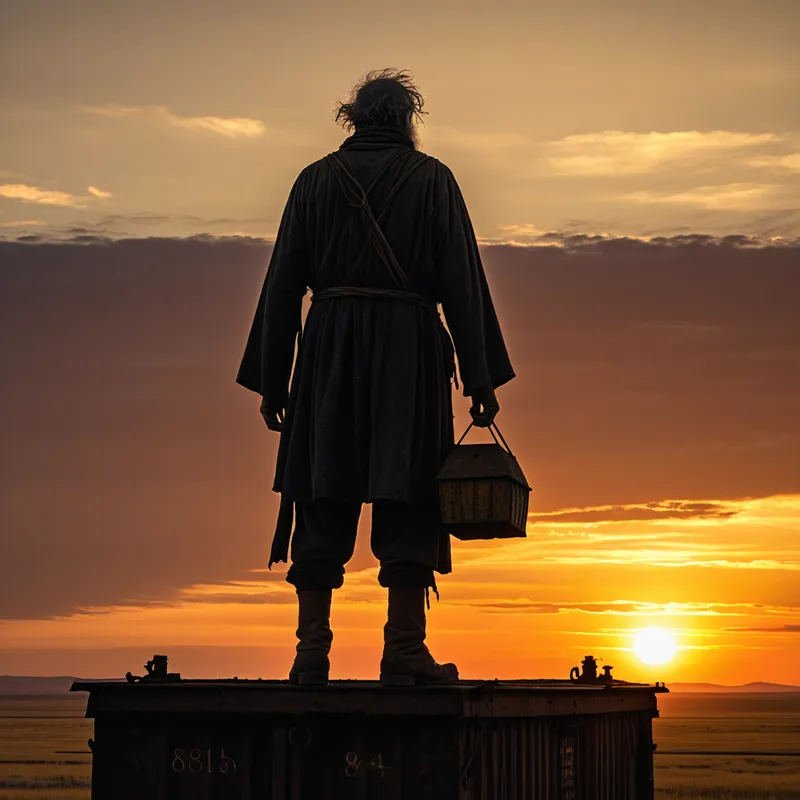
It begins not as a thought, but as a texture in the body. A low-grade hum of confinement, a subtle ache of constriction behind the sternum, as if the ribs have grown just a fraction too close together. The breath feels shallow, borrowed, never quite reaching the depths of the diaphragm. There is a phantom weight on the shoulders, not of burden, but of limitation—the somatic memory of walls you agreed to build, of agreements you forgot you signed. This is the pre-verbal landscape of the unfree soul: a silent, cellular yearning for space. It is the body’s ancient wisdom whispering of a territory within that has been cordoned off, a wildness domesticated, a voice muted. Before the dream images arrive, the body is already dreaming of open sky, of unbound movement, of a breath that belongs wholly to itself.
The Dreamer's Log
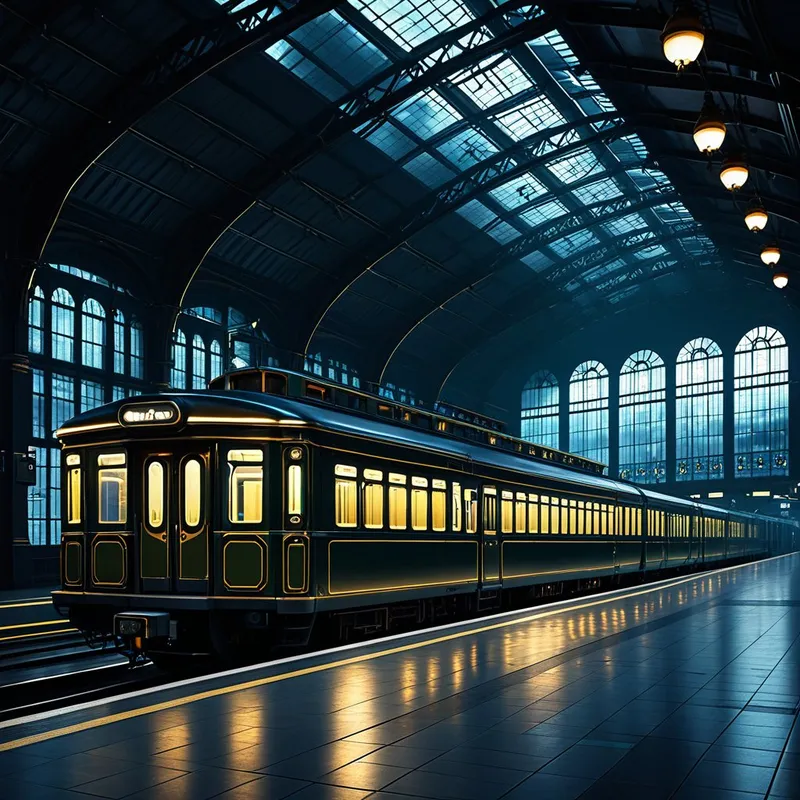
The dreamer stands alone on the platform of a vast, empty train station at night. A single, illuminated carriage waits, its door open. They know, with dream-certainty, that this train can take them anywhere—to any life, any version of themselves. Yet, their feet are fused to the concrete. They watch the empty train, pulsing with potential, until the doors sigh shut and it glides silently away into the dark.
This is not a dream of missed opportunity, but of confronting the internal architecture that makes the platform feel like the only safe ground. The alchemical key is not in the departing train, but in the molten feeling where foot meets stone.
The False Lead
Do not mistake this theme for mere escapism or adolescent rebellion. The dream of freedom is not a fantasy of running from responsibility, but a profound calling to run toward a deeper, more authentic response-ability—the ability to respond from your core, not from conditioning. It is not about shirking structure, but about discerning which structures are exoskeletons you’ve outgrown and which are the living bones of your integrity. A dream of breaking chains is not a prescription for chaos; it is often the first glimpse of a more elegant, self-authored order waiting to be born from within the dissolution.
Psychological Architecture
The shadow work here is an excavation of the internal warden. This is not a cruel figure, but often a sophisticated mental system—a loyal protector part forged in childhood, tasked with keeping you safe by keeping you small, agreeable, predictable. In the language of Internal Family Systems, it is a Manager of impeccable skill, building prisons of “should” and “must” to shield a younger, more vulnerable Exile from perceived danger. The dream of freedom signals this system’s failure; the Exile’s longing for air and sky is leaking through the cracks.
Individuation in this realm is the agonizing, glorious process of turning toward that warden not as an enemy, but as a fatigued guardian. It is thanking it for its service while gently, firmly, dismantling its jurisdiction. You must feel the terror that birthed the prison—the fear of abandonment, of failure, of your own unbridled power—and hold it in the crucible of your adult consciousness. The transformation occurs when you realize the true captivity is in believing the warden’s voice is the only voice you have. Sovereignty is born when you begin to speak from the silent, spacious center that was there all along, watching both the prisoner and the guard.
Mythic Resonance
This process echoes in the myth of Ariadne, not in her role as the helper with the thread, but in her aftermath. After providing Theseus the means to navigate the labyrinth and slay the Minotaur—the beast of unconscious, imprisoning terror—she is herself abandoned on the shore of Naxos. Her freedom from Crete was not freedom at all, but a transfer of dependency. Her true liberation arrives only when Dionysus finds her; he does not rescue a princess, but recognizes a goddess in exile. He offers not a new cage of protection, but a sacred marriage—an integration of her forsaken, wild essence (Dionysian ecstasy) with her strategic, linear intelligence (the thread). Her freedom is consecrated through this alchemical union, elevating her from a pawn in a hero’s story to a sovereign figure in her own right.
Symbolic Nodes
- Open Doors, Windows, Gates: Thresholds to unchosen possibilities.
- Broken Chains, Locks, Cages: The dissolution of binding agreements.
- Wide, Empty Landscapes (deserts, oceans, tundra): The terrifying and exhilarating vista of pure potential.
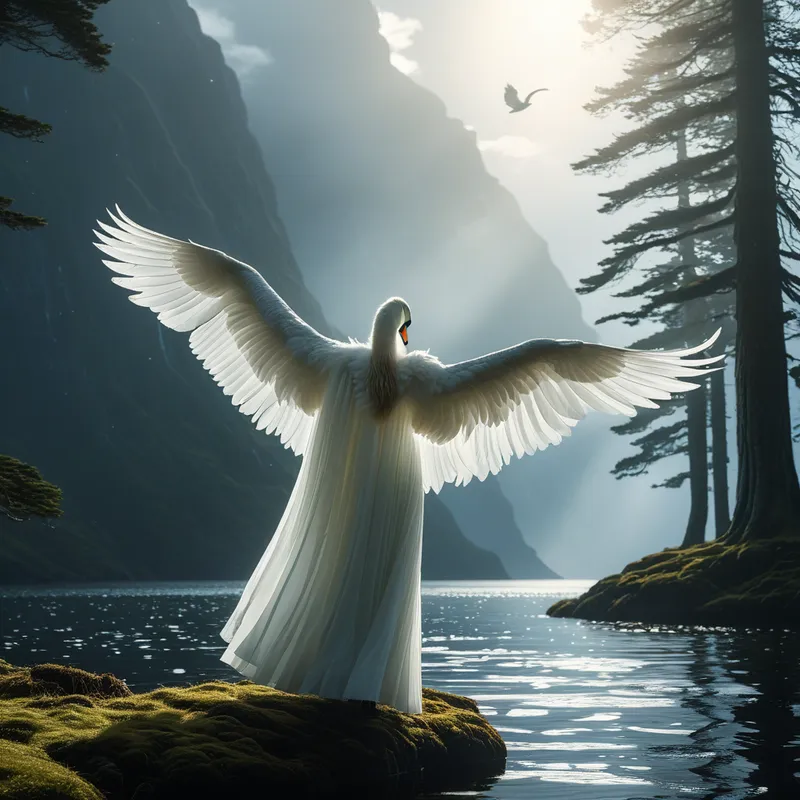
- Birds in Flight, Especially Breaking from Cages: The spirit achieving lift, overcoming gravity of circumstance.
- Vehicles You Cannot Board (or that leave without you): The gap between perceived possibility and felt permission.
- Shedding Skin or Heavy Clothing: The visceral act of sloughing off an outgrown identity.
- Finding a Hidden Room in a Familiar House: The discovery of unused, sovereign psychic space within the self.
Archetypal Resonance
The energy here pulses with the core frequency of The Rebel Archetype. Not its shadow form of the destructive Outlaw, but the revolutionary in its purest, most necessary expression. The Rebel’s somatic echo is that fiery tension in the gut, the refusal to accept a life dictated by external blueprints. Its alchemical potential lies in its sacred “no”—a negation that is not an end, but the essential clearing required for an authentic “yes” to emerge. This archetype does not seek chaos for its own sake; it instigates the necessary demolition of internal tyrannies so that the Ruler, the sovereign self, can eventually build a kingdom based on truth, not compliance. The dream of freedom is the Rebel’s manifesto, written in the body’s own language of ache and aspiration.
The Alchemical Process
The transmutation of captivity into sovereignty requires the heat of conscious suffering. This is not the passive suffering of the victim, but the active, voluntary engagement with the grief of your own constraints. You must sit in the fire of two realizations: the profound sadness for the years spent in the internal labyrinth, and the terrifying uncertainty of the open space beyond its walls. The pressure is applied by asking, relentlessly, “Who would I be if I were not afraid?” and then daring to feel the answer vibrate through your cells.
This is the solve et coagula of the soul: the dissolving of the old, rigid identity (the loyal prisoner) and the coagulating of a new, fluid, and self-authored form. The prima materia is the raw feeling of entrapment; the philosopher’s stone is the discovered truth that you were always the architect, and can therefore be the dismantler. The gold is not a state of perpetual license, but the earned, unshakable authority of a self that can hold its own center amidst any storm.
The Integration Protocol
Question 1: Where in my body do I feel the most vivid sensation of “stuckness” or constriction when I imagine a choice I deeply desire but feel I cannot make? Describe its texture, temperature, and weight.
Question 2: What ancient, unspoken agreement—with a parent, a culture, a past version of myself—does this internal prison uphold? What was it originally meant to protect me from?
Question 3: If my current life is a beautifully furnished room, what one piece of furniture represents a constraint I agreed to for comfort or safety, but that now blocks the window to my own horizon?
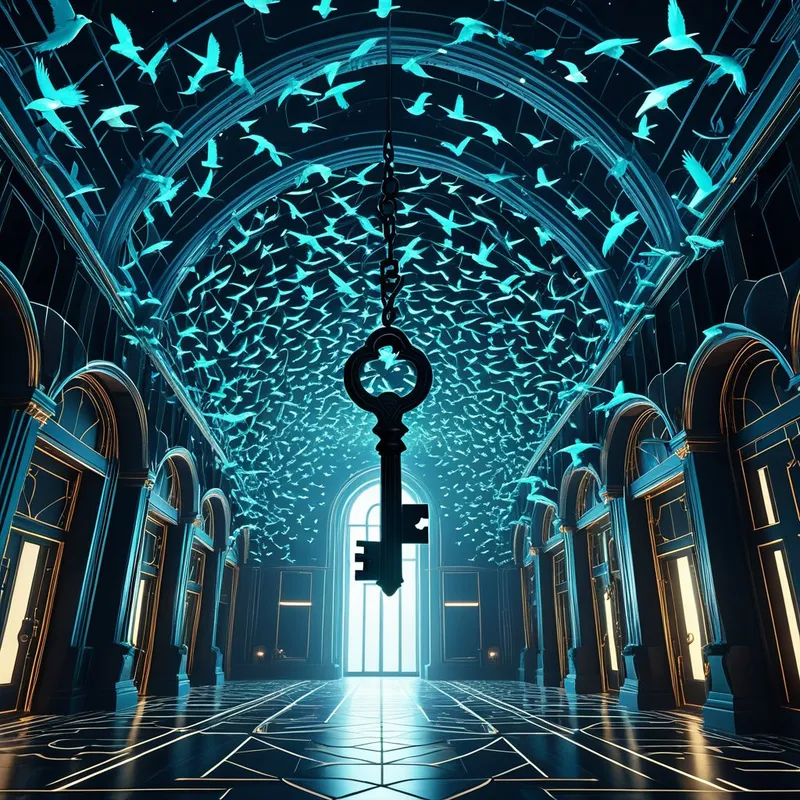
Action 1 (Somatic Key): For five minutes, sit or lie down and focus only on your breath. With each inhale, imagine the breath flowing directly into the area of constriction identified in Question 1. With each exhale, imagine that space expanding, not by force, but by melting, as if warm light is softening a frozen knot. Do not seek to fix it, only to send breath to the captivity itself.
Action 2 (Manifesto of the Unsaid): Take a blank page. Set a timer for 10 minutes. Write, without stopping or editing, a “Declaration of Independence” from an internal rule that no longer serves you. Address it to the Internal Warden. Be specific, poetic, or blunt. It begins: “I hereby renounce the law that states I must…”
Action 3 (Threshold Ritual): Physically enact a small, symbolic release. Write the constraint from Action 2 on a small piece of paper. Go to a threshold in your home—a doorway, a window. Stand there, feel the separation of spaces. Then, step across it, tearing the paper and leaving the pieces behind, or burning it safely in a bowl. The ritual is in the conscious, embodied movement from one state into another.
Final Validation
The path from the dream of freedom to its embodied reality is perhaps the most daunting and noble journey the psyche can undertake. It asks you to unmake parts of your world, to sit in the howling silence of the open platform, and to trust that the ground of your own being is firmer than any platform ever was. It is difficult because it is sacred. Honor the fear; it is the ghost of the old guardians making their final, loyal stand. Then, take the first breath that is entirely your own. The spaciousness you dream of is not a destination out there. It is the native atmosphere of the soul that has remembered, at last, how to inhabit itself.