Abstract & Philosophy

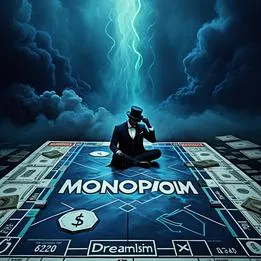
Monopoly Dream Meaning

A symbol of capitalism, competition, and the pursuit of wealth, often representing power dynamics, inequality, and the illusion of control in life's game.

Common Appearances & Contexts

Context Emotion Interpretation
Winning the game Euphoric Temporary triumph fantasy.
Losing everything Despair Fear of failure.
Cheating at game Guilty Moral compromise anxiety.
Refusing to play Defiant Rejecting societal norms.
Owning all properties Dominant Power accumulation desire.
Going bankrupt Panicked Financial insecurity fear.
Playing with family Competitive Family power struggles.
Game never ends Exhausted Endless striving fatigue.
Changing the rules Rebellious Desire for fairness.
Monopoly money only Disillusioned Value illusion realization.
Everyone cooperating Hopeful Alternative system fantasy.
Being the banker Manipulative Control over resources.

Interpretive Themes

Cultural Lenses

Jungian Perspective

View Context →

Represents the Shadow archetype—unconscious desires for power and wealth that conflict with persona. The game board symbolizes the collective unconscious's structured patterns of competition and hierarchy.

Freudian Perspective

View Context →

Symbolizes anal-retentive traits—obsession with control, order, and accumulation. The money and properties represent fecal matter, with hoarding reflecting unresolved childhood psychosexual development.

Gestalt Perspective

View Context →

Each game piece represents an aspect of self—the dreamer's fragmented parts competing for dominance. The board symbolizes life's field where these parts interact and conflict.

Cognitive Perspective

View Context →

Represents schemas about fairness, success, and social comparison. The game mechanics mirror cognitive biases in risk assessment and zero-sum thinking in decision-making processes.

Evolutionary Perspective

View Context →

Symbolizes ancestral competition for resources and territory. The game reflects evolved behaviors for status acquisition, coalition formation, and survival in hierarchical social structures.

Modern Western Perspective

View Context →

Critique of late capitalism—symbolizing wealth concentration, corporate monopolies, and the American Dream's broken promise. Represents both nostalgia and disillusionment with economic systems.

East Asian Perspective

View Context →

In Confucian-influenced cultures, represents disruption of harmony through excessive competition. In modern contexts, symbolizes both economic ambition and anxiety about societal imbalance and loss of collective values.

European Perspective

View Context →

Historically reflects aristocratic land ownership systems; modernly critiques neoliberal economics. The original game's anti-monopoly message contrasts with its current capitalist symbolism in popular culture.

African Perspective

View Context →

In Ubuntu philosophy, represents destructive individualism versus communal values. Modern interpretations connect to post-colonial economic exploitation and struggles for equitable resource distribution.

Latin American Perspective

View Context →

Symbolizes historical resource extraction by foreign powers and contemporary economic inequality. The game represents both aspiration for mobility and critique of neo-colonial economic structures.

Global/Universal Perspective

View Context →

Cross-cultural symbol of competition, wealth disparity, and power structures. While rules vary, the core themes of acquisition, exclusion, and hierarchical dominance appear in most human societies historically.

Middle Eastern Perspective

View Context →

In Islamic contexts, represents concerns about riba (usury) and unjust accumulation. Modern interpretations reflect oil economy dynamics, wealth distribution debates, and traditional versus capitalist value conflicts.

AI-Powered

Interpret Your Full Dream

Beyond this symbol, every dream carries a unique story. Share your dream for a personalized AI-powered interpretation.