Theseus in the Labyrinth of Cr Myth Meaning & Symbolism
A hero enters a cosmic labyrinth to face a monstrous beast, guided only by a thread, emerging transformed by the confrontation with his own shadow.
The Tale of Theseus in the Labyrinth of Cr
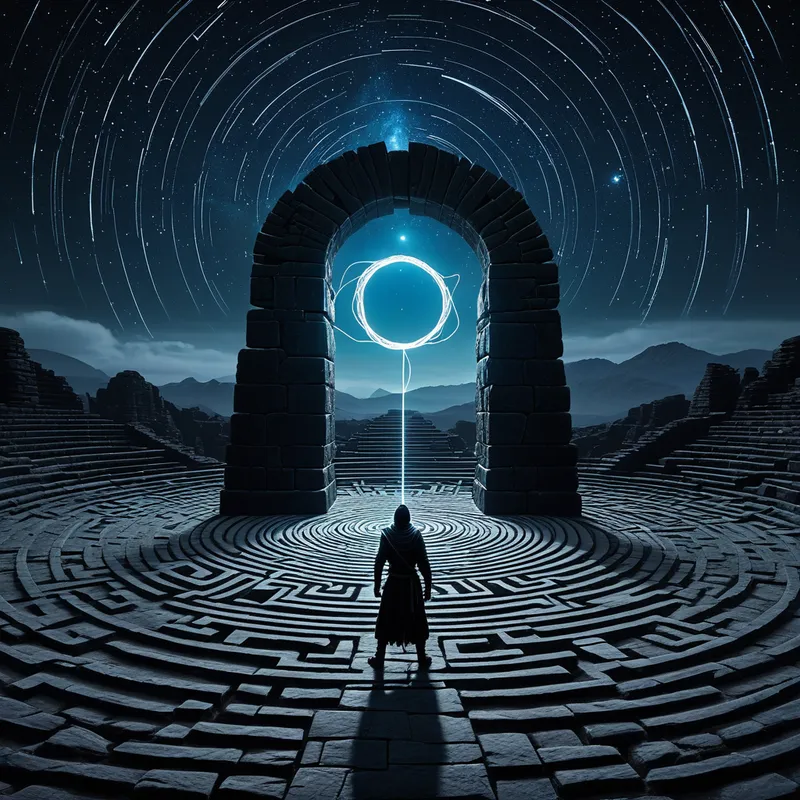
Hear now the tale of the maze and the man, the beast and the thread. In a time when the world was younger and the gods walked closer to the dreams of mortals, there stood a kingdom under a heavy shadow. Every nine years, the great bell would toll, and the people would weep, for the tribute was due. Seven youths and seven maidens, the flower of the land, were sent across the wine-dark sea to the island of King Minos. Their fate was not slavery, but a terror far worse: to be cast into the Labyrinth of Cr.
At its heart dwelled the Minotaur, a creature of rage and sorrow, born of a queen’s transgression and a god’s wrath. It was a beast that fed on fear, and the labyrinth was its gullet, a stone throat designed by the cunning Daedalus to confuse and consume. None who entered its confounding passages ever returned. The very walls seemed to breathe, to shift, to drink the hope from those who wandered, lost, until the monster’s hot breath was upon them.
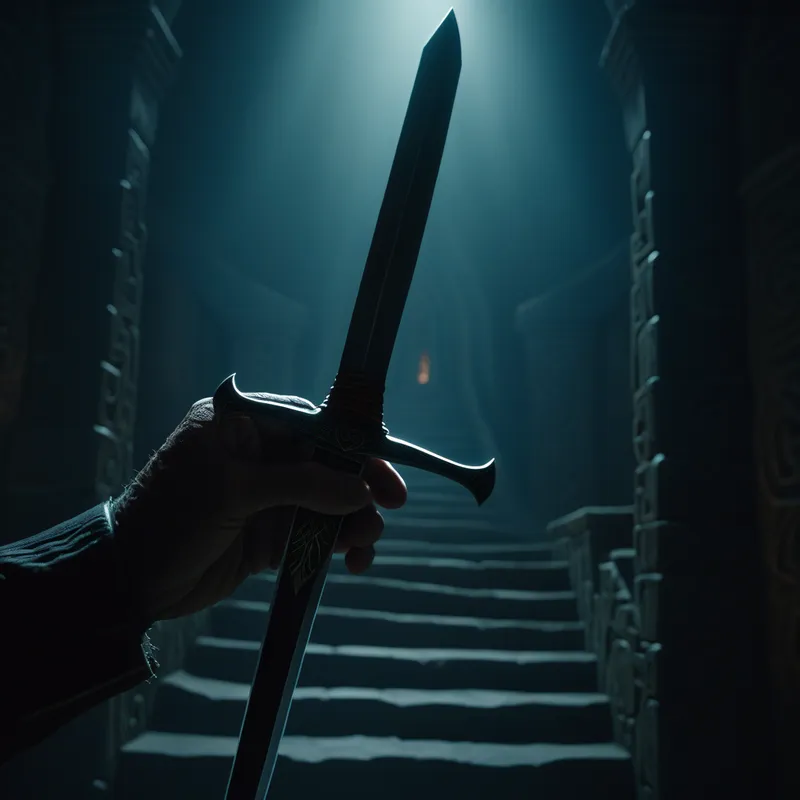
Then came Theseus, son of Poseidon and heir to a grieving city. He would not see more of his people devoured. He volunteered to be among the fourteen, not as a victim, but as a hunter. His father’s blood sang in his veins, a tide of resolve. When his ship landed on the foreign shore, the king’s daughter, Ariadne, saw him. In his eyes, she saw not despair, but a fierce, clear light. She loved him, and in that love, she offered salvation: a simple skein of thread and a sword.
The night of the offering, the great bronze doors groaned open. A chill, earthy breath exhaled from the darkness within. Theseus stepped across the threshold, the stone cold beneath his feet. He tied one end of the thread to the lintel, a fragile tether to the world of sun and air. Then he descended, paying out the line as he went. The labyrinth swallowed him. Torchlight danced on wet, close walls that curved and forked without reason. Whispers seemed to echo—the ghosts of the lost, the taunts of the maze itself. He heard distant roars, felt vibrations through the stone. The air grew thick with the scent of damp earth, old blood, and animal musk.
For what felt like days, he followed the thread deeper, his senses straining. The roars grew louder, a sound that shook the dust from the ceiling. He rounded a final corner and entered the vast, central chamber. There, in the guttering light, stood the Cr. It was not merely a beast; it was a monument of anguish, a fusion of man and bull that embodied a kingdom’s shame. Its eyes held a terrible intelligence, a prison of instinct and fury. No words were exchanged. Only the scream of challenge, the ring of bronze on horn, and the desperate dance of survival. Theseus fought not just a monster, but the very embodiment of the labyrinth’s chaotic, consuming will. With a final, mighty thrust, the beast fell silent.
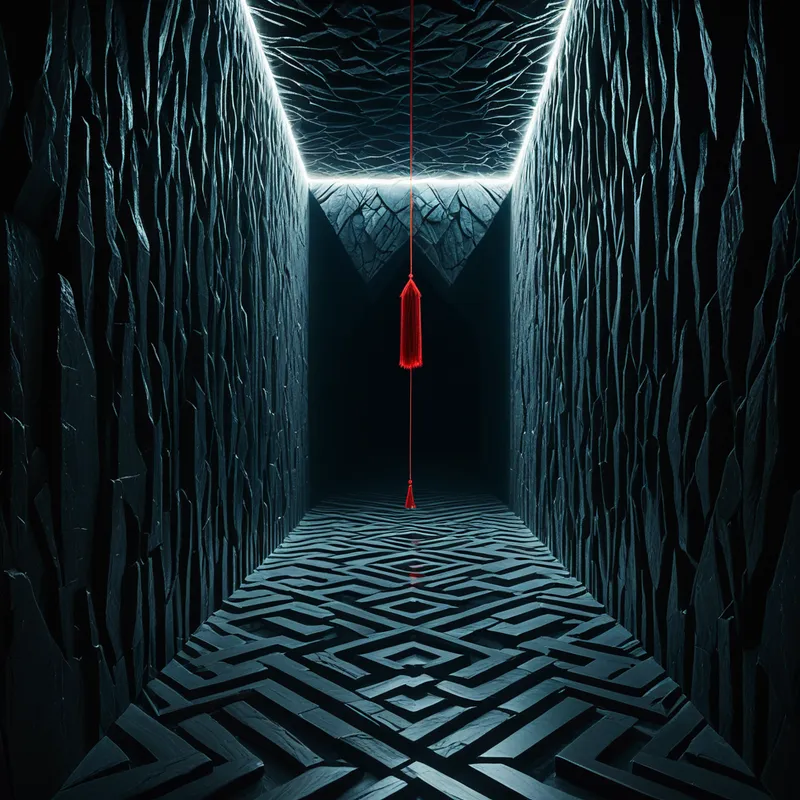
The way out was a blur of retracing steps, the red thread his only guide through the crushing darkness, past the bones of those who had no such clue. He emerged into the blinding dawn, pulling his companions behind him, the thread recoiling into the world, a lifeline pulled from the belly of the underworld. He was not the same man who entered. He carried the silence of the deep place in his bones, and the scent of the beast on his skin.
Cultural Origins & Context
The myth of Theseus and the Labyrinth is a foundational narrative of the ancient Hellenic world, primarily preserved in the works of later writers like Plutarch and referenced in pottery and art dating back centuries earlier. It functioned as a powerful national myth for Athens, symbolizing the city-state’s triumph over a former tributary power (Crete) and its emergence as a civilized, heroic force. The story was told in symposia, enacted in rituals, and painted on vessels, serving as a moral and psychological map for a culture deeply concerned with concepts of order (cosmos) versus chaos (chaos), civic duty, and the navigation of life’s profound perils. It was a tale that explained the cost of heroism and the thin, vital thread of cunning and love that connects humanity to salvation.
Symbolic Architecture
The Labyrinth is the ultimate symbol of the complex, often terrifying journey of the psyche. It is not a prison with random walls, but a constructed puzzle, representing the intricate, self-created complexities of our inner world—our traumas, defenses, and repressed shadows.
The labyrinth is not built to imprison you from the outside, but to manifest the prison you have already built within.
Theseus represents the conscious ego, the part of the self that must voluntarily descend into the unconscious to confront what lurks there. His voluntary journey is the essence of the heroic act: facing what one most fears. The Minotaur is the shadow incarnate, the unacceptable, bestial, and potent aspect of the self (or, in the myth’s literal layer, of King Minos) that has been hidden away and fed on sacrificial victims—our suppressed energies and unlived life. Ariadne’s thread is the symbol of relatedness and the guiding principle of consciousness—be it love, intuition, intellect, or the therapeutic process. It is the fragile but essential connection that allows one to go into the darkness and return, transformed, not lost.
The sword is the discriminating function of the mind, the ability to make decisive cuts, to differentiate and ultimately integrate or overcome the shadow. Forgetting to change the ship’s black sails to white upon return—a later part of the myth—speaks to the tragic cost of such journeys; the conscious self can be so altered by the encounter that it fails to properly communicate with the world it returns to, with devastating consequences.
The Dreamer's Resonance
When this myth pattern arises in modern dreams, the dreamer is often at a critical juncture of inner confrontation. Dreaming of being lost in a maze or complex building signals a feeling of confusion in one’s life path, a sense of being trapped by one’s own mental or emotional constructs. The somatic experience is often one of anxiety, shortness of breath, and a racing heart—the body’s response to perceived entrapment.
If the Minotaur appears, it represents a specific, powerful shadow content that demands attention: perhaps a buried rage, a shameful desire, or a potent creative force perceived as monstrous. The dream is the psyche’s Labyrinth, and the confrontation, however terrifying, is an invitation to engagement. Finding or holding a thread or a guide in such a dream is a profoundly positive sign, indicating the emergence of a connecting insight, a supportive relationship, or a nascent consciousness that can navigate the complexity. It marks the beginning of the integrative process.
Alchemical Translation
The myth models the alchemical process of individuation—the journey toward psychic wholeness. The initial state is one of collective suffering and periodic sacrifice (the tribute), where the unintegrated shadow wreaks havoc on the community (the psyche). The nigredo, or blackening, is the descent into the labyrinth, the confrontation with the dark, chaotic material of the unconscious.
The hero’s journey is always an interior one; the monster slain is always a part of the self that must be known, not destroyed.
The fight with the Cr represents the fierce struggle of assimilation. The ego does not annihilate the shadow but engages with it, wresting its power. This is the albedo, or whitening—the gaining of insight from the darkness. Ariadne’s thread is the conjunctio, the sacred marriage of opposites: the masculine, penetrating consciousness (Theseus) with the feminine, connective wisdom (the thread). It is this union that enables the journey.
Emerging from the labyrinth is the rubedo, the reddening or realization—the integration of the shadow’s energy into the conscious personality. The hero gains sovereignty, but the myth warns that the process is cyclical and costly. The modern individual undertaking this alchemy must find their own Ariadne’s thread—perhaps through therapy, art, meditation, or deep relationship—to venture into their personal labyrinth, confront their unique Cr, and return not with a beast’s head, but with its transformed power, woven into the fabric of a more complete self.
Associated Symbols
Explore related symbols from the CaleaDream lexicon: