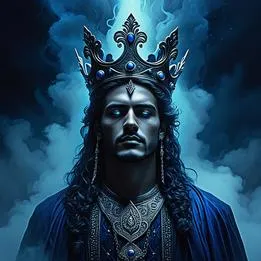
King
The Oracle's Essence
A symbol of ultimate authority, leadership, and societal order, often representing the dreamer's inner power or external control figures.
Interpretive Themes
✧ Archetypal Essence
Ruler
Dominant Influence ( 95%)
The king embodies the Ruler archetype in its most potent form.
The Light
The king embodies the Ruler archetype in its most potent form.
The Shadow
The king embodies the Ruler archetype in its most potent form.
Modern Visibility
In contemporary society, the king often symbolizes corporate leadership, political power, or personal sovereignty, shifting from divine right to earned or contested authority.
◈ Mythological Resonance
King Arthur Myth Meaning & Symbolism
Global/Universal traditionThe once and future king who pulled the sword from the stone, establishing Camelot as ideal kingdom before its fall.
Oedipus Myth Meaning & Symbolism
Greek traditionThe king who solved the Sphinx's riddle but could not solve the riddle of his own identity, representing the burden of kingship.
The SidheMounds Myth Meaning & Symbolism
Celtic traditionEochaid as the archetypal ruler of the conscious psyche, whose legitimacy and wholeness depend on a sacred marriage with the deep, feminine sovereignty of the land/Self.
Bahram the Warrior King Myth Meaning & Symbolism
Persian traditionThe archetype of sovereign authority and rightful order, representing the integrated Self that Bahram must become to claim his destiny.
Jamshid and the Jeweled Cup Myth Meaning & Symbolism
Persian traditionThe archetype of the ruling ego-consciousness, whose legitimacy depends entirely on his relationship to a higher principle (the Farr), not on his personal will.
Lugalbanda Myth Meaning & Symbolism
Sumerian traditionRepresents the ego in its ruling, conscious function, which must undergo a humbling and rebirth to rule wisely, in harmony with deeper, archetypal powers.
Park Hyeokgeose Founder of Silla Myth Meaning & Symbolism
Korean traditionThe archetype of inner order, legitimate authority, and the conscious organizing principle that unifies disparate parts of the psyche into a functioning whole.
Sadko and the Sea King Myth Meaning & Symbolism
Slavic traditionThe archetypal ruler of a domain, here the Sea King as the personified autocrat of the watery unconscious, demanding tribute and entertainment.
Shambhala Myth Meaning & Symbolism
Tibetan Buddhist traditionThe embodiment of the Kulika lineage, symbolizing the archetype of the wise ruler within, the Self that governs the psyche with compassion, justice, and enlightened authority.
Shaka Zulu and the Prophecy Myth Meaning & Symbolism
African traditionThe achieved state of sovereignty and order, the psyche's central ruling principle that organizes disparate elements into a cohesive, powerful whole.
The Dragon King of the Sea Myth Meaning & Symbolism
Korean traditionThe archetype of inner sovereignty, order, and containment; the ruling principle of the psyche that emerges from integrating the depths.
The Founding of Goryeo Myth Meaning & Symbolism
Korean traditionThe archetype of the sovereign ruler, which Wang Geon must integrate, representing the ego's capacity to govern the inner kingdom with authority and justice.
The Great Zimbabwe Mystery Myth Meaning & Symbolism
African traditionThe ruling principle of consciousness, order, and temporal authority that must learn the wisdom of surrender to a greater power.
The Origin of Hangul Myth Meaning & Symbolism
Korean traditionThe conscious ego that takes responsibility for the state of the inner kingdom, acting as a mediator between divine inspiration and earthly need.
The Python God of Dahomey Myth Meaning & Symbolism
West African traditionThe human sovereign who emerges from the pact, symbolizing the conscious ego in its role as steward and executor of a deeper, archetypal order.
The Var of Yima Myth Meaning & Symbolism
Persian traditionYima as the archetypal ruler represents the ordering, shepherding principle of consciousness tasked with the supreme duty of stewardship and preservation.
Yima the Golden Age King Myth Meaning & Symbolism
Persian traditionThe archetype of conscious order and responsibility, representing the ego’s potential to rule the inner kingdom in service to the greater Self.
Marduk the City God
Babylonian traditionThe archetypal ruler and centralizing principle of the psyche, embodying authority, law, and the responsibility of command.
Nebuchadnezzar's Dream
Babylonian traditionThe archetype of sovereign power and ego consciousness, who must be humbled and educated by transpersonal wisdom.
Oduduwa's Chain from Heaven
Yoruba traditionThe human vessel of divine authority, the earthly anchor of the celestial chain and steward of cosmic order.
Oduduwa West African
West African traditionThe embodied principle of sacred order and authority, the human vessel for divine will who establishes structure and lineage for the community.
Srivijaya Maritime Kingdom
Indonesian traditionThe Dharmaraja, the central axis of the worldly and cosmic mandala, embodying ordained authority, responsibility, and the fragile point where spiritual law meets material administration.
The Phoenix Bongwang
Korean traditionThe human archetype and role that mirrors the Bongwang, tasked with establishing and maintaining harmony within a realm.
Tiphareth Beauty and the Sun
Kabbalistic traditionThe principle of conscious, benevolent order and sovereignty, representing the integrated ego in service to the greater Self and the harmonious rule of one's inner kingdom.
Cultural Lenses
Jungian
Learn More →Represents the Self archetype—the center of psychic wholeness and integration. The king symbolizes the dreamer's potential for complete individuation and balanced masculine energy (animus development).
Freudian
Learn More →Typically represents the father figure and paternal authority. May indicate unresolved Oedipal conflicts, superego dominance, or power dynamics rooted in childhood family structures and repressed desires.
Gestalt
Learn More →The king represents disowned aspects of the self—particularly authority, control, or leadership qualities the dreamer may reject or fear owning. Each element reflects self-projection.
Cognitive
Learn More →Symbolizes schemas about power, hierarchy, and responsibility. May reflect cognitive processing of real-world authority figures, decision-making stress, or mental models about leadership and social order.
Evolutionary
Learn More →Represents alpha male dynamics and hierarchical social structures crucial for group survival. Taps into ancient neural pathways for dominance, status assessment, and coalition-building instincts.
European
Learn More →Historically divine-right monarchs, now constitutional figureheads. Symbolizes tradition, national identity, and the tension between ceremonial roles and actual power in parliamentary democracies.
East Asian
Learn More →The Mandate of Heaven concept—rulers as cosmic intermediaries. Modern context blends Confucian hierarchical respect with contemporary corporate leadership models and family patriarchy structures.
Middle Eastern
Learn More →Ancient caliphs and modern autocrats. Symbolizes centralized power, tribal leadership, and the tension between traditional monarchies and revolutionary movements across 20th-21st centuries.
African
Learn More →Traditional chiefs as spiritual and communal leaders. Modern context includes post-colonial monarchies, ceremonial kings, and the persistence of royal lineages amid democratic transitions.
South Asian
Learn More →Mughal emperors and maharajas as divine rulers. Contemporary symbolism includes Bollywood royalty, political dynasties, and the spiritual guru-as-king in modern religious movements.
Latin American
Learn More →Post-colonial caudillos and revolutionary leaders. Symbolizes strongman politics, the tension between indigenous leadership traditions and European monarchical imports, and modern populist authority.
Modern Western
Learn More →Corporate CEOs, political leaders, and celebrity 'kings.' Represents meritocratic authority, celebrity culture power dynamics, and the individual as sovereign consumer in capitalist societies.
✦ The Oracle's Prediction
You will be tested for a position of significant authority.
A profound realization of your inner sovereignty will transform your self-perception.
Contextual Nuances
Being crowned
Recognition of achievement.
Challenging king
Rebellion against authority.
King falling
System collapse anxiety.
Serving king
Commitment to ideals.
Becoming king
Sudden responsibility shock.
Integrative Mantra
"Affirmation"
Integration Ritual
Ritual Practice
Light a candle and place it before a mirror. Gaze at your reflection while placing a hand on your heart. Speak three declarations of personal sovereignty, then blow out the candle while saying 'My kingdom is within.'
Questions for Reflection
- "Where in your life do you feel called to take more authority or leadership?"
- "What external authority figures does this king represent in your waking life?"
- "How does the weight of responsibility shown in the dream mirror your current burdens?"
Related Weavings
The Portal is Always Open
Every dream is a personalized dispatch from the deep. Don't let yours fade into static.
Interpret Full Dream