The Dream of Heroism: A Somatic Summons to the Internal Battlefield
The Somatic Echo
It begins not as a thought, but as a pressure. A low, tectonic hum in the solar plexus, a tightening of the shoulders as if preparing for a weight not yet seen. There is a metallic taste at the back of the tongue—adrenaline before the cause is known. The breath becomes shallow, ready to be held. The body knows a threshold is near before the mind can name it. This is the somatic echo of the hero’s call: a visceral, pre-verbal recognition that a system within you—a pattern of avoidance, a buried grief, a silent loyalty to a limiting story—has reached its expiration date. The heroism dream is the psyche’s declaration that the cost of peace has become greater than the cost of the war you’ve been avoiding.
The Dreamer's Log
The city is endless and drowning in a silent, electric rain. I am running, not from something, but toward a point on a map only I can see, displayed on a cracked phone that keeps glitching. I have no weapon, no plan, only the absolute certainty that if I do not reach the coordinates, a fundamental frequency in the world will go dark forever. The streets are empty, but I feel the weight of every sleeping soul in every tower.
This is not a fantasy of grandeur, but an alchemical imperative: The dreamer is being drafted by their own soul to deliver a vital, fragmented piece of consciousness back to the core self.

The False Lead
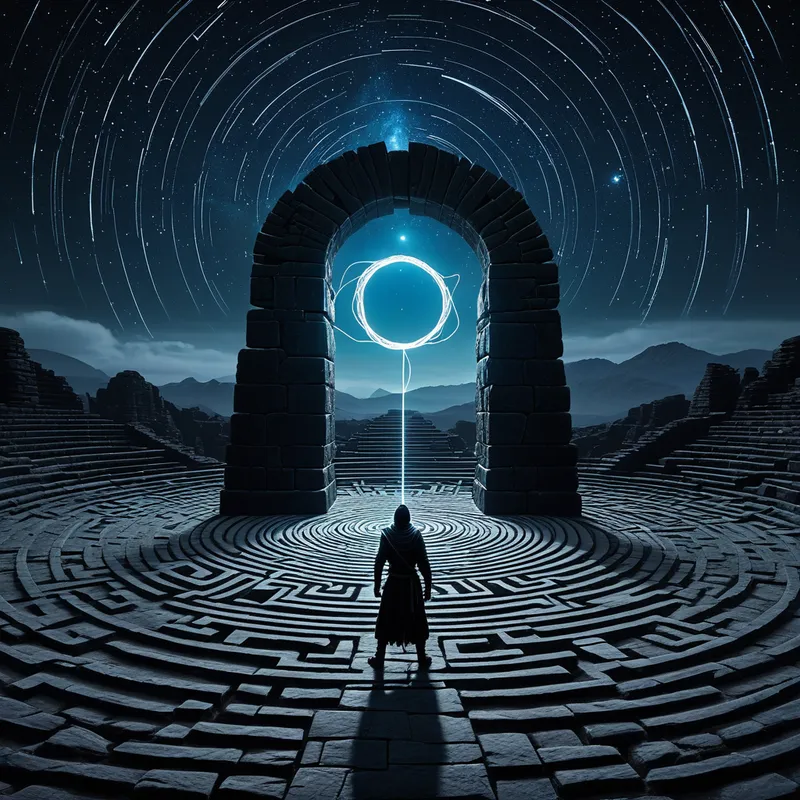
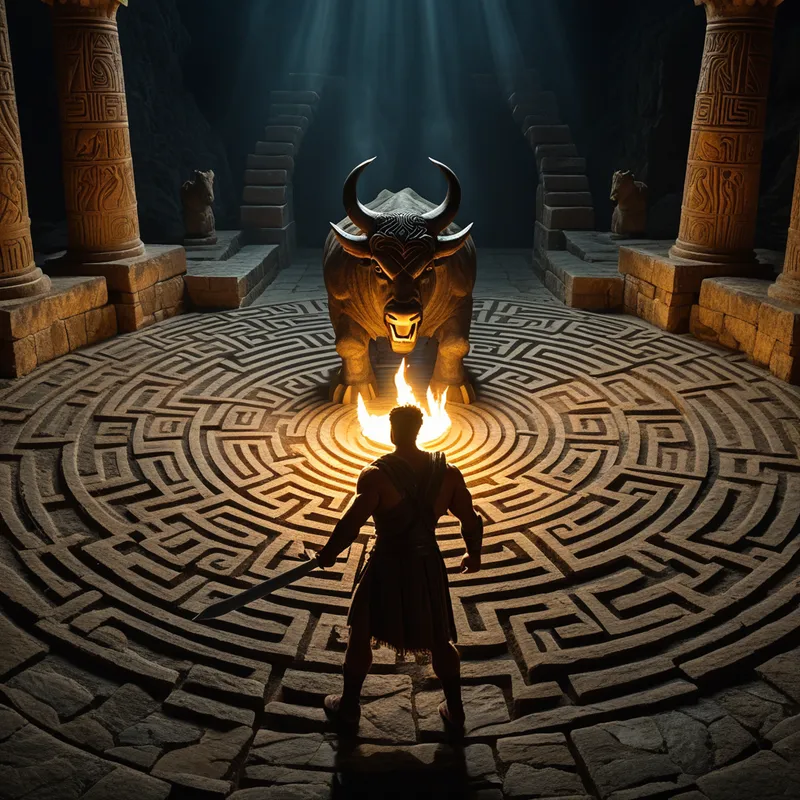
This theme is not about external validation, winning, or becoming a savior. It is the polar opposite of the ego’s desire for a medal. The dream of heroism is often mistaken for a wish-fulfillment of power, when in truth, it is a profound confrontation with powerlessness. It is not about slaying dragons out there, but about turning to face the dragon whose breath has been heating the walls of your internal castle for a lifetime. A dream of fleeing a monster is not a failure of heroism; it is its first, honest somatic spark. The false lead is believing the call is to be admired. The true call is to be altered.
Psychological Architecture
The architecture here is one of internal civil war. Using the language of Internal Family Systems, the psyche is not a monolithic hero, but a council. The "Manager" parts that maintain control, the "Firefighter" parts that numb and distract, and the exiled, wounded "Child" parts holding old pain—all are stakeholders in a fragile peace. The hero’s journey in dreams is the emergence of a Self-led energy, a consciousness capable of entering that council chamber not as a dictator, but as a compassionate, firm sovereign. It does not obliterate the exiles or silence the firefighters. Instead, it does the unthinkable: it approaches the very vulnerability the system was built to wall off. The shadow work is the deconstruction of the persona of the "capable one," the "strong one," to make contact with the raw, un-metabolized tremors of the one who never felt safe enough to fall apart. Individuation in this theme is the process of no longer identifying with any of the warring parts, but becoming the space in which their reintegration can occur.
Mythic Resonance
Consider the Sumerian goddess Inanna’s descent into the underworld. Her myth is not one of conquest, but of deliberate, ritualized dismantling. At each of the seven gates, she removes a piece of her regalia—her crown, her lapis beads, her royal robe—until she stands naked and dead before her shadow sister, Ereshkigal. This is the mythic blueprint of true heroism: the willingness to be stripped of every identity, every credential, every external symbol of power, to face the raw, chaotic core of being. The return, the resurrection, is possible only because she submitted to the full journey. Her heroism was in her surrender to the process of unbecoming. Our dreams of forgotten maps and urgent, solitary missions are echoes of this same non-negotiable descent into the personal kur, the underworld where our own Ereshkigal waits.
Symbolic Nodes
- Forgotten/Glitching Maps & Coordinates: The intuitive, often non-linear path to wholeness that the conscious mind cannot yet chart.
- Broken or Inadequate Tools: A recognition that old coping strategies (the sword, the shield, the clever plan) are insufficient for this internal quest.
- An Empty, Resonant Landscape (city, desert, ocean): The interior space of the Self, vast and awaiting engagement.
- A Frequency, Sound, or Light That Must Be Preserved: The essential, core vibration of your authentic being, threatened by fragmentation.
- A Weight of Silent Witnesses (sleeping citizens, an audience): The collective of your inner parts, or your lineage, depending on you to complete this cycle.
Archetypal Resonance
The energy at the core of this dream theme is The Hero Archetype in its most profound, pre-cultural form. Its resonance is not in the victory parade, but in the solitary vigil before the battle. The somatic echo—the tension, the alertness—is the Hero’s system mobilizing, gathering resources not for aggression, but for a sacred encounter. Its alchemical potential lies in its movement toward the threshold of disintegration. The ego’s hero wants to defeat the monster and return home unchanged. The archetypal Hero, as summoned in dreams, understands that the encounter will change them, that the dragon’s blood will scar their hands, and that this scarring is the mark of the transformation. The dream is the call to step out of the village of consensus reality and into the forest of the unknown psyche.
The Alchemical Process
The alchemy of heroism is the transmutation of fragmentation into sovereignty. The prima materia, the base substance, is the shattered state: your power dispersed among inner critics, people-pleasers, and wounded children. The heat and pressure—the nigredo—is applied the moment you stop projecting the battle outward and consent to feel the full, terrifying weight of the internal stalemate. It is the heat of shame when you admit your coping mechanisms are failing. It is the pressure of grief for the time lost managing a civil war. The albedo, the whitening, begins when you can witness these fragments without becoming them—when you can feel the fear of the exile without being drowned by it. The final rubedo, the reddening, is not a state of perfect, conflict-free unity. It is the embodied capacity to hold the entire fractured council within a conscious, compassionate awareness. Sovereignty is not the absence of inner conflict; it is the presence of a Self that can govern the conflict with integrity.
The Integration Protocol
Question 1: In the dream, what was the quality of the urgency? Was it a fear of punishment, a pull of destiny, or a deep, somatic knowing? Where do you feel that same quality in your waking life?
Question 2: If the glitching map or broken tool in the dream represents a current strategy for navigating your life, what is that strategy? How is it failing to get you to your true "coordinates"?
Question 3: Who or what are the "sleeping citizens" in your inner world? Which exiled or silenced parts of you are waiting for you to complete this journey so they, too, can be liberated?
Action 1 (Somatic Cartography): For one week, when you feel the "heroic tension"—the shoulder tightening, the jaw clenching—stop. Place a hand on the center of your chest. Breathe into that pressure and ask inwardly: "What are you protecting? What are you preparing for?" Do not seek an answer in words. Wait for an image, a memory, or a shift in the sensation. This grounds the epic in the cellular.
Action 2 (Weapon Forging): Engage in an unstructured creative act with the theme of "an inadequate tool." Draw, sculpt with clay, or write a fragment of a story about a character whose only tool for their great quest is something absurdly mundane or broken (e.g., a spoon, a torn umbrella, a voice with no language). The act externalizes the psyche's recognition that a new kind of power must be forged.
Action 3 (Threshold Ritual): Physically enact a micro-descent. At dusk, turn off all electronic devices and lights. Sit in the growing darkness for 20 minutes with a single candle. As the outer light vanishes, feel the internal landscape the dream showed you—the empty city, the vast desert. When you light the candle, do not do it to banish the dark, but to see its contours. This ritualizes the heroic act of turning toward, not away from, the interior unknown.
Final Validation
The journey is never what you imagined. The armor will chafe, the map will blur, and you will question the summons itself in the deepest watches of the night. This doubt is not a sign you are failing; it is proof you are in the authentic terrain, far from the shores of fantasy. The dream does not call you because you are already a hero. It calls you because there is a sovereignty within you—a capacity to hold the impossible contradictions of your being—that is ready to be claimed. The integration is not a destination, but the gradual, fearless inhabiting of the question your dream first posed in the language of myth: What are you willing to be unmade for, in order to become truly whole?