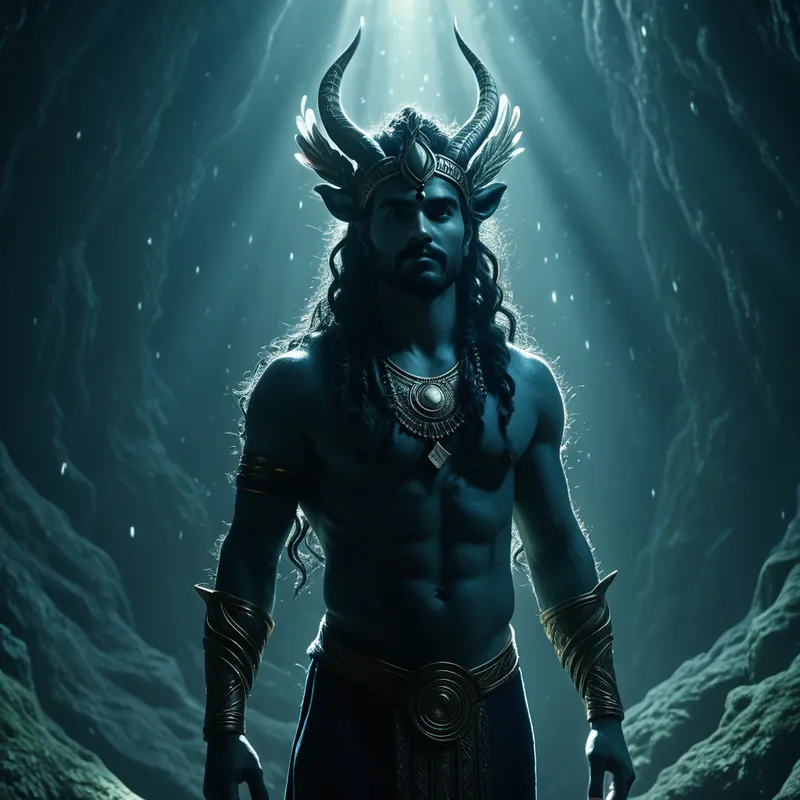
The Three Worlds of the Amazon
Amazonian cosmology envisions reality as three distinct yet interconnected worlds, each with unique inhabitants and spiritual significance.
The Tale of The Three Worlds of the Amazon
In the beginning, there was the Great Breath, and from its rhythm, reality was woven into three distinct yet inseparable threads. This is the world as known to the peoples of the rainforest, a living cosmology sung into being by shamans beneath the ceaseless green canopy.
First, there is Hanan Pacha, the World Above. This is not a distant heaven but a luminous layer of existence that presses against the top of the sky. Here, the great celestial beings reside: the Sun Father, who is the source of all generative power and order; the Moon Mother, who governs the waters, fertility, and the cyclical nature of time; and the Star People, who are the ancestral spirits watching with silent, knowing light. The air is crystalline, and thoughts travel as swift as hummingbirds. It is a realm of pure potential, of archetypal forms before they descend into the density of life. To journey here, one must ascend via the world tree, the towering Ceiba, whose roots are deep in the earth and whose crown pierces the celestial vault.
Then, there is Kay Pacha, the World of the Here and Now. This is our world, the vibrant, palpable, and perilous middle realm. It is the vast emerald body of the rainforest itself—a tapestry of endless green, tangled vines, murmuring rivers, and teeming life. Here, humans, animals, and plants live in a constant state of exchange and negotiation. But this world is not solely material. It is saturated with spirit. Every waterfall has a voice; every ancient tree holds memory; every jaguar may be a shaman in transformed guise. Kay Pacha is the great meeting place, the membrane where the influences of the World Above and the World Below seep through, requiring constant ritual attention to maintain balance. It is beautiful, abundant, and fiercely demanding.
Finally, there is Uku Pacha, the Inner World or World Below. This is not a hell of punishment, but a subterranean realm of potent, raw forces. It is the domain of earth, of roots, of decay that feeds new growth, and of the ancestors who are not among the stars but are woven into the soil. Here reside the powerful, often ambivalent, spirits of the land and the waters—the anaconda lords of the rivers and the ancient tapir spirits of the forest floor. It is a place of darkness that is not evil, but profoundly fertile, the womb from which life emerges and to which it returns. Its gates are caves, deep whirlpools in rivers, and the hollows of great trees. To enter Uku Pacha is to confront the source of both nourishment and terror, the psychic substrate of all that grows.
These three worlds are not stacked like inert layers. They are in constant, dynamic conversation. The shaman, the payé or curandero, is the traveler who navigates this vertical cosmos. In a trance induced by the sacred brew ayahuasca—the "vine of the soul"—their consciousness climbs the Ceiba to seek wisdom from Hanan Pacha or descends into Uku Pacha to retrieve a stolen soul or diagnose a spiritual illness. The health of an individual, a community, and the entire forest depends on this delicate equilibrium between the luminous order above, the manifest life in the middle, and the chthonic power below.
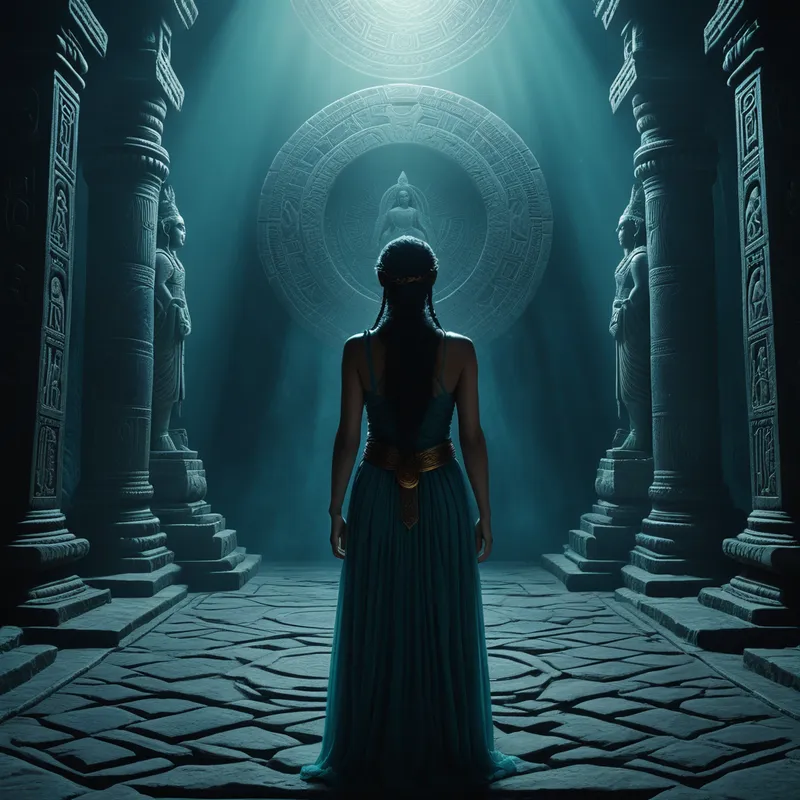
Cultural Origins & Context
This tripartite cosmology is not a unified dogma but a profound pattern emerging from countless indigenous nations across the Amazon Basin—from the Quechua-speaking peoples in the west to the Tupi-Guarani in the east, and the myriad cultures of the Arawak, Pano, and Tukano families. It is a lived geography of the spirit, born from millennia of intimate dialogue with the world's greatest rainforest.
The model arises from direct, phenomenological experience. The forest itself teaches verticality: the dark, rich soil (Uku Pacha); the bustling, sun-dappled middle canopy (Kay Pacha); and the bright, open sky above the emergent trees (Hanan Pacha). The daily and seasonal cycles reinforce this: the sun and moon traverse Hanan Pacha, governing the life (Kay Pacha) that depends on them, while the rains that nourish that life are born from the rivers and vapors connected to Uku Pacha.
Furthermore, this cosmology is fundamentally relational and ecological. It does not posit a human-centric universe. Instead, humans are one node in a vast network of persons—animal-persons, plant-persons, river-persons, and spirit-persons—all inhabiting these interpenetrating worlds. A disease might be caused by a spirit from Uku Pacha, a curse sent from a rival in Kay Pacha, or a consequence of offending a celestial rule from Hanan Pacha. Healing, therefore, requires diagnostic travel across all three realms. This worldview is the ultimate expression of a fully animated universe, where spirituality is not separate from ecology but is its very language.
Symbolic Architecture
The architecture of the Three Worlds is a map of the psyche as much as it is of the cosmos. It represents the full spectrum of consciousness, from the supernal to the subliminal.
Hanan Pacha symbolizes the realm of ideals, order, consciousness, and the Father principle. It is the domain of light, clarity, and transcendent law. Psychologically, it corresponds to the superego and the higher aspirations of the Self—the guiding principles and archetypal blueprints that shape our lives from above.
Kay Pacha is the realm of the ego, of everyday consciousness and the complex dance of relationships. It is the field of manifestation, where potential takes form, conflict occurs, and life is lived in its tangible, messy beauty. It is the "middle earth" of the psyche, perpetually acted upon by forces from above and below.
Uku Pacha is the unconscious—the dark, fertile ground of the psyche. It holds repressed memories, instinctual drives, creative potentials, and the shadow. It is the realm of the Mother in her transformative, devouring aspect. It is not to be rejected, for it is the source of vitality and renewal, but it must be approached with respect and skill.
The shaman’s journey is the ego’s (Kay Pacha) deliberate voyage into the unconscious (Uku Pacha) to retrieve healing knowledge, guided by the transcendent principles of the Self (Hanan Pacha). It is individuation enacted as cosmic geography.
The Ceiba tree is the central symbol of this psychic structure. It is the spine of the cosmos and the individual—the connecting channel (the sushumna in yogic terms) that allows for the vertical integration of these three levels of being. To be unmoored from this axis is to suffer spiritual dislocation, a sickness of disconnection.
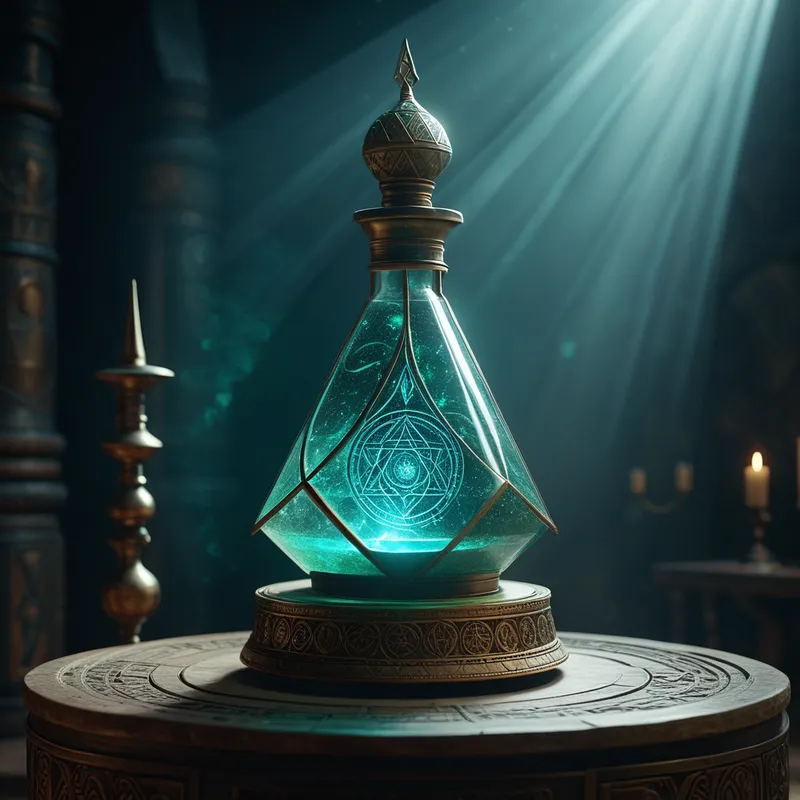
The Dreamer's Resonance
For the modern dreamer, the Three Worlds offer a profound template for understanding inner experience. A dream of soaring flight, meeting luminous figures, or receiving clear mandates may be an encounter with Hanan Pacha—the superconscious imparting guidance. The intricate dramas of our daily lives, our relationships, and our struggles play out in the theater of Kay Pacha. And the chthonic realm of Uku Pacha manifests in dreams of caves, cellars, murky waters, terrifying or fertile encounters with beasts, and visits from the dead—the psyche working through its foundational, often hidden, material.
This cosmology teaches that wholeness is not found by living solely in the bright light of consciousness (Hanan Pacha) nor by being swallowed by unconscious impulses (Uku Pacha). Health is dynamic balance, a constant circulation of energy and meaning between all three. The feeling of being "ungrounded" is a disconnection from Uku Pacha; a sense of meaninglessness, a severed link to Hanan Pacha; and social or personal chaos, an imbalance in Kay Pacha itself.
The myth insists that we are not flatlanders. We are vertical beings, with roots in the dark earth of our instincts and history, a trunk in the present reality of our bodies and relationships, and branches reaching for a sky of meaning and spirit. To ignore any dimension is to live a partial life.
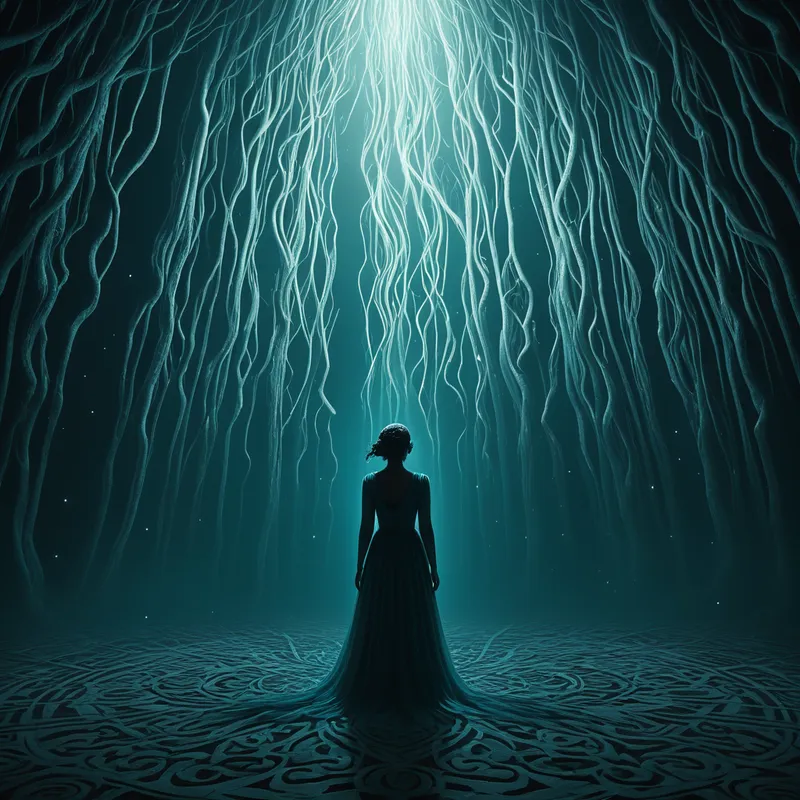
Alchemical Translation
In the alchemical process of soul-making, the Three Worlds map directly onto the stages of transformation. The initial, unconscious state (massa confusa) is the dominion of Uku Pacha—the primal, undifferentiated matter of the psyche. The labor of separatio and coniunctio occurs in Kay Pacha, the crucible of conscious work where opposites are engaged and reconciled.
The ultimate goal, the lapis philosophorum or Philosopher’s Stone, represents the fully integrated being who has successfully brought the luminous gold of Hanan Pacha into permanent marriage with the fertile black earth of Uku Pacha, with the conscious self (Kay Pacha) as the stable vessel for this union.
The shamanic journey is the alchemical opus in narrative form. The descent into Uku Pacha is the nigredo, the blackening, the confrontation with the shadow and primal matter. The ascent to Hanan Pacha is the albedo, the whitening, the illumination and washing by celestial dew. The return to Kay Pacha, healed and with new wisdom, is the rubedo, the reddening, the embodiment of the integrated spirit in the flesh of the world. The psychoactive brew, ayahuasca, is the literal and symbolic solvent that dissolves the ego’s rigid boundaries, allowing this sacred circulation to occur.
This is not escapism. It is the deepest form of realism—an engagement with the full architecture of existence. The cosmology provides a container so vast that even the most terrifying contents of the psyche (Uku Pacha) and the most awe-inspiring revelations of spirit (Hanan Pacha) can be held, navigated, and integrated into the business of living (Kay Pacha).
Associated Symbols
Explore related symbols from the CaleaDream lexicon:
- Tree — The cosmic axis, the Ceiba, connecting the underworld, earth, and sky; a symbol of vertical growth and psychic integration.
- River — The flowing boundary between worlds, often a pathway to Uku Pacha; a symbol of life, journey, and the unconscious current.
- Serpent — The primal inhabitant of Uku Pacha, representing transformative power, healing, and the chthonic wisdom of the earth.
- Sun — The sovereign of Hanan Pacha, embodying consciousness, order, generative father-energy, and the illuminating principle.
- Moon — The mistress of Hanan Pacha, governing cycles, water, intuition, and the reflective, feminine aspect of the celestial realm.
- Cave — The entrance to Uku Pacha, a symbol of the womb of the earth, the unconscious mind, and the site of initiatory descent.
- Bridge — The shaman’s function and the ayahuasca vision itself, facilitating passage and communication between the separate yet interconnected worlds.
- Shadow — The inherent content of Uku Pacha, the repressed, instinctual, and fertile aspects of self that must be integrated for wholeness.
- Dream — The natural state in which the soul travels between the worlds, a common ground where their influences mix and communicate.
- Circle — The wholeness of the threefold cosmos, the cyclic journey of descent and return, and the eternal exchange between the realms.
- Journey — The fundamental movement within this cosmology, the shaman’s quest for knowledge and healing across the vertical landscape of reality.