The Alchemical Inheritance: Dreaming Your Ancestry
The Somatic Echo
It begins not as a thought, but as a gravity. A weight in the marrow, a specific density in the breath. It is the feeling of a language spoken just below the threshold of hearing, a syntax of grief and resilience encoded in the tension of your shoulders, the quickness of your startle, the particular way you hold joy at bay. This is the somatic echo—the body’s living archive. Before you dream of faces, names, or homelands, you feel the architecture of lineage: a foundation of stone, a wall of silence, a room full of unspoken weather. It is the ghost in the nervous system, a resonance that hums, “This pain is not yours alone. This strength is not yours to invent.” The work begins here, in the visceral recognition that you are not a solitary self, but a conversation.
The Dreamer's Log
I am standing on a floor of polished obsidian that reflects a starless sky. In the center of the vast, empty room rests a single, cracked porcelain teacup on a stone pedestal. As I approach, I see the cracks are held together by filaments of golden light, humming softly. I know, without knowing how, that if I pick it up, it will either mend completely or shatter into dust.
Alchemical Interpretation: The dream presents the fragile vessel of inherited story—beautiful, broken, and artificially sustained—demanding a conscious, embodied choice to either transmute its form or let its pattern dissolve.

The False Lead
This theme is not a call to genealogical research, nor is it a passive inheritance of “family curses” or predestined fate. To mistake the dream of ancestry for a fixed blueprint is to confuse the map with the territory. It is not about blaming the past for the present, nor is it about claiming glory from bloodlines you did not earn. The false lead is literalization—the belief that the dream is directing you to a specific person, place, or historical fact. The true territory is the structure of your interior world: the unconscious loyalties, the adopted burdens, the exiled talents that flow through you like underground rivers. The dream is not about them; it is about the part of you that is still them.
Psychological Architecture
To work with ancestral dreams is to engage in a profound archaeology of the Self. You are not digging for bones, but for the living software of relationship, survival, and love. This is Shadow work of a collective dimension. You encounter the orphaned grief your grandmother could not weep, the rebel’s fury your grandfather had to swallow, the lover’s passion that was forbidden three generations back. These are not memories, but psychic structures—internal family systems that operate autonomously within you. Individuation here is the courageous act of differentiation: to feel the echo fully, to honor its origin, and then to consciously ask, “Does this structure still serve the life I am building?” It is the process of updating an inherited operating system, not by deleting the old code, but by understanding its source logic and writing new, more conscious subroutines. The foundation of your psyche was laid by hands you never met; sovereignty is earned by becoming the architect of its next story.
Mythic Resonance
Consider the Greek myth of Psyche. Her impossible tasks—sorting a mountain of seeds, gathering golden fleece from sun-rampant sheep, fetching black water from the river Styx—were not solved by her own power alone. Aid came from the overlooked and the marginalized: ants, a reed, a tower. This is the mythic truth of ancestry: the resources you need are often hidden in the overlooked, “insignificant” fragments of your lineage, in the quiet strengths and adaptive wisdoms of those who survived not by glory, but by subtlety. Your inheritance is not only the grand narrative, but the humble, resilient ant. Similarly, the Norse world tree, Yggdrasil, binds all realms—the divine, the human, the ancestral, the primordial. To dream of ancestry is to feel your specific branch vibrate with the storms shaking the roots and the winds stirring the highest leaves. You are a nexus in a living system of time.
Symbolic Nodes
- Roots, Trees, & Mycelial Networks: The structure of connection, often revealing either nourishing support or constricting entanglement.
- Old Houses, Attics, Basements: The architecture of the inherited psyche; rooms represent patterns, basements hold repressed material, attics store forgotten potential.
- Heirlooms, Photographs, Broken Vessels: Objects charged with transgenerational emotion—carriers of love, loss, expectation, or trauma.
- Unfamiliar Landscapes that Feel Like Home: Somatic memories of place embedded in the cellular fabric.
- Flooded Rooms, Buried Doors, Hidden Staircases: The pressure of unresolved history seeking emergence or the discovery of blocked passageways to parts of the self.
- Meeting Figures of Indistinct Age/Gender: Direct representations of ancestral energy, often embodying a specific quality (a judging presence, a comforting warmth, a guiding hand).
Archetypal Resonance
The Magician Archetype is the core energy activated in the alchemy of ancestry. The somatic echo is the raw, unformed potential of inherited memory—the prima materia of lineage. The Magician’s task is not to accept this material as fate, but to become the conscious vessel for its transmutation. This archetype understands that the laws of the inner world can be changed, that the past is not a prison but a library of codes waiting to be reinterpreted. The Shadow Magician, however, operates here as the manipulator or illusionist, who either uses ancestral narratives as a weapon for blame and victimhood or spins glamorous fictions to avoid the gritty, grieving work of real transformation. The true Magician’s work is to take the lead of inherited trauma and the base metals of old loyalties and, under the intense heat of conscious attention, turn them into the gold of authentic, self-authored sovereignty.
The Alchemical Process
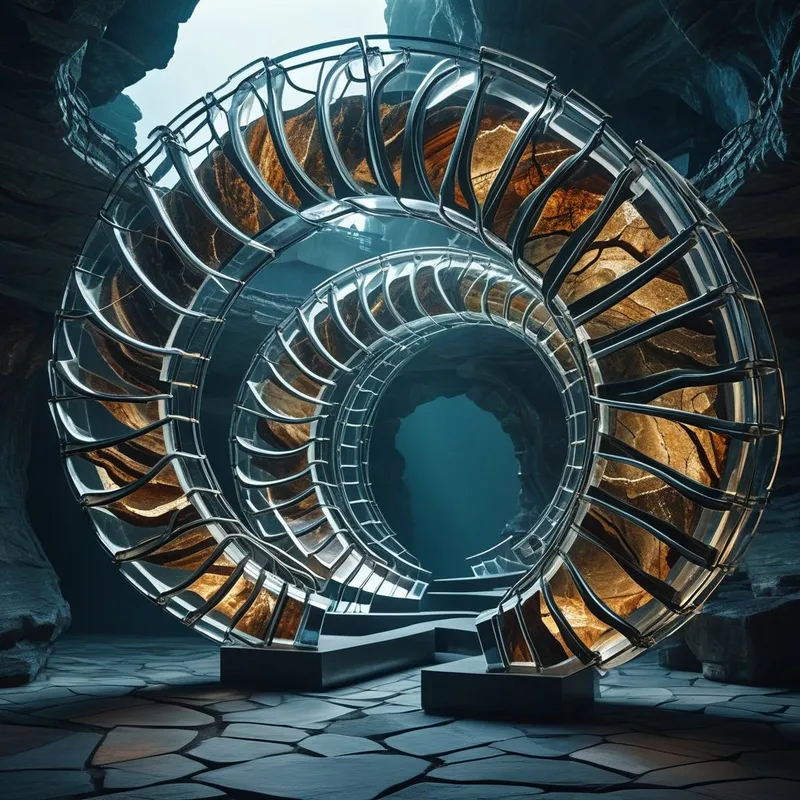
The transmutation of ancestry is an operation of solutio and coagulatio—dissolution and re-coagulation. The intense psychological heat, the nigredo, is found in the willingness to fully feel the inherited grief, terror, or rage without identifying with it as your personal biography. You let the old, rigid forms of “this is just how we are” dissolve in the waters of your own compassionate awareness. This is the pressure: to hold the contradiction of profound gratitude for the lineage that gave you life, and the simultaneous, necessary rebellion against its limitations. You are not destroying your ancestors; you are completing their unfinished sentences in a new language. The albedo, the whitening, appears when you separate the essential wisdom from the historical wound. The final rubedo is the coagulation of a new substance: a self that honors the echo but is conducted by your own conscious voice. You become the ancestor of your future.
The Integration Protocol
Question 1: When you feel the “gravity” of this theme in your body, what specific emotion is present? Is it a weight of sorrow, a buzz of anxiety, a solidity of strength? Trace its shape without a story.
Question 2: What one quality (e.g., resilience, caution, artistry, silence) do you suspect you inherited that has been a double-edged sword—both a survival tool and a limitation?
Question 3: If you could place one unresolved story from your lineage into a sacred vessel and offer it a ritual of completion, what would that ceremony look and feel like?
Action 1 (Somatic Mapping): For one week, keep a log not of dreams, but of bodily sensations that arise during quiet moments. Note the location, texture, and emotional tone. Do not analyze, just map. You are charting the geography of the echo.
Action 2 (Unstructured Writing): Set a timer for 10 minutes. Begin writing with the prompt: “The voice I inherited says…” Do not lift the pen or censor the flow. Let it move from the critical voice to the nurturing one, from fear to longing. This is not fact, it is psyche.
Action 3 (Elemental Ritual): Find a natural body of water—a stream, the sea, even a bowl of water. Speak aloud a single sentence that names an inherited burden you are ready to release. Let the sentence be simple: “I release the contract of constant worry.” Then, with reverence, place a stone (representing the density of the pattern) into the water, symbolizing its return to the flow of time, transmuted.
Final Validation
This work is not linear, and it is not easy. To feel the centuries in your bones is a lonely gravity. To sift through the ashes and jewels of lineage requires a courage that often goes unseen. Honor the fatigue, the confusion, the moments of profound grief for ghosts you never knew. You are doing the work of generations. And in this sacred labor, you are performing the ultimate act of love for both your past and your future: you are breaking the chain not of connection, but of unconscious repetition. You are not erasing your ancestors; you are finally, truly listening to them, and in your conscious breath, you are giving them the answer they waited for. You are building a bridge in the dark, and the material is your own awakened life.