The Art of Bonsai Myth Meaning & Symbolism
A tale of a kami who learns to sculpt not just a tree, but time and spirit, revealing the universe within a single, living vessel.
The Tale of The Art of Bonsai
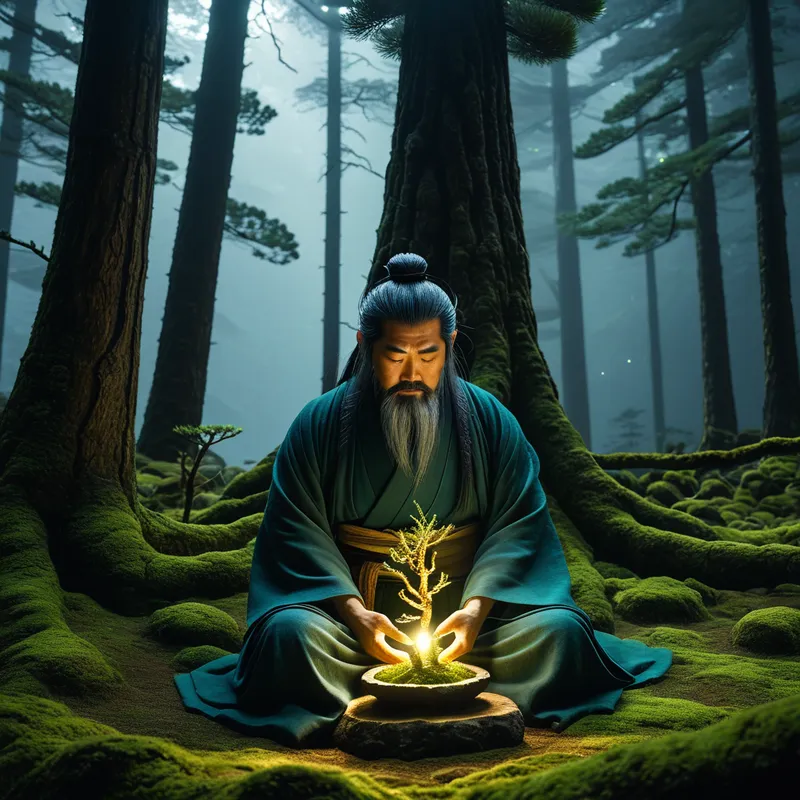
In the age when the mountains were young and the rivers first learned their songs, there lived a kami named Kikimimi. He was a spirit of the deep forest, a tender of the great and ancient trees whose crowns brushed the belly of the sky. Kikimimi loved the wild, untamed growth, the furious green rush of life that climbed toward the sun without thought or pause. Yet, in his heart, a quiet discord hummed. He saw the chaos in the rampant growth, the beautiful but formless struggle of branch against branch, root over root.
One evening, as he walked the sacred slopes of Mount Takachiho, he came upon a sight that stilled his breath. A great, ancient pine had been struck by a bolt of Raijin's fury. Its vast trunk was shattered, its heartwood exposed to the wind. But from a single, surviving scrap of bark and root, a new shoot had emerged. Not reaching wildly for the heavens, but growing slowly, deliberately, in a graceful, windswept curve that told the entire story of the storm, the survival, and the mountain's enduring patience. In that miniature landscape of resilience, Kikimimi saw a universe contained.
A longing seized him, a divine discontent. He went to the eldest kami, Izanami-no-Mikoto, who slumbered in the stone. "Great Mother," he whispered into the earth, "I wish not to create life, but to listen to it. I wish not to command growth, but to converse with it. How can I hold the essence of a thousand-year cedar in the space between my palms?"
Izanami did not speak with words, but with a feeling that rose from the soil—a lesson of profound constraint. Kikimimi understood. He took a seed from the great pine, not planting it in the open field, but within a small, shallow vessel of fired clay. He placed it where it would receive sun, but not too much; rain, but never a flood. He began the long, silent vigil.
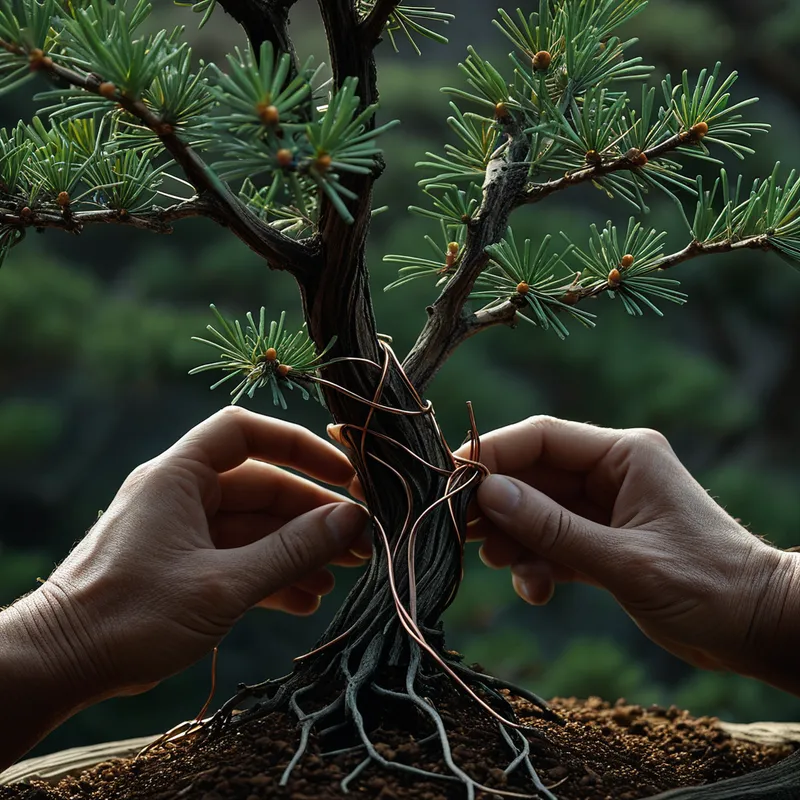
Years passed like breaths. The seedling grew, and Kikimimi learned its language. When a branch reached out with greedy haste, he did not break it, but gently guided it with a whisper-thin wire, a suggestion of a better path. When roots threatened to choke themselves in their search for space, he carefully lifted the tree, trimming only what was necessary to ensure the whole could thrive within its chosen world. He pruned not with the anger of a conqueror, but with the precision of a poet removing a superfluous word. Each cut was a question: "Is this you? Is this true?"
Decades turned. The tree in the pot was no longer a pine as the forest knew it. It was the idea of a pine, the memory of the storm-swept cliff, the spirit of endurance given form. It contained the vastness of the mountain in the curve of its trunk, the endless wind in the slant of its branches. Kikimimi, the wild forest kami, had become the first bonsaika. He had learned that true power lies not in boundless freedom, but in finding infinity within deliberate, loving boundaries. The art was born not of making, but of listening; not of building, but of unveiling.
Cultural Origins & Context
The practice that would become bonsai entered Japan from China over a millennium ago, arriving with Buddhist monks and scholars. Initially a pursuit of the elite, associated with penjing and the display of rare specimens, it was gradually transformed by the Japanese sensibility. It was woven into the fabric of Shinto, which sees kami in all natural phenomena, and refined by the aesthetics of Zen, with its focus on simplicity, asymmetry, and the profound beauty of the imperfect and transient (mono no aware).
The "myth" of bonsai is not a single, codified story like those of the Kojiki, but a living, cultural narrative passed down through practice. It is told in the silent teaching of master to apprentice, in the careful demonstration of a wiring technique, and in the shared contemplation of a finished tree. Its societal function was multifaceted: as a meditation for the samurai class, a connection to nature for urban dwellers, and a physical manifestation of philosophical concepts like wabi and sabi. The bonsai itself became the mythic object, a vessel containing a story of time, struggle, and harmonious collaboration between human will and natural essence.
Symbolic Architecture
At its core, the myth of bonsai is a profound dialogue between opposing forces: wildness and order, freedom and constraint, the cosmic and the miniature. The tree is the symbol of the untamed soul, the raw, burgeoning potential of life with all its chaotic beauty and unchecked desires. The pot represents the necessary limitations of existence—the body, society, time, and consciousness itself. The artist, or kami in our tale, symbolizes the observing ego, the aspect of the self that seeks meaning, pattern, and beauty within the given constraints.
The bonsai is not a tree stunted, but a universe focused. The pot is not a prison, but the crucible where form meets infinity.
The wire is a key symbol of gentle, guiding consciousness—a temporary, non-coercive influence that shapes without breaking. The act of pruning is perhaps the most potent symbol: it represents the difficult, necessary sacrifices of individuation. We must cut away the parts of ourselves that, while alive and growing, do not serve the integrity and beauty of the whole being. This is not violence, but compassionate discernment. The goal is fukinsei, a dynamic balance that mimics nature's own order, revealing the essential spirit (kokoro) of the tree—and by reflection, of the self.
The Dreamer's Resonance
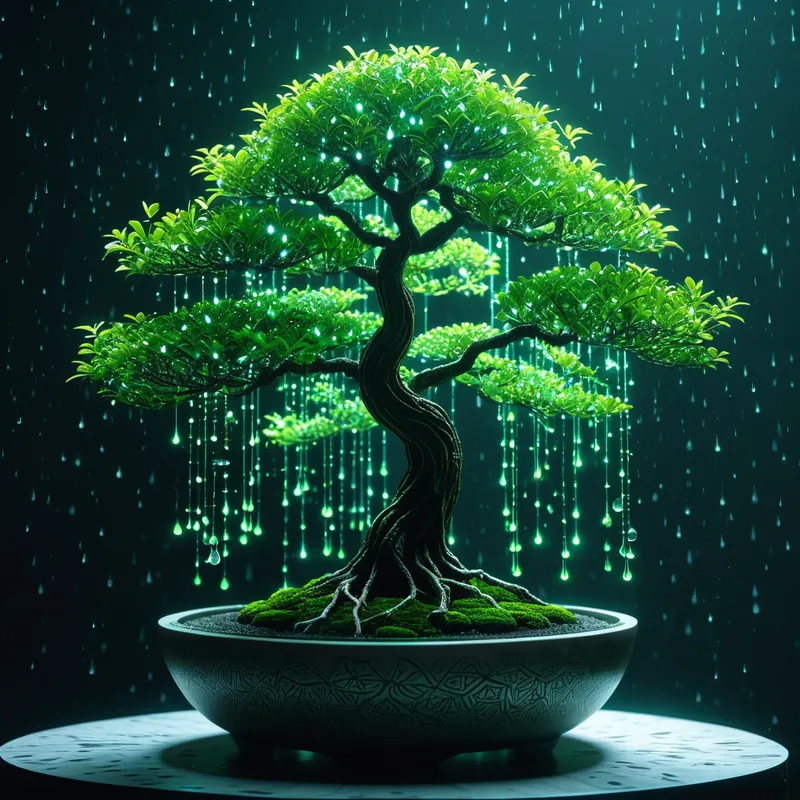
When the archetype of the bonsai manifests in modern dreams, it often appears during periods of life review, consolidation, or deliberate self-cultivation. To dream of carefully pruning a miniature tree suggests the dreamer is engaged in an internal process of editing their own life—assessing habits, relationships, or ambitions, and consciously choosing which to nurture and which to release for the health of the whole psyche. It is a dream of agency within limitation.
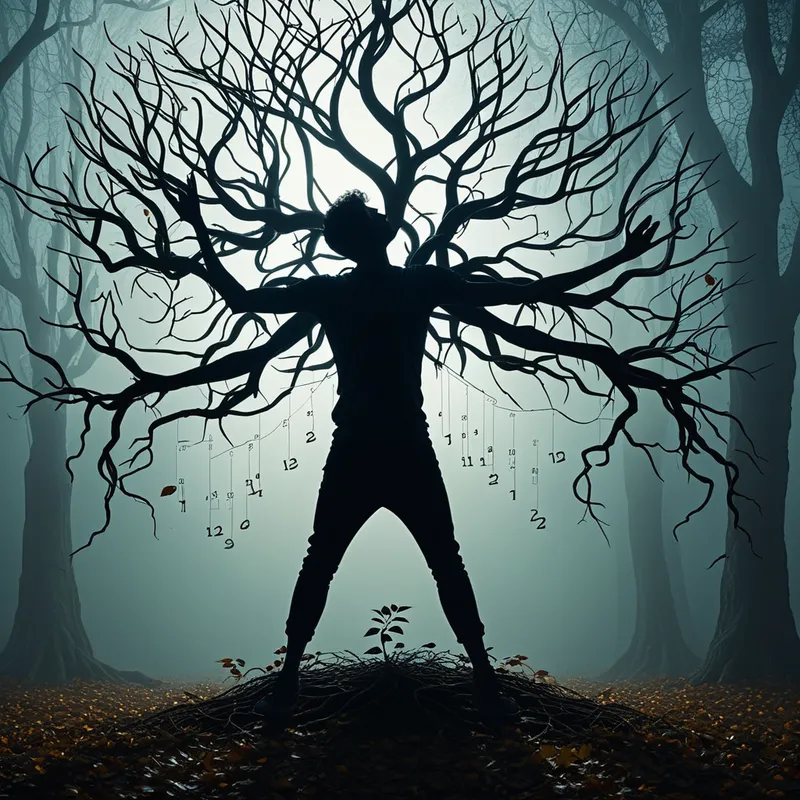
Dreaming of being the bonsai tree, feeling wires or the snip of shears, can indicate a somatic experience of external pressures or self-imposed disciplines. The dreamer may feel "potted," constrained by life circumstances, but the mythic context suggests this constraint is not merely punitive; it is the very condition that makes profound, focused growth possible. The dream invites the dreamer to examine: are these shaping forces applied with the respectful, listening attention of Kikimimi, or with the harsh, ego-driven hand of a tyrant? The emotional tone—whether of peaceful collaboration or anxious coercion—holds the key.
Alchemical Translation
The alchemical process modeled by the bonsai myth is the transmutation of the prima materia of one's raw, natural being into the lapis philosophorum—the philosophical stone of an integrated Self. The initial stage is nigredo, the blackening: recognizing the chaotic, overgrown, or shattered state of one's inner landscape (the storm-shattered pine). The choice of the pot is albedo, the whitening: the conscious acceptance of one's limits (the vessel of clay). This is not a defeat, but the creation of a sacred container for the work.
The decades of wiring, watering, and pruning are the long, patient work of citrinitas, the yellowing: the slow, often repetitive application of consciousness to habit, thought, and emotion. Each act of mindful attention, each gentle redirection of a compulsive impulse (the greedy branch), each sacrifice of a pleasing but ultimately distracting trait (the superfluous leaf), is an alchemical operation.
The goal of this psychic horticulture is not a perfect, static specimen, but a living testament to the collaboration between nature and nurture, the unconscious and the conscious, fate and choice.
The final stage, rubedo, the reddening, is the achievement of the tree in its full, expressive beauty. It is the individuated Self—not a wild, untamed force, nor a rigid, artificial sculpture, but a unique essence that has realized its most true and harmonious form within the conditions of a single, mortal life. The tree is complete, yet forever alive and changing. The art of bonsai, therefore, becomes a lifelong practice of soul-making, where the gardener and the garden are one, engaged in the endless, sacred conversation of becoming.
Associated Symbols
Explore related symbols from the CaleaDream lexicon: