Superman Myth Meaning & Symbolism
A child of two worlds, raised in obscurity, must choose between his hidden divinity and his adopted humanity, bearing the weight of both.
The Tale of Superman
Listen, then, to the tale of the last son of a dying star.
In the final hours of a world called Krypton, a scientist of noble house, Jor-El, saw the coming cataclysm in the shuddering of the planet’s core. The council of elders, proud and blind, dismissed his warnings as madness. With the very ground cracking beneath his feet and the sky burning crimson, he and his wife Lara made a desperate covenant with hope. Into a small vessel, they placed their only infant son, Kal-El. They kissed his brow, their tears evaporating in the heat of the atmosphere, and launched him into the cold, silent river of space, a seed cast from a burning tree toward a distant, blue world.
The vessel fell like a silent star into the heart of a place called Kansas. The impact was not of destruction, but of soft earth and shattered cornstalks. He was found by Jonathan and Martha Kent, souls of simple virtue and profound strength, who heard not a crash, but a cry. They took the strange child from the metal womb, wrapped him in a homespun blanket, and named him Clark. Under the yellow sun of this new world, the boy did not merely grow; he blossomed. His bones were unbreakable, his muscles could lift tractors from the mud, and his eyes could see through mountains. Yet, his parents taught him the greater power: to hide his light, to feel the fragility of others, to know that true strength is measured in restraint.
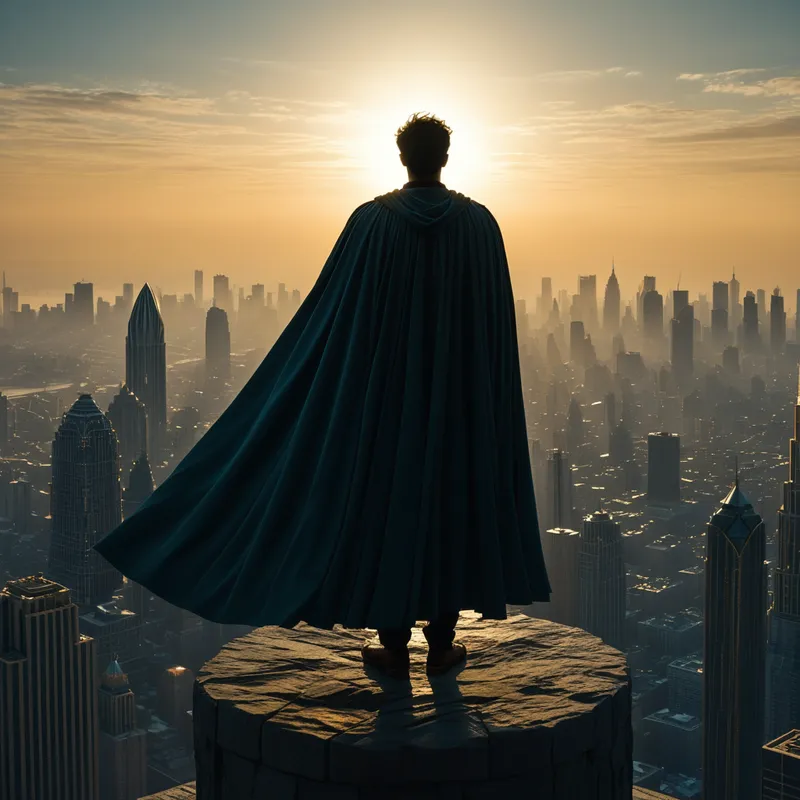
Years passed. The boy became a man, moving to the great, teeming city of Metropolis. He walked among the crowds, a gentle giant in a suit and glasses, listening to the world’s pain with senses that spanned continents. He heard the cry of a falling plane, the groan of a collapsing bridge, the whispered plot in a darkened alley. And the man, Clark Kent, would step into a phone booth or a storage closet, and shed his civilian skin. From it emerged the figure in blue and red, the S-Shield blazing on his chest—not an ‘S’, but the symbol of hope from a dead world. He would take to the sky, a streak of primary color against the steel and glass, to catch the falling, to mend the broken, to stand between humanity and the abyss.
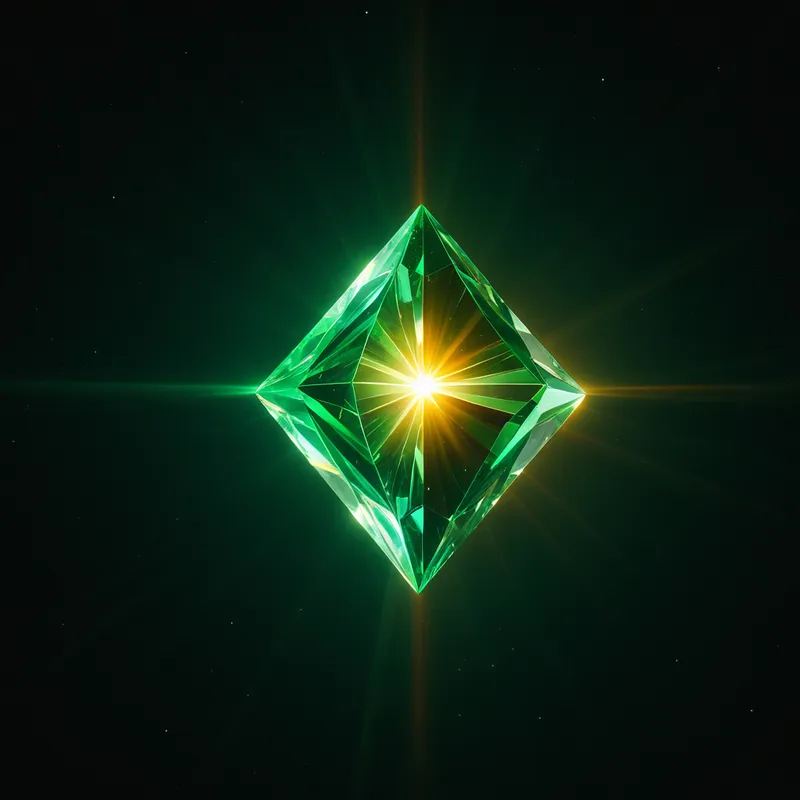
His enemies were reflections of his own paradox: the mad genius Lex Luthor, who hated the “alien” for making humanity feel small; the beast Doomsday, a pure force of annihilation from his dead home; and the green stone, the Kryptonite, a piece of his own world that could poison him. His greatest battle was never with them, but within the silent chamber of his own heart. To love a human woman, Lois Lane, was to hold a bird in his hands, terrified of crushing it with a sigh. To be a god who chose to be a man, every single day. The myth does not end, for it is a cycle: the fall from heaven, the humble upbringing, the revelation of power, the eternal sacrifice. He is always there, in the space between the sun and the street, bearing the weight of both.
Cultural Origins & Context
This myth was not carved on temple walls but printed on cheap, four-color pulp paper in 1938, born from the minds of two young Jewish immigrants, Jerry Siegel and Joe Shuster. It emerged from the crucible of the Great Depression and the gathering storm of World War II—a time of profound anxiety, displacement, and a desperate need for a savior who was not of the corrupt old world. Passed down not by bards but by newsstand vendors, comic book racks, and later, radio serials, television shows, and cinematic spectacles, it became the foundational narrative of the American superhero genre.
Its societal function was multifaceted. For a generation of children, especially the children of immigrants, it was a powerful allegory of assimilation and dual identity: the extraordinary secret self hidden within the ordinary exterior. For a nation facing global tyranny, it provided an idealized image of power wedded to altruism, a “champion of the oppressed” who fought for “truth, justice, and the American way.” As the decades turned, the myth evolved, becoming more introspective, questioning its own iconography, grappling with the psychological toll of such power and the moral ambiguity of its application, mirroring the complex anxieties of the Cold War and the postmodern era.
Symbolic Architecture
At its core, the Superman myth is the archetype of the Hidden God, the orphaned king who does not know his own lineage until his power manifests. Psychologically, he represents the immense potential of the Self—the total, integrated psyche—that lies dormant within the conscious personality (Clark Kent). His Kryptonian origin symbolizes the transpersonal, the “numinous” or divine spark that feels alien to the mundane ego.
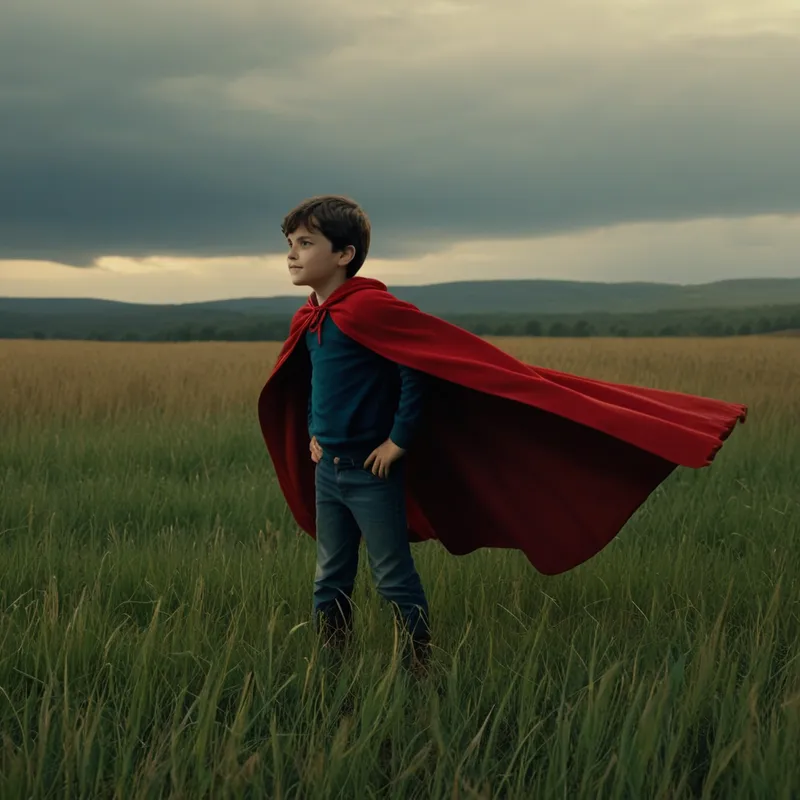
The cape is not for flight; it is the visible burden of a destiny one did not choose.
The dual identity is the central symbolic conflict. Clark Kent is the persona—the mask worn for society, clumsy, bespectacled, safe. Superman is the eruption of the authentic, powerful Self into the world, but one that cannot be sustained constantly without destroying the possibility of human connection. The Kryptonite is a profound symbol of the shadow—the toxic, disowned parts of one’s own history (his dead planet) that can paralyze the emerging Self. The yellow sun is the energizing, life-giving force of consciousness itself, while the doomed red sun of Krypton represents the unconscious, instinctual matrix from which consciousness must differentiate.
The Dreamer's Resonance
When this mythic pattern stirs in the modern dreamer, it often signals a crisis or emergence of personal power. To dream of discovering incredible strength or the ability to fly may point to an awakening of untapped potential or a desire to transcend limiting circumstances. Conversely, dreaming of being weakened by a green, glowing stone may reflect a somatic experience of being poisoned by a past trauma, a secret, or a deeply ingrained self-doubt that sabotages one’s strength.
Dreams of a crashing spaceship or being an alien observer among humans touch the core wound of the myth: the feeling of profound otherness, of carrying a secret self that feels too large, too different, or too dangerous to reveal. The dreamer may be processing the somatic tension between the urge to fully express their capabilities (to be Superman) and the deep-seated need for belonging, normality, and love (to be Clark Kent).

Alchemical Translation
The alchemical journey of Superman is a masterful map for the process of Individuation. The prima materia is the orphaned child, Kal-El, a being of pure potential cast into the void (the nigredo, or blackening). His landing in Kansas and adoption by the Kents is the albedo, the whitening—the cleansing and nurturing in the vessel of humble, human values.
Individuation is not about becoming a god, but about a god learning how to become responsibly human.
The long period of hiding his powers is the citrinitas, the yellowing—the slow, secret incubation of the Self, testing its limits in private. The eventual emergence as Superman is the rubedo, the reddening—the glorious and dangerous revelation of the Self to the world. But the alchemy is never complete. The eternal work, the magnum opus, is the sustained tension of the conjunction: holding the alien god (Krypton) and the adopted human (Earth) in a single being without one destroying the other. The hero’s sacrifice is not a one-time death, but the daily, conscious choice to use transcendent power for connection, protection, and love, thereby transmuting raw, alien potential into grounded, ethical humanity. The myth teaches that our highest power is forged in the crucible of our deepest vulnerability.
Associated Symbols
Explore related symbols from the CaleaDream lexicon: