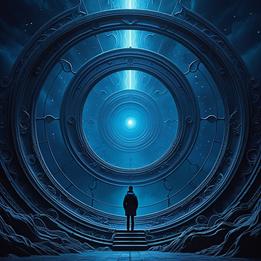
Scope
In Arts & Music, 'scope' represents the range, breadth, or focus of creative expression, encompassing both technical limitations and imaginative possibilities.
Scope Dream Meaning
In Arts & Music, 'scope' represents the range, breadth, or focus of creative expression, encompassing both technical limitations and imaginative possibilities.
Interpretive Themes
Mythological Resonance
Prometheus
GreekStole fire from the gods to give humanity the scope of technology and arts, expanding human capability beyond natural limits.
Vishnu
HinduIn his cosmic form, revealed infinite scope to Arjuna in the Bhagavad Gita, showing all possibilities contained within divine consciousness.
Cultural Lenses
Jungian Perspective
View Context →Scope represents the tension between conscious specialization and unconscious wholeness. The creative process balances focused ego-work with archetypal collective material, with scope dreams revealing integration struggles between personal style and universal themes.
Freudian Perspective
View Context →Scope symbolizes sublimated libidinal energy channeled into creative work. Narrow scope suggests repression, while expansive scope indicates successful sublimation of unconscious desires into artistic production, with scope changes revealing psychic economy shifts.
Gestalt Perspective
View Context →Scope represents the figure-ground relationship in creative perception. Dreams explore what aspects of artistic expression come into focus versus remain background, with scope adjustments revealing unfinished creative business and integration needs.
Cognitive Perspective
View Context →Scope reflects mental models of creative problem-solving. Dreams process information about artistic constraints and possibilities, with scope variations representing different cognitive strategies for managing creative complexity and resource allocation.
Evolutionary Perspective
View Context →Scope relates to adaptive signaling through artistic display. Broad scope may signal fitness through resource investment in elaborate creations, while focused scope indicates specialized skill development for specific social or survival advantages.
East Asian Perspective
View Context →In Daoist and Zen traditions, scope represents the balance between focused discipline (jing) and expansive spontaneity (shen). Artistic mastery involves knowing when to narrow focus for technical perfection and when to embrace boundless creativity.
European Perspective
View Context →From Renaissance perspective to Romantic expansiveness, European art history shows tension between defined classical boundaries and boundless creative imagination. Scope dreams often reflect this historical dialectic between form and freedom.
Modern Western Perspective
View Context →Scope relates to artistic branding and market positioning. Dreams may process anxiety about niche specialization versus mainstream appeal, with scope representing the tension between authentic expression and commercial viability.
African Perspective
View Context →In many African traditions, artistic scope connects individual creativity to communal expression. Scope dreams may reveal tensions between personal artistic vision and cultural responsibilities, with creative range serving social cohesion.
Middle Eastern Perspective
View Context →In Islamic art traditions, scope balances geometric precision with infinite pattern repetition. Dreams may explore the spiritual significance of artistic boundaries as manifestations of divine order versus human creative freedom.
Global/Universal Perspective
View Context →Scope represents the fundamental human tension between creative focus and expansion across cultures. Dreams universally process the anxiety and excitement of artistic limitation versus possibility, reflecting our species' unique capacity for symbolic expression.
South Asian Perspective
View Context →In Indian aesthetics (rasa theory), scope relates to the range of emotional states an artist can evoke. Dreams may process the artist's capacity to contain and express the full spectrum of human experience through disciplined artistic means.
Historical Authorities
Want a deeper analysis?
Get a personalized interpretation of your entire dream including this symbol.
Interpret My DreamThe Oracle's Prediction
Combine multiple symbolsA major creative opportunity requiring you to expand your skills or collaborate across disciplines.
Timeframe
Seasonal (~3 Months)
Intensity
Deep
Common Appearances & Contexts
| Context | Emotion | Interpretation |
|---|---|---|
| Context Zooming lens | Emotion focused | Interpretation Narrowing creative focus |
| Context Expanding canvas | Emotion excited | Interpretation Broadening artistic vision |
| Context Limited palette | Emotion frustrated | Interpretation Feeling creatively restricted |
| Context Endless horizon | Emotion overwhelmed | Interpretation Too many possibilities |
| Context Telescopic view | Emotion curious | Interpretation Seeking distant inspiration |
| Context Microscopic detail | Emotion obsessed | Interpretation Over-focusing on minutiae |
| Context Panoramic vision | Emotion inspired | Interpretation Seeing complete picture |
| Context Blurred edges | Emotion confused | Interpretation Unclear creative boundaries |
| Context Sharp focus | Emotion determined | Interpretation Clear artistic direction |
| Context Shrinking frame | Emotion anxious | Interpretation Losing creative space |
| Context Expanding sound | Emotion joyful | Interpretation Musical possibilities growing |
| Context Silent scope | Emotion peaceful | Interpretation Creative potential resting |
Interpret Your Full Dream
Beyond this symbol, every dream carries a unique story. Share your dream for a personalized AI-powered interpretation.