Vajra Myth Meaning & Symbolism
The myth of how the thunderbolt Vajra was forged from the bones of the sage Dadhichi, creating an unbreakable weapon of divine order and sacrifice.
The Tale of Vajra
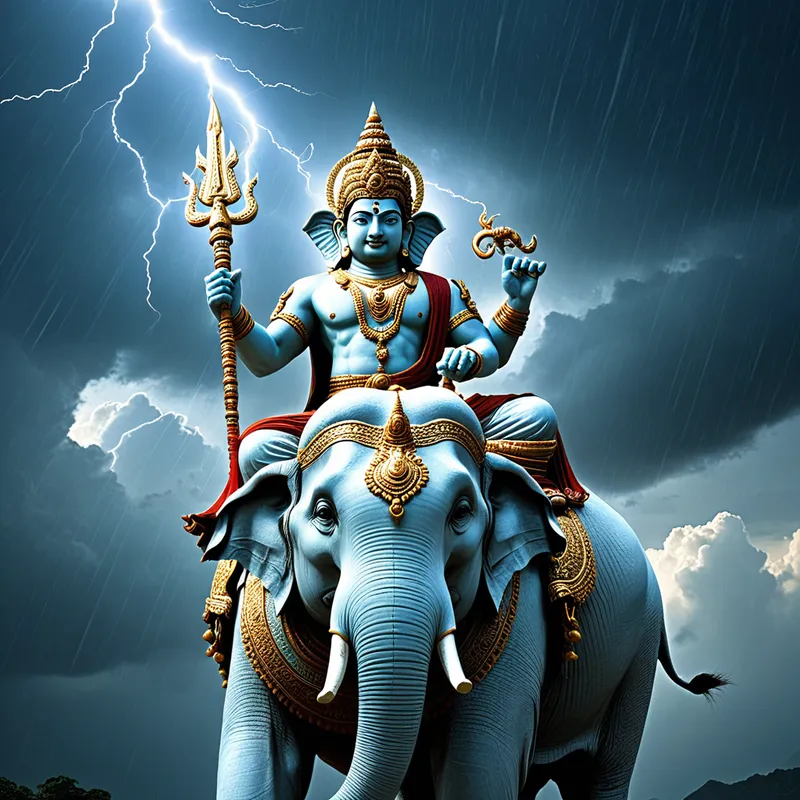
Listen, and hear the tale of the unbreakable. It begins not in the heavens, but in the dust. In a time when chaos, wearing the skin of a dragon, coiled itself around the world. Its name was Vritra, the Enveloper, and it had swallowed all the waters of creation. Rivers ran dry. The earth cracked like an old skull. The very breath of life grew thin. In the high halls of Svarga, the king of the gods, Indra, sat in despair. His thunderbolt was but a spark against the demon’s scales. His strength, the strength of a thousand sacrifices, had failed him.
The gods gathered, a council of fading light. Their whispers were carried on the parched wind to the ears of the great preserver, Vishnu. He appeared before them, his form calm as a deep ocean. “The weapon you seek,” he intoned, his voice the sound of distant rivers, “cannot be forged from any metal known to god or demon. It must be born from a substance of ultimate purity, tempered by a will that has transcended the very flesh that houses it. Only the bones of the sage Dadhichi possess such a nature.”
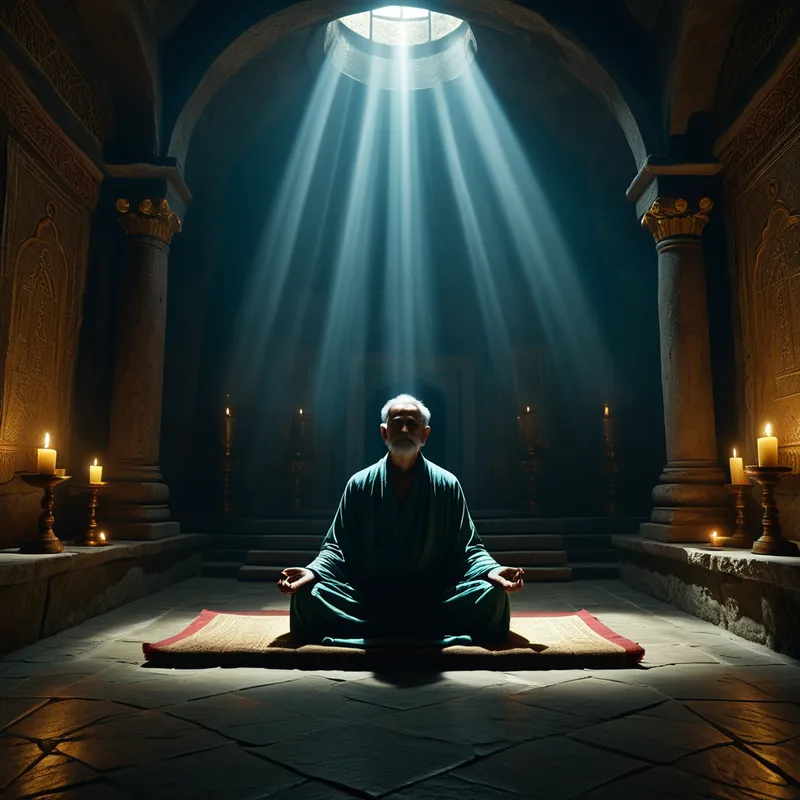
A silence fell, heavier than the drought. To ask a sage for his bones was to ask for the sun to extinguish itself. Yet, with the weight of all worlds upon him, Indra descended to earth. He found Dadhichi in his humble ashram, a man so steeped in meditation that grass had grown around his still form. The air around him hummed with peace. Indra, the mighty king, fell to his knees and spoke his terrible request.
Dadhichi opened his eyes. There was no fear in them, only a profound, knowing light. He saw not the end of his body, but the necessity of the act. He smiled, a gentle curve in the wilderness of his beard. “This body is but a temporary vessel,” he said, his voice like wind through reeds. “If its remnants can uphold Dharma and slay chaos, then it finds its highest purpose. Let it be so.”
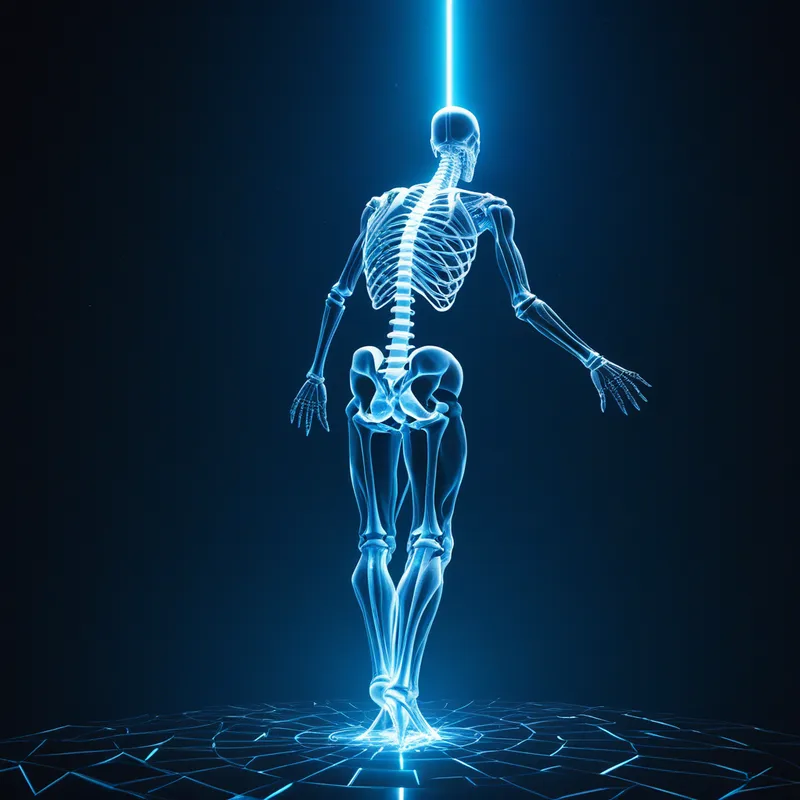
Without another word, the sage entered a final, deepest meditation. His life force, his immense tapas, gathered inward. His body glowed, then became still as stone. His spirit, freed from its earthly tether, ascended. What remained was not a corpse, but a skeleton of impossible radiance—bones not of calcium, but of solidified truth.
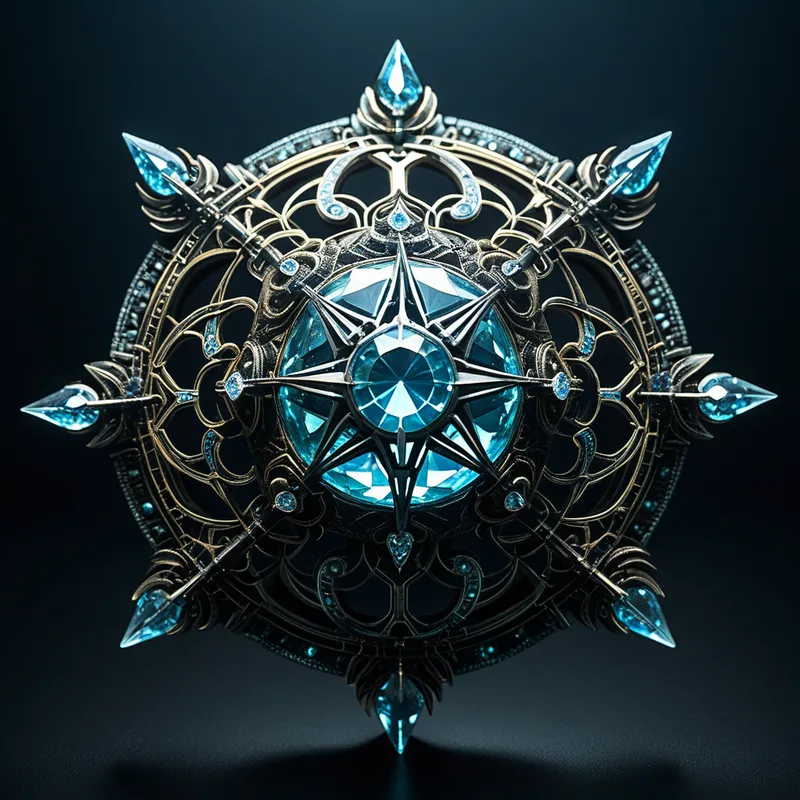
The divine artisan, Tvastr, was summoned. From the luminous bones, he forged a weapon. He fashioned it with a central sphere, the kila, and prongs that flared from each end. It did not glitter; it contained light. It did not hum; it held silence. This was the Vajra. Indra grasped it, and a shock of clarity coursed through him. This was not merely power; it was purpose given form.
The final battle was not a clash, but a surgical strike. Indra descended to the coiled mountain of Vritra. The demon roared, spewing darkness. Indra raised the Vajra. It did not flash; it simply was. A line of absolute reality cut through the illusion of the demon’s form. Vritra’s hold shattered. The waters, the Apaḥ, burst forth in a torrential, life-giving flood, roaring back into the world’s veins. Order was restored not by brute force, but by the application of an indestructible truth, born from the ultimate sacrifice.
Cultural Origins & Context
The myth of the Vajra is woven into the earliest strands of Hindu thought, primarily found in the Rigveda. It is a foundational narrative of the Vedic period, a time when the cosmos was perceived as a perpetual struggle between the forces of order (Ṛta) and chaos. This was not mere entertainment; it was a cosmological map and a social contract. The myth was recited by priests during elaborate yajñas, reinforcing the idea that the prosperity of the kingdom and the fertility of the land depended on the sovereign’s (Indra’s counterpart) adherence to dharma and his willingness to make profound sacrifices for the collective good. The story legitimized the authority of the ruler while simultaneously binding it to a higher, selfless principle. It was a powerful metaphor for the social body: the renunciation of the individual (the sage) for the survival and flourishing of the whole (the community, the cosmos).
Symbolic Architecture
The Vajra is not merely a weapon; it is a complete symbolic system. At its core, it represents the indestructible nature of awakened consciousness. Dadhichi’s bones symbolize the essential, immutable core of the self—the Self—which remains after all that is transient (the flesh, the ego, personal desire) has been willingly surrendered. His sacrifice is the ultimate act of discernment, separating the eternal from the ephemeral.
The Vajra is forged in the crucible of self-annihilation; its power is proportional to the completeness of the surrender.
The demon Vritra represents the chaotic, undifferentiated, and engulfing waters of the unconscious—the primal state where all potentials are trapped, unable to manifest. It is psychic inertia, depression, or the overwhelming complexity that paralyzes the will. Indra, the ego-consciousness, is impotent against this until he is armed with the instrument of the Self. The Vajra’s action is not destruction, but differentiation; it cuts through confusion, establishes clarity, and liberates the life-giving energies (the waters) that were always present but bound.
The Dreamer's Resonance
When this myth stirs in the modern psyche, it may manifest in dreams of profound sacrifice or transmutation. One might dream of their own skeleton being removed, not with horror, but with a sense of solemn necessity. They may dream of a trusted elder or guide voluntarily dissolving, leaving behind a luminous, geometric object. The somatic experience is often one of a deep, central ache—a bone-deep weariness with an old way of being—coupled with a strange, calm certainty.
This dream pattern signals a critical juncture in the individuation process. The dreamer is confronting a “Vritra” complex: a monolithic problem, a chronic depression, or a life-stifling pattern that has “dried up” their inner waters of creativity and vitality. The psyche is proposing the radical solution of the sage: to offer up the very structure of one’s current identity (the “bones” of one’s personality) to be reforged. The anxiety in such dreams is not about death, but about the terrifying willingness required.
Alchemical Translation
The alchemy of the Vajra myth models the process of psychic transmutation with stark elegance. The first stage is the recognition of impotence (Indra’s despair). The conscious will, for all its efforts, cannot overcome a deep-seated neurosis or life-stagnation. The second is the descent to the sage—turning inward, consulting the deep, guiding wisdom of the Self, often experienced as a quiet, inner voice or a compelling intuition that points toward an unthinkable sacrifice.
The core operation is the sacrifice of the familiar self. This is the “Dadhichi phase.” It is the voluntary dissolution of an outmoded ego-position, a cherished identity, or a long-held grievance. It is not suicide of the personality, but its offering up to a higher purpose.
The bone given willingly becomes the diamond that cuts the knot.
From this sacrifice, the Vajra is forged: a new, resilient, and focused psychic attitude. This is the integrated will, aligned with the Self. It is characterized by clarity, decisiveness, and an unshakeable center. Finally, this new instrument is applied in the liberation of the waters—the freeing of bound libido, creativity, and emotional flow back into one’s life. The struggle is not fought with the old, exhausted weapons of the ego, but resolved through the precise application of a truth forged in the fire of ultimate letting go. The myth teaches that true power, the power to restore order and flow to one’s inner world, is born not from accumulation, but from sacred, conscious surrender.
Associated Symbols
Explore related symbols from the CaleaDream lexicon: