Dragon's Tide Myth Meaning & Symbolism
A myth where a celestial dragon's grief floods the world, and a hero must journey to the heart of the tide to restore cosmic harmony.
The Tale of Dragon's Tide
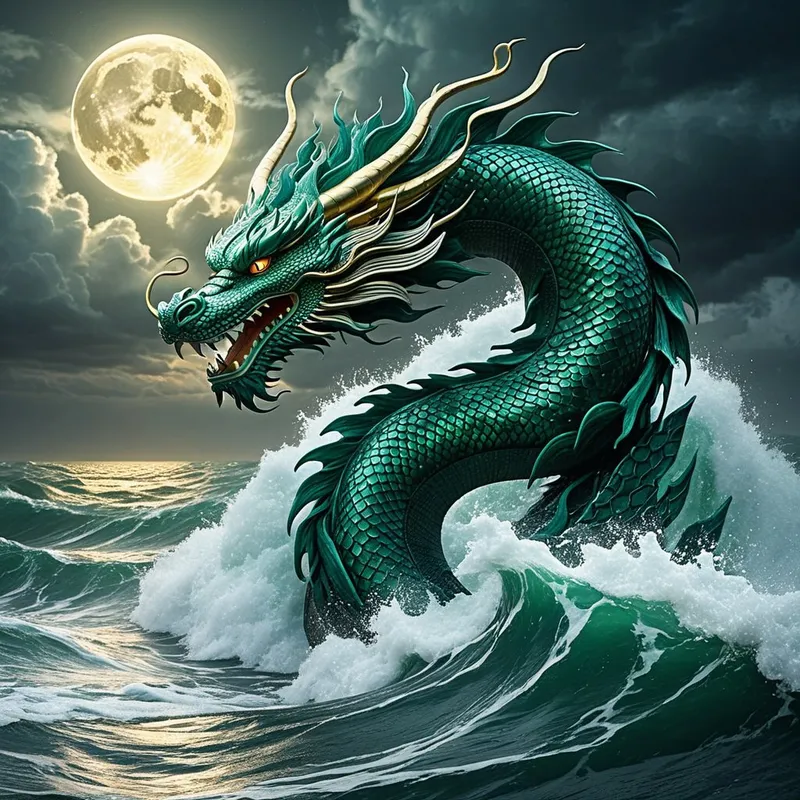
Listen, and hear the tale that the old rivers whisper when the moon is full and the world holds its breath. It begins not with a bang of thunder, but with a silence so deep it ached—the silence of the Azure Dragon, Qinglong, in mourning.
His mate, the Vermilion Bird, had fallen in a great celestial alignment, her fire dimmed by a shadow from the void. Qinglong’s grief was not a human thing. It was a cosmic tide, a welling-up of the primal waters he commanded. He did not roar; he wept. And each tear that fell from his star-bright eyes was a monsoon. Each sigh from his cavernous lungs became a typhoon. The rivers forgot their banks. The seas rose up in solidarity with their lord’s sorrow, climbing the mountains to touch the grieving sky. The world was drowning in a dragon’s heartbreak.
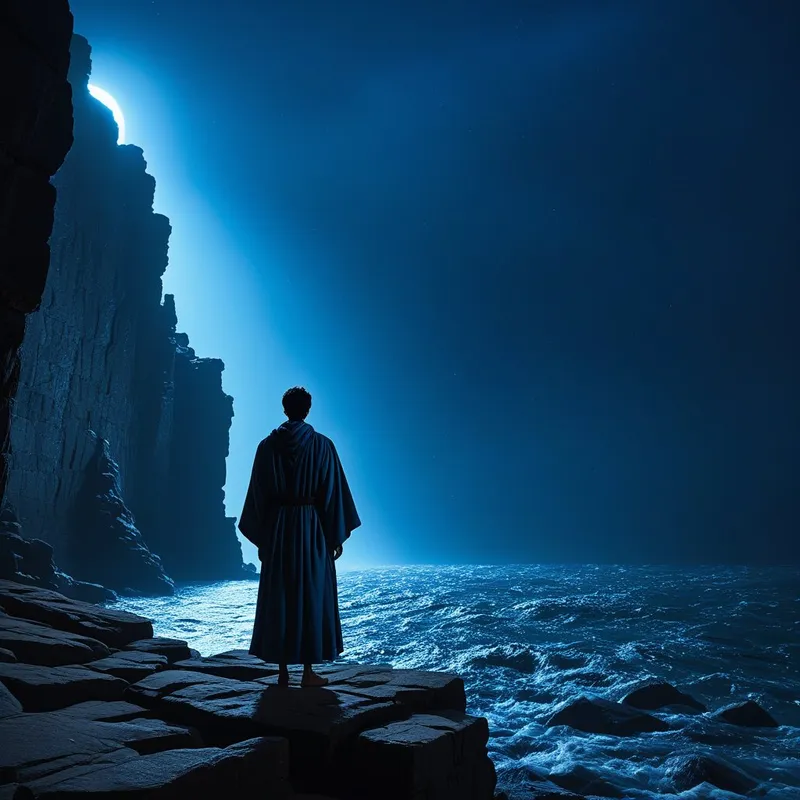
In a village now clinging to the peaks like a barnacle on a sinking ship, a young fisher named Yushan watched the endless rain. He saw not just water, but the pain within it. Where others saw a cataclysm, he heard a dirge. Guided by a dream of a single, un-shed tear glowing in the abyss, he built a boat of salvaged cedar and set forth, not to flee, but to sail into the heart of the deluge, toward the source of the sorrow.
His journey was a descent through liquid mountains and valleys of wave. He passed drowned forests where koi swam through temple doors, and silent cities where eels coiled around bell towers. The pressure of the deep sang in his bones. Finally, in a place where the water was neither blue nor black but a profound, luminous indigo, he found the Azure Dragon. The great being was coiled upon itself, its head buried, its immense form trembling with silent sobs that sent shockwaves through the ocean. The Tide was not an attack; it was the dragon’s soul made manifest, spilling over.
Yushan’s boat shattered in the psychic current. But he did not swim away. He let the tide pull him closer. He did not bring a weapon, but a memory—a lullaby his grandmother sang, a simple tune of earth and steady growth. As he drifted before the dragon’s closed eye, he began to hum it, a fragile thread of sound in the aquatic roar.
The dragon stirred. One great, luminous eye, larger than a lake, opened. In its pupil, Yushan saw not malice, but an ocean of loneliness. He spoke then, not with words, but with the images in his heart: the memory of sunlight on dry land, the resilience of a seedling cracking stone, the enduring love for what is lost that does not demand the drowning of what remains. He offered the dragon not a solution, but witness. He held a space for the grief.
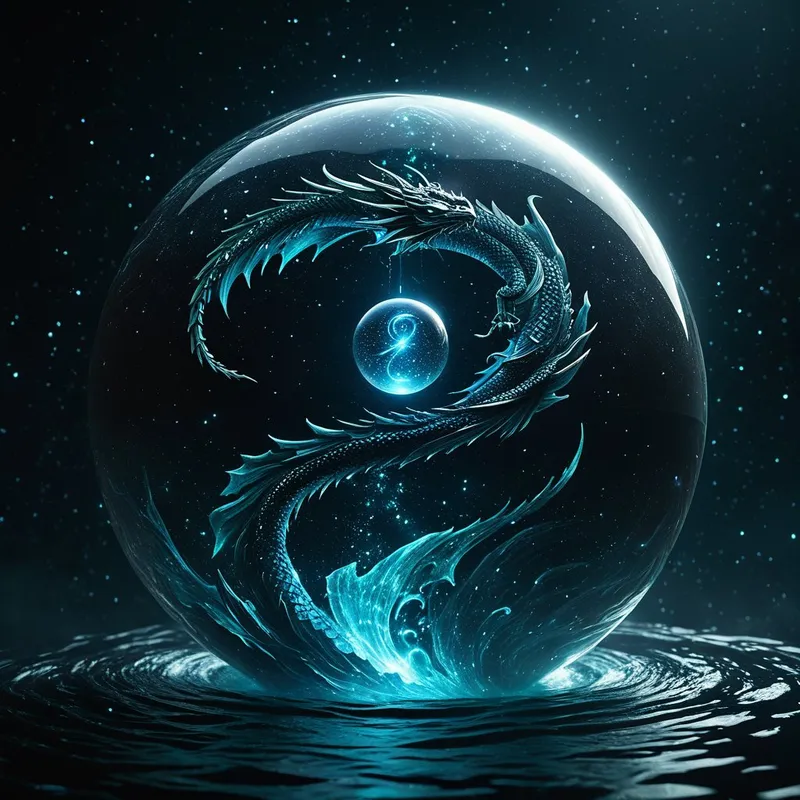
A single, final, colossal tear—clear as crystal and warm as a spring—welled from the dragon’s eye and floated before Yushan. Within it, he saw a reflection of the Vermilion Bird, not dead, but transformed, waiting in a cycle of dawn. The dragon’s sigh this time was one of release, not anguish. The Tide, which was his held breath, began to recede. Not with a violent rush, but with a gentle, sighing withdrawal, returning to its celestial courses. The waters found their beds. The dragon, its grief integrated, uncoiled and ascended, its form weaving back into the constellations from whence it came, leaving the world washed clean, fertile, and in balance once more.
Cultural Origins & Context
The myth of the Dragon’s Tide is not found in one canonical text like the Shan Hai Jing, but is a folk narrative pattern woven through coastal and riverine communities across southern China. It belongs to the oral tradition, told by village elders and Taoist storytellers, particularly in Fujian, Guangdong, and Zhejiang provinces. Its primary societal function was explanatory and psychological. It gave a sacred, narrative shape to the very real and terrifying experience of catastrophic floods, framing them not as arbitrary punishment, but as part of a cosmic emotional ecology.
The myth also served a vital function within the framework of Wu Xing, the Five Phases. The Azure Dragon (Wood) grieving for the Vermilion Bird (Fire) represents a profound elemental imbalance—Wood over-produces Water in its distress, threatening to extinguish Fire and overwhelm Earth. The story models the restoration of this cosmic cycle. It was a tale told to instill resilience, teaching that even celestial forces are subject to emotional tides, and that balance is not a static state, but a dynamic process of acknowledgment and return.
Symbolic Architecture
At its core, the Dragon’s Tide is a profound map of the relationship between the unconscious and the conscious, the personal and the transpersonal.
The flood is not the problem; it is the symptom. The true cataclysm is the un-witnessed sorrow of the depths.
The Azure Dragon represents the instinctual, emotional, and deeply unconscious psyche—the shen or spirit in its raw, untamed form. It is not evil, but vast, powerful, and governed by its own primordial logic. Its grief is the accumulated, unattended pain of the soul, the collective shadow, or a personal trauma so deep it feels archetypal. The Tide is this content breaking into conscious reality: a depression that floods all aspects of life, a rage that feels oceanic, a sorrow that dissolves the foundations of the self.
Yushan symbolizes the nascent ego-consciousness, the "I" that chooses to turn toward the flood rather than flee. His journey is the act of introspection, of venturing into the submerged landscapes of one’s own psyche. Crucially, he does not go to slay the dragon, but to listen to it. His lullaby represents the mediating function of culture, memory, and human warmth—the small, steady voice of the conscious self that can hold a container for the overwhelming.
The resolution—the dragon’s release and ascent—symbolizes the alchemical moment when unconscious content, once faced and honored, loses its destructive autonomy and is integrated. Its energy is transmuted. The floodwaters recede, but they leave the land more fertile; the psyche, having fully experienced its depths, gains a new capacity for life and compassion.
The Dreamer's Resonance
When this myth stirs in modern dreams, it often manifests as dreams of overwhelming water: tsunamis, rising floodwaters in one’s house, or being adrift in a boundless sea. Somatic sensations upon waking may include a feeling of pressure in the chest, a sense of being emotionally "waterlogged," or profound fatigue.
Psychologically, this dream pattern signals that a deep, unconscious emotional content—a "dragon’s grief"—is breaching the thresholds of consciousness. The ego is being called to a necessary but daunting task: to stop bailing water and instead sail into the heart of the deluge. The dream is an indicator of a psyche attempting to self-regulate, forcing a confrontation with what has been too vast or too painful to feel. The specific nature of the "grief" can vary: it could be ancestral trauma, a buried personal loss, or the collective anxiety of an age. The dream is the Tide itself; it is the psyche beginning its own process of release through imagery, demanding witness.
Alchemical Translation
The myth of the Dragon’s Tide provides a flawless model for the Jungian process of individuation—the psychic transmutation of the self into a more whole, integrated being.
Individuation does not mean becoming dry land, but learning to breathe in the tide and discern its rhythms. The goal is not to banish the dragon, but to earn its partnership.
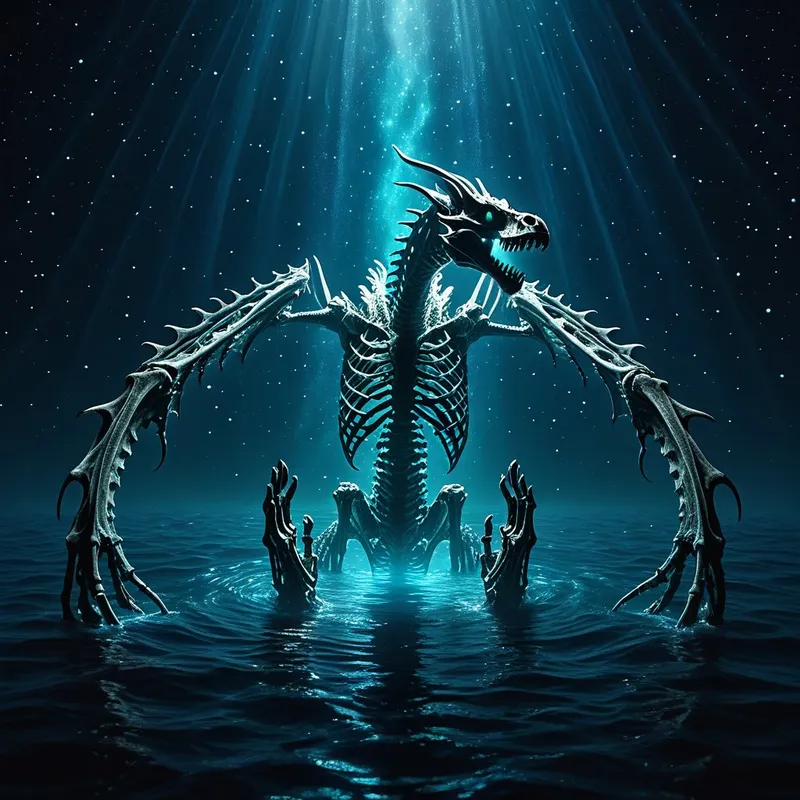
The first alchemical stage, nigredo (the blackening), is the flood itself—the overwhelming by the unconscious, the dissolution of the old ego-structures that could not contain this depth. Yushan’s journey into the abyss is the mortificatio, a symbolic death of the naive self.
The core operation is coniunctio (the sacred marriage). This is not a romantic union, but the profound reconciliation symbolized by Yushan facing the Dragon’s eye. It is the conscious ego (the human) engaging the unconscious Self (the dragon) in a relationship of mutual recognition. The hero’s offering of the lullaby and the memory of sunlight is the act of bringing conscious values, culture, and love to bear on raw instinct.
The release of the final tear and the dragon’s ascent represent albedo (the whitening) and rubedo (the reddening). The clear tear is the distilled essence of the pain, now conscious and contained. The dragon’s return to the heavens signifies the sublimation of this immense psychic energy. It is no longer a chaotic, flooding force but a guiding, celestial pattern—an integrated archetypal power that now informs the personality from a place of harmony, not conflict. The individual who undergoes this internal process does not become immune to emotion, but gains the capacity to navigate the inner tides without drowning. They become, in a sense, both the sailor and the sea, the witness and the wept-for tear, grounded in a world made fertile by their own acknowledged depths.
Associated Symbols
Explore related symbols from the CaleaDream lexicon: