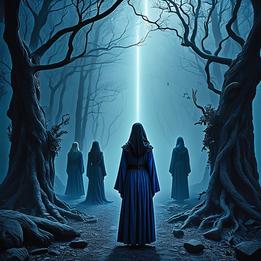
Mythos
The collective body of myths, legends, and archetypal narratives that shape cultural identity and spiritual understanding across civilizations.
Mythos Dream Meaning
The collective body of myths, legends, and archetypal narratives that shape cultural identity and spiritual understanding across civilizations.
Interpretive Themes
Collective Unconscious
highConnects personal dreams to universal patterns.
Cultural Identity
highDreams may explore heritage integration.
Spiritual Guidance
mediumDreams as personal myth-making.
Transformation
mediumHero's path reflected in life stages.
Cosmic Order
lowDreams seeking universal meaning.
Cultural Lenses
Jungian Perspective
View Context →Represents archetypes from the collective unconscious—universal psychic patterns manifesting as mythic figures, symbols, and narratives that guide individuation and psychological integration.
Freudian Perspective
View Context →Symbolizes repressed desires and childhood conflicts projected onto cultural narratives; myths as sublimated expressions of unconscious wishes and familial dynamics.
Gestalt Perspective
View Context →Seen as projections of the dreamer's fragmented self; each mythic element represents an unintegrated aspect of personality seeking wholeness through narrative.
Cognitive Perspective
View Context →Viewed as mental schemas organizing experience; myths function as cognitive frameworks that help process emotions, solve problems, and construct personal identity.
Evolutionary Perspective
View Context →Interpreted as adaptive narratives promoting survival; myths encode social norms, cooperation strategies, and threat responses that enhanced ancestral fitness.
Global/Universal Perspective
View Context →Cross-cultural narrative patterns addressing fundamental human concerns—creation, morality, death, and transcendence—reflecting shared existential questions across civilizations.
East Asian Perspective
View Context →In Chinese and Japanese traditions, myths blend with ancestor veneration and nature spirits; modern context sees mythos in martial arts philosophy and anime narratives.
South Asian Perspective
View Context →Hindu and Buddhist mythologies as living traditions; epics like Mahabharata provide moral frameworks, with modern reinterpretations in Bollywood and spiritual practices.
Middle Eastern Perspective
View Context →Abrahamic and pre-Islamic narratives shaping monotheistic theology; modern context includes political myth-making and preservation of ancient Mesopotamian stories.
European Perspective
View Context →Greco-Roman and Norse myths influencing Western philosophy and art; contemporary neopagan revivals and literary adaptations maintain cultural relevance.
African Perspective
View Context →Oral traditions encoding history, ethics, and cosmology; modern Afrocentric movements reclaim myths for cultural identity and resistance narratives.
North American Perspective
View Context →Indigenous creation stories and trickster tales; contemporary context includes cultural preservation efforts and influence on environmental movements.
Want a deeper analysis?
Get a personalized interpretation of your entire dream including this symbol.
Interpret My DreamCommon Appearances & Contexts
| Context | Emotion | Interpretation |
|---|---|---|
| Context Ancient temple | Emotion Reverence | Interpretation Connecting to ancestral wisdom. |
| Context Mythic battle | Emotion Fear | Interpretation Internal conflict resolution. |
| Context Creation story | Emotion Awe | Interpretation Personal origin exploration. |
| Context Ritual ceremony | Emotion Peace | Interpretation Seeking spiritual integration. |
| Context Lost mythology | Emotion Longing | Interpretation Searching for meaning. |
| Context Modern mythmaking | Emotion Confusion | Interpretation Navigating contemporary beliefs. |
| Context Archetypal figures | Emotion Wonder | Interpretation Meeting inner guides. |
| Context Mythic journey | Emotion Determination | Interpretation Personal growth path. |
| Context Sacred text | Emotion Curiosity | Interpretation Seeking hidden knowledge. |
| Context Mythic collapse | Emotion Anxiety | Interpretation Belief system crisis. |
| Context Myth revival | Emotion Hope | Interpretation Renewing personal narrative. |
| Context Universal myth | Emotion Unity | Interpretation Global connection feeling. |
Interpret Your Full Dream
Beyond this symbol, every dream carries a unique story. Share your dream for a personalized AI-powered interpretation.