The Currency of the Deep: Wealth as a Somatic Map
The Somatic Echo
Before the mind conjures images of vaults or coins, the body knows the theme of wealth. It is not a feeling of smug satisfaction, but a profound and often disorienting pressure. It can feel like a dense, humming warmth in the solar plexus—a gravity well of potential that pulls your attention inward. Or it can manifest as a brittle, metallic tension in the jaw and shoulders, the armor of one who must guard something precious. Sometimes, it is a hollow, echoing chill in the chest cavity, the somatic signature of a vault that is structurally sound but utterly empty. This is the body’s first log of your internal economy, reporting on the circulation—or stagnation—of your most vital resources: time, attention, creative force, love, and the authority of your own voice. The dream of wealth begins here, in this visceral ledger of abundance and deficit.
The Dreamer's Log
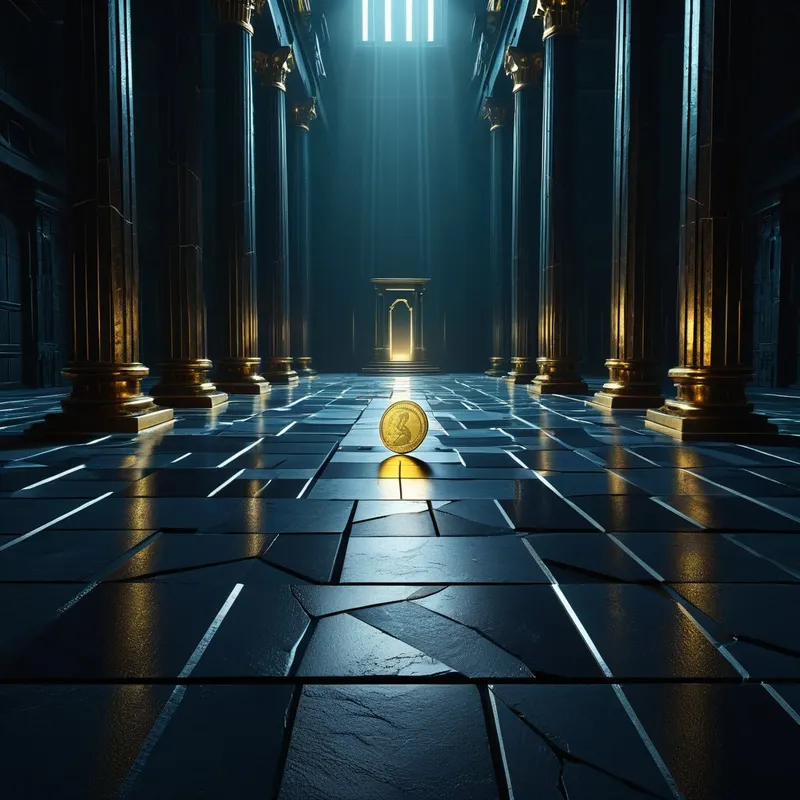
I stand in an endless hall with a floor of polished obsidian. My footsteps make no sound. In the center of the vast emptiness lies a single, perfect gold coin. I know, with a certainty that bypasses thought, that if I pick it up, the entire floor will shatter. I wake with my hand outstretched, muscles taut with unreleased motion.
The alchemy here is the terrifying realization that claiming one’s inherent value risks the collapse of a familiar, if barren, world.
The False Lead
This theme is not a literal prophecy of financial windfall or ruin, nor is it a simple commentary on greed or generosity. To interpret it as such is to mistake the gold for the ore, the currency for the mine. A dream of losing wealth is not a warning of bad luck; it is a somatic report on a perceived hemorrhage of personal power or integrity. A dream of finding a treasure hoard is not a promise from the universe, but a sudden, often overwhelming, awareness of an untapped inner resource you have been walking over for years. The false lead is taking the symbol at face value. The true work begins when you ask: What, in my waking life, feels as dense, as potent, or as guarded as this dream-gold?
Psychological Architecture
The shadow work of the wealth dream is an audit of the soul’s ledger. It asks the most uncomfortable question: What do you truly value, and where have you accepted counterfeit currency? This is the individuation process of becoming your own central bank, moving from a state of being funded by external validation, roles, and achievements to being sovereign in your own intrinsic worth.
We often exile the parts of ourselves that seem costly—the vulnerable child, the raging rebel, the “unproductive” dreamer—believing they drain our resources. We then appoint an internal treasurer, a stern shadow figure who hoards energy, restricts spending on joy, and invests only in what seems safe and respectable. The dream of wealth emerges when this system is either cracking under its own austerity or when an exiled part makes a desperate, symbolic withdrawal. To find the treasure is to be forced to reconcile with the very aspects of self you deemed worthless. The vault’s location is always in the shadowlands.
Mythic Resonance
Consider the tale of King Midas. The myth is not about the folly of greed, but about a profound confusion of substance. Midas wished for everything he touched to turn to gold—a desire for ultimate, immutable value. But when his food, his wine, and finally his daughter solidify into cold metal, the dream reveals its nightmare. The alchemical failure here is the inability to distinguish between lifeless currency and living wealth. The gold is real, but it is sterile. His touch does not create value; it terminates exchange, relationship, and nourishment. The myth whispers that true wealth is fluid, participatory, and exists in the space between things—in touch, in taste, in love—not in the isolated, perfected object.
Symbolic Nodes
- Coins, Bills, Bullion: Concentrated, quantified value. Often point to a specific “unit” of self-worth or personal energy.
- Vaults, Safes, Locked Rooms: The psyche’s structures for protection and isolation. The condition of the lock (open, broken, impenetrable) is crucial.
- Jewels & Gems: Crystallized potential, hardened light. Often represent core talents or truths that have been under pressure for a long time.
- Fountains, Springs, Overflowing Vessels: The wealth of emotion, creativity, or spiritual vitality in its liquid, circulating state.
- Deeds, Titles, Contracts: Legalistic symbols of claimed ownership over some part of your life or identity.
- Barren Land vs. Fertile Field: The foundational soil of your being—is it seen as a resource to be extracted from, or a living system to be cultivated?
Archetypal Resonance
The Ruler Archetype is the sovereign energy at the heart of the wealth dream. Its shadow, the Tyrant or Control-Freak, manifests as the internal treasurer who hoards, micromanages energy, and rules through scarcity and fear. The somatic echo of the shadow ruler is that brittle, armored tension—the body as a fortified castle under siege by its own needs.
The active, integrating Ruler, however, does not merely possess wealth; they generate the realm in which value can flourish. Their alchemical potential is to move from guarding a static hoard to stewarding a dynamic ecosystem. This archetype calls you to take full responsibility for your inner kingdom—to mint your own currency of meaning, establish fair trade with all parts of yourself, and build infrastructures (habits, boundaries, practices) that allow your true resources to circulate and grow. The wealth dream is ultimately a summons to this throne.
The Alchemical Process
The transmutation here is Lead of Scarcity into Gold of Sovereignty. The prima materia is the ingrained belief that your worth is external, finite, and must be earned or seized. The heat is applied in the moment of conscious lack—the grief of feeling impoverished in spirit, time, or joy. The pressure is the terrifying obligation to become your own source.
The alchemical fire is lit when you stop seeking deposits from the outside world and turn instead to audit your inner exiles. You must sit in the vault with your ledgers and feel the grief for the resources wasted on maintaining facades, the terror of unlocking the door to your own wild, unquantifiable potential. This is the nigredo, the blackening. The albedo, the whitening, comes with the insight that your attention is your primary currency; where you spend it, you create value. The final rubedo is the embodied realization that you are not the coin, nor the vault, but the entire mint—the living process that transforms raw experience into the gold of wisdom, and circulates it as compassion, creativity, and presence.
The Integration Protocol
Question 1: Where in your waking life do you feel the most potent sense of "poverty"? Is it a poverty of time, of peace, of creative expression, of authentic connection?
Question 2: If your dream symbol of wealth (the coin, the jewel, the land) could speak, what one sentence would it say about what you have been guarding or neglecting?
Question 3: What internal "part" of you acts as your treasurer or accountant? What is it afraid will happen if you spend your energy freely on what you truly love?
Action 1 (Somatic Audit): For one day, track the sensations in your body (tightness, warmth, buzzing, hollow-ness) every time you make a decision, big or small. Don't judge, just log. At day's end, ask: Where did I feel most "rich" in my body? Where did I feel most "depleted"?
Action 2 (Creative Minting): Take a physical object—a stone, a blank card, a piece of wood. Using paint, engraving, or collage, transform it into a token that represents a non-material form of wealth you currently possess (e.g., "the wealth of my patience," "the wealth of a lesson learned"). Place it where you will see it as a reminder of your internal currency.
Action 3 (Ritual Circulation): Choose a small, intentional act that "spends" your wealth in a new way. If your wealth is insight, share a vulnerable piece of wisdom without expectation. If your wealth is care, offer it to a part of yourself you usually criticize. The ritual is in the conscious, sovereign choice to circulate rather than hoard.
Final Validation
To dream of wealth is to be confronted with the immense and often frightening responsibility of your own inner economy. It is not a gentle theme. It asks you to account for every disowned dream, every undervalued feeling, every payment made in the counterfeit coin of people-pleasing. This reckoning is difficult because it strikes at the core of how you have negotiated your worth in the world. Yet, within that very difficulty lies the promise: you are not a beggar at the table of life. You are the land, the mine, the mint, and the sovereign. The dream does not show you what you lack; it shows you, in symbolic code, the vast and unclaimed reserves of your own being. The integration is not about acquiring more, but about courageously assuming ownership of the infinite wealth you already are.