The Alchemy of the Self: Dreaming the Uncharted Territory Within
The journey of self-discovery does not begin with a thought, but with a tremor. It is a somatic echo, a vibration felt in the hollow of the chest before it becomes a question in the mind. It is the quiet, persistent hum of a system running a diagnostic on itself, a feeling of being both the map and the uncharted territory. This is not the anxiety of a problem to be solved, but the profound disquiet of a truth seeking its own form. The body knows first: a tightening behind the sternum, a lightness in the head as if old anchors are dissolving, a restlessness in the hands that speaks of a need to shape something, though you know not what. It is the visceral sense of standing at the threshold of a room within yourself whose door you never knew was there.
The Dreamer's Log
I am in a vast, abandoned train station made of dark marble and cold steel. The departure boards are blank. In the center of the concourse, on the floor, lies a single, ornate iron key. I know it is mine, but I have no memory of what lock it fits. The silence is absolute, and it weighs more than any sound.
Alchemical Interpretation: The dream presents the self not as a fixed destination, but as the forgotten station where all potential journeys begin, and the key is the dormant agency to choose one.

The False Lead
This theme is not the mere accumulation of personality traits or the crafting of a more appealing personal brand. It is not "finding yourself" as if the self were a lost set of keys waiting under a streetlamp. That is a consumerist parody of the process. True self-discovery is a structural, often terrifying, reorganization. It is the dismantling of the persona—the efficient, social-facing software—to make contact with the older, slower, more authentic hardware of the psyche. It is not about becoming someone new, but ceasing to pretend you are someone you are not.
Psychological Architecture
To engage this process is to volunteer for shadow work. The psyche is not a unitary king on a throne but a council of internal family systems—exiles, managers, firefighters—each with a voice, a memory, a need. Self-discovery is the slow, patient act of convening this council in the dreamspace, where the exiled child can finally speak its grief, the managerial critic can reveal its fear of chaos, and the fiery rebel can state its case for revolution. This is individuation in motion: not a victory over these parts, but a difficult diplomacy that leads to a more integrated sovereignty. The dream becomes the negotiating table, and every symbol is a delegate from a forgotten province of your being.
Mythic Resonance
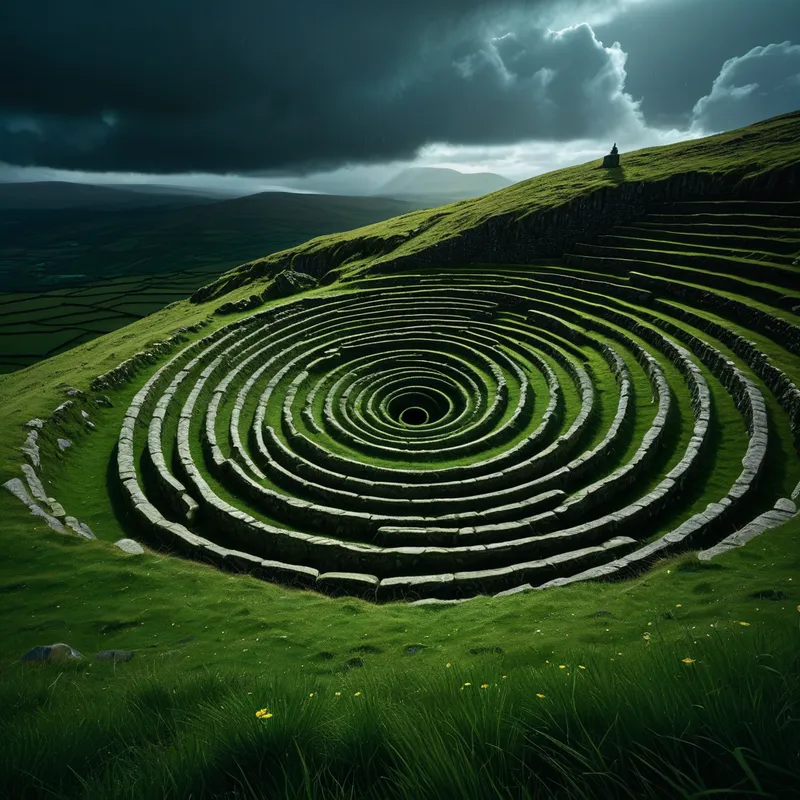
We see this eternal process in the myth of Theseus entering the Labyrinth. The hero does not bring a map; he brings a thread, a connection to the world above (the known self) as he descends into the chaotic, minotaur-haunted depths (the unconscious). The victory is not merely over the beast, but in the ability to navigate the maze and return, whole, to the light. Similarly, the alchemical Opus was never just about lead into gold, but the prima materia—the base, confused, and rejected aspects of the self—into the philosophical gold of integrated consciousness. The dream is your thread, your alchemical vessel.
Symbolic Nodes
Common images in this terrain include: uncharted landscapes (dense forests, vast deserts, mountain paths), empty or unfamiliar rooms in known houses, veils, masks, or mirrors, animals that guide or observe, tools (keys, maps, compasses that may or may not work), and meeting unknown figures who feel intimately familiar. These are not puzzles to be solved, but portals to be felt.
Archetypal Resonance
The core energy of self-discovery resonates most powerfully with The Explorer Archetype. This is not the shadow explorer, lost and aimless, but the archetype in its essential form: the Seeker, the Wanderer driven by a deep curiosity for the interior world. Its somatic echo is that restlessness in the limbs, the feeling of being confined by known borders. Its alchemical potential lies in its willingness to trade the false comfort of the familiar map for the terrifying, liberating truth of the genuine frontier within. The Explorer does not seek a destination called "The Self," but understands that the self is the territory revealed with each courageous step into the unknown of one's own psyche.
The Alchemical Process
The transmutation here is from fragmentation into coherence. The prima materia is the collection of inherited scripts, unmet expectations, and buried traumas that form a false, but functional, self. The heat and pressure—the nigredo—is applied in the dream state when this false self is revealed as inadequate: the mask cracks, the map fails, the familiar room has a new, disturbing door. This is a necessary dissolution, often felt as grief or existential terror. The alchemical fire is the sustained, conscious attention you bring to these dream revelations upon waking. By holding the tension between who you thought you were and what the dream shows you might be, you initiate the albedo, the whitening. The old structures dissolve not into nothing, but into their essential components, ready to be reassembled—rubedo—into a form that is more authentic, more resilient, more wholly your own.
The Integration Protocol
The work begins in reflection and is cemented in action.
Question 1: In the dream, what did you feel when you encountered the unknown? Was it fear, curiosity, numbness, or awe? Where do you feel that same sensation in your waking life?
Question 2: If the unfamiliar figure or object in the dream could speak, what one question would it ask you about the way you live now?
Question 3: What small, exiled part of yourself might the dream be attempting to repatriate into your internal kingdom?
Action 1 (Somatic Anchoring): For one week, upon waking, before you move or check any device, place a hand on the part of your body where the dream's echo is strongest. Breathe into that space for three cycles, not to analyze, but to acknowledge its presence.
Action 2 (Unstructured Cartography): Using any medium—charcoal, watercolor, digital scribbles—create an abstract map of the dream's landscape. Let your hand move without intention. Afterward, label the areas not with logical names, but with the emotions or memories they evoke.
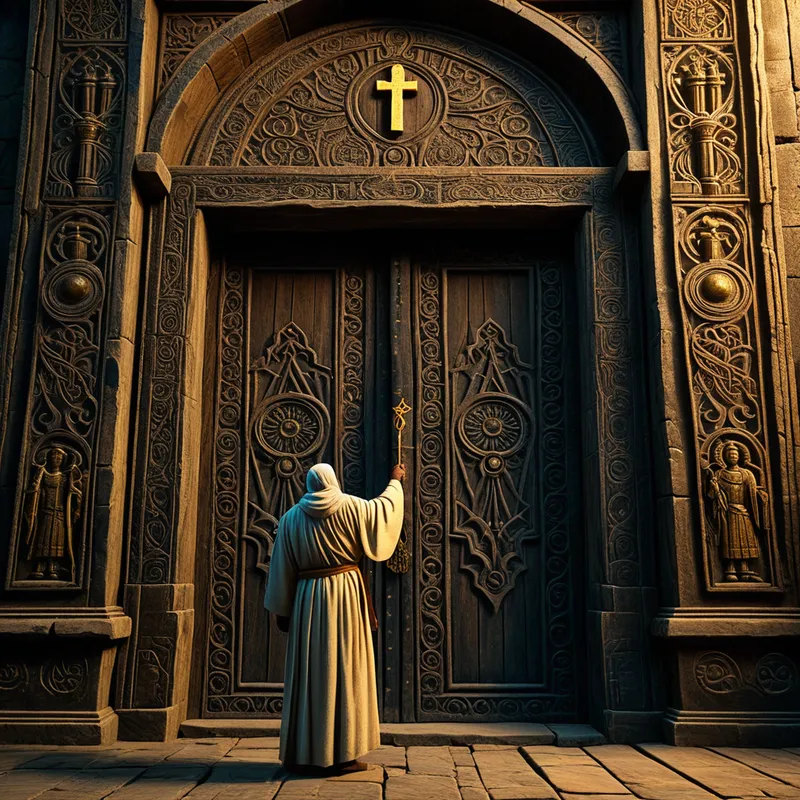
Action 3 (Ritual of the Threshold): Find a physical doorway in your home. Stand at its threshold. For one minute, feel the identity of the room you are in. Then step across, and for the next minute, consciously feel the shift in energy, role, or possibility. This ritualizes the dream's lesson: the self is not a room, but the capacity to move between them.
Final Validation
This path is not for the faint of heart. To look into the mirror of the dream and see not a reflection, but a question, is to willingly enter a sacred disorientation. It requires the courage to be a stranger to yourself for a time. Yet, within that very disorientation lies the promise. For the terror of the labyrinth is inseparable from the triumph of the thread. The grief of dissolving the old form is the prerequisite for the sovereignty of the new. You are not lost. You are in the process of being found, by the only one who can do the finding: the dreamer, awake at last to the endless, unfolding discovery of their own profound and mysterious architecture.