The Alchemy of Hunger: Dreaming of Greed
The Somatic Echo
It begins not as a thought, but as a hollow. A visceral, gravitational pull in the solar plexus, a cold, metallic taste at the back of the throat. It’s the clench of a jaw you didn’t know was tight, the restless tremor in the hands that must hold, the shallow breath of one who fears the next inhalation might steal what little they have. This is the somatic echo of greed: the body’s memory of a fundamental scarcity. It is not the excitement of desire, but the anxiety of a system convinced it is perpetually on the brink of depletion. The mind will later dress this sensation in images of gold, food, power, or data, but the root is older, more primal—a psychic organ convinced it must hoard light to survive the coming winter of the soul.
The Dreamer's Log
The dream is always the same. I am in the silent, humming heart of a vast data archive. Racks of servers stretch into darkness, blinking with cold blue light. My task is simple: protect the core. But as I stand guard, a compulsion takes hold. I must have the data. Not read it, not use it, but possess it. I begin ripping drives from their housings, stuffing them into my chest cavity, feeling their heat and vibration merge with my own heartbeat. I am filling a void with cold, humming silicon, becoming more machine than guardian, until I am frozen, a monument of fused flesh and circuitry, unable to move, only to hum.
The dream alchemizes the guardian’s sacred duty into the hoarder’s paralyzing hunger, showing how the desire to secure a resource corrupts into the need to become the resource itself.

The False Lead
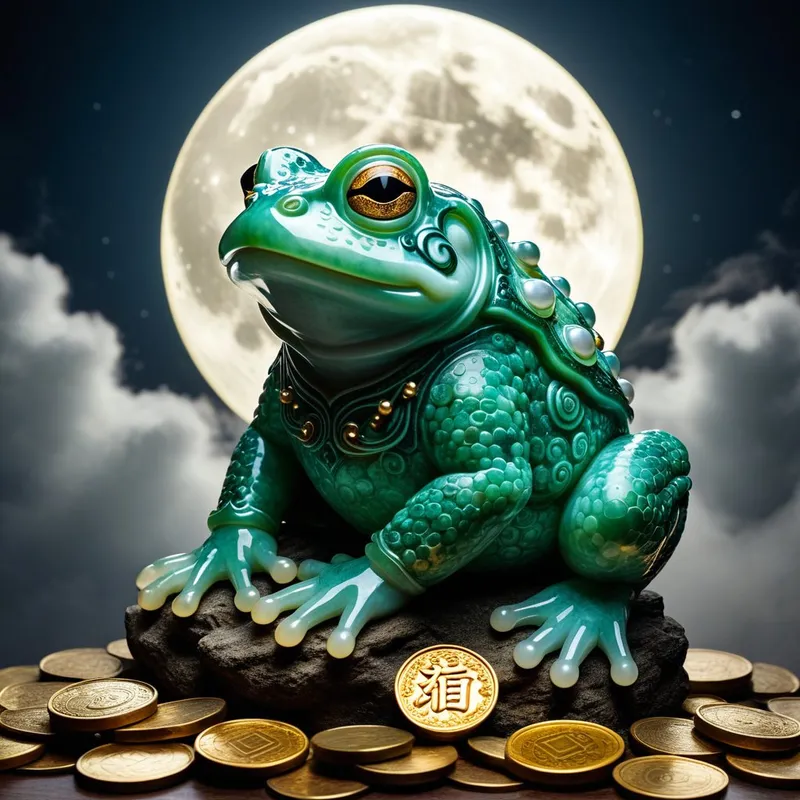
Do not mistake this dream for one of simple ambition or healthy wanting. This is not the dream of planting a seed, but of clutching the entire harvest in a death-grip until it rots in your hands. The shadow of greed is not a call to acquire more in the waking world; it is a siren song that promises wholeness through possession, and in doing so, ensures you will always feel the lack. It is the fundamental error of confusing external accumulation for internal integration. A dream of finding a treasure chest is not greed; a dream of being buried alive by the coins from that chest is.
Psychological Architecture
Greed, in the psyche’s architecture, is a structural flaw in the foundation of the Self. It is the orphaned part of us—the exiled child of scarcity—who has been promoted to chief financial officer of the soul. This inner exile operates on a brutal, binary logic: the world is a zero-sum game, love is a finite commodity, and worth is measured in what you can hold onto. The individuation process here is a profound act of shadow re-parenting. It requires you to sit with that terrified inner hoarder, not to chastise it, but to ask, “What are you so afraid of losing?” The answer is never the object itself, but a quality it symbolizes: safety, love, validity, existence. The work is to differentiate the symbol from the substance, to give the inner orphan the direct experience of being held so it no longer needs to hold on so desperately.
Mythic Resonance
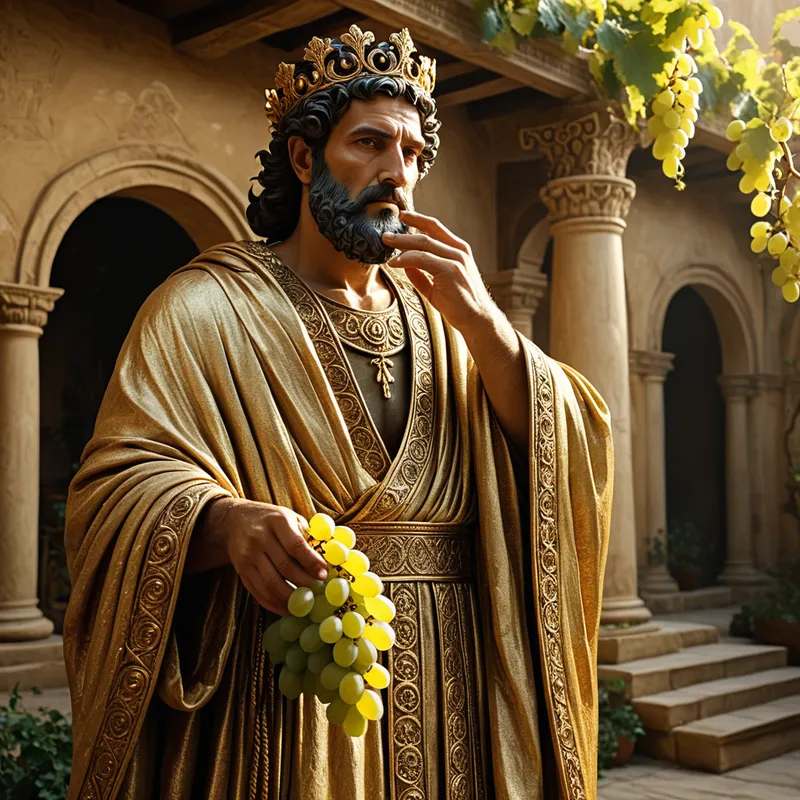
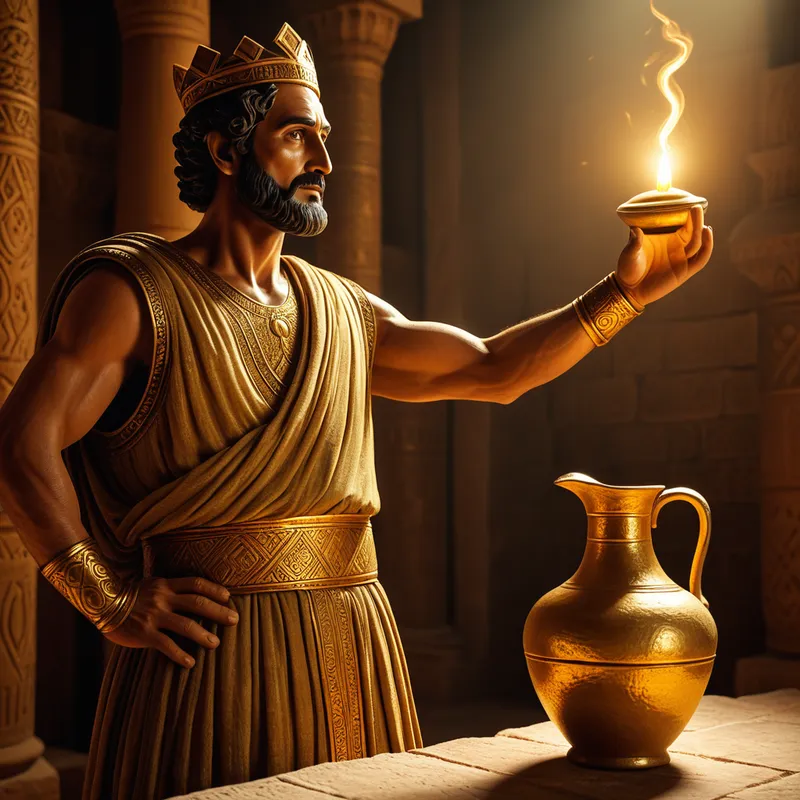
We see this architecture perfected in the myth of King Midas. His wish—that all he touches turn to gold—is not the wish of a greedy man, but of a profoundly hungry soul. He seeks a guarantee, an alchemical certainty in a world of flux. The tragedy is not the golden touch itself, but its indiscriminate nature. It cannot differentiate between a goblet and his daughter, between currency and connection. The myth shows us that greed is ultimately a failure of discernment, a psychic process that converts the living, the nourishing, and the beloved into the same inert, shiny substance. It is the attempt to make the world safe by making it static, and in doing so, starving amidst a kingdom of gold.
Symbolic Nodes
- Insatiable Consumption: Eating endlessly but never feeling full; drinking from a cup that refills the moment it’s emptied.
- Fusion with the Object: Becoming the gold coin, the gem, the data stream; losing your form to the thing you crave.
- Paralytic Hoarding: Rooms crammed with useless treasure; being physically trapped or immobilized by the weight of your acquisitions.
- Barren Vaults: Endless, empty warehouses or bank vaults that must be filled; a pristine, sterile space that echoes with lack.
- The Guarded Heart: A jewel, flame, or child kept behind endless walls, lasers, and locks—the thing you most protect becomes the thing that imprisons you.
Archetypal Resonance
The energy of greed resonates most powerfully with the shadow aspect of The Ruler Archetype—the Tyrant or Control-Freak. The core desire of the Ruler is to create order and stability, a noble aim. But in its shadow form, this morphs into a need for total control born from a terror of chaos and lack. The Tyrant within doesn’t just want influence; it demands absolute possession to feel secure. The somatic echo of the clenched jaw and shallow breath is the body of a tyrant-king, armoring itself against a perceived siege. The alchemical potential here lies in transmuting this rigid, fear-based control into true sovereignty—the ability to govern one’s inner kingdom with wisdom and generosity, knowing real security comes from resilient flow, not fortified stockpiles.
The Alchemical Process
The transmutation of greed is one of the most intense psychic operations: the solve et coagula (dissolve and coagulate) of the soul’s economy. First, the heat—the uncomfortable pressure of recognizing your own clinging, the shame of the hollow hunger. This heat must be applied not to destroy the hunger, but to melt the rigid identity of “the one who lacks.” As that identity dissolves, the true nature of the hunger is revealed: a longing for integration, for a sense of inherent worth that doesn’t require external proof.
Then, the coagulation. This is not about acquiring new things, but about restructuring your inner governance. You must consciously redirect energy from the external hoard to the internal foundation. It is the patient, deliberate act of building inner resources—self-trust, self-compassion, creative expression—that are non-fungible and cannot be stolen. The leaden fear of scarcity is transmuted into the golden awareness of inner sufficiency. You move from a paradigm of ownership to one of stewardship, from a closed fist to an open hand that can both give and receive without fear of depletion.

The Integration Protocol
Question 1: In the dream, what did I fear would happen if I stopped acquiring, consuming, or holding on? What is the catastrophic fantasy my psyche is preparing for?
Question 2: Where in my waking life do I confuse having with being? (e.g., “If I have that title, I will be respected.” “If I have their love, I will be whole.”)
Question 3: If the object of my greed in the dream (the gold, the data, the food) could speak, what quality would it say it represents, and how could I cultivate that quality directly within myself?
Action 1 (The Emptying Ritual): Choose one small, cluttered physical space—a drawer, a shelf. With full presence, remove every item. Hold each one and ask, “Does this nourish my life now, or am I holding it out of a fear of future lack?” Donate or discard anything that belongs to the latter category. Feel the created space as a physical analog for inner capacity.
Action 2 (The Hunger Dialogue): In a journal, let the voice of your inner “hoarder” or “tyrant” speak uncensored. Let it rant about what it needs to control and why. Then, respond not as a critic, but as a wise, compassionate sovereign. Offer understanding first, then gently present a new law: “In this kingdom, your safety is guaranteed not by the size of our vault, but by the strength of our spirit.”
Action 3 (Generative Gesture): Create something with the explicit intention of giving it away. Bake bread and share it. Write a poem and leave it in a public place. Sketch a small image and mail it to a friend. The action must involve making something from your own resources and releasing it without any expectation of return. This actively rewires the psyche from a circuit of accumulation to a circuit of generative flow.
Final Validation
To dream of greed is to touch one of the deepest, most ancient wounds of the human psyche: the terror of emptiness. It is a difficult, often shameful dream to carry into the waking light. Honor that difficulty. You are not flawed for having this dream; you are courageous for meeting it. This dream is not an indictment of your character, but an invitation to rebuild the very foundation of your sense of worth. It calls you to cease the exhausting labor of building outer fortresses, and to turn instead to the quieter, more revolutionary work of cultivating an inner garden so fertile that the very idea of scarcity becomes obsolete. The integration of this shadow does not make you poor; it makes you sovereign, ruling a self that is finally, profoundly, enough.