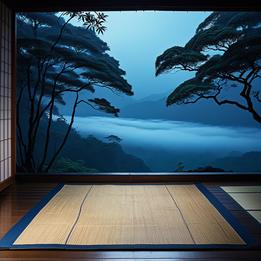
Tatami Mat
A traditional Japanese floor mat made of woven straw, symbolizing order, tradition, and connection to nature and domestic life.
Tatami Mat Dream Meaning
A traditional Japanese floor mat made of woven straw, symbolizing order, tradition, and connection to nature and domestic life.
Interpretive Themes
Mythological Resonance
Tatami in Shinto Shrines
JapaneseSacred flooring in shrines like Ise Jingu, ritually renewed every 20 years, symbolizing the cyclical rebirth of tradition and connection to kami (spirits).
Zabuton (cushion on tatami)
Zen BuddhismThe meditation cushion placed on tatami represents the intersection of human discipline and natural order in pursuit of enlightenment.
Cultural Lenses
Jungian Perspective
View Context →Represents the Self or mandala, symbolizing wholeness and the integration of consciousness with the unconscious, often linked to Eastern spirituality and archetypal patterns of order.
Freudian Perspective
View Context →May symbolize domestic or maternal security, with the woven texture potentially representing repressed desires or childhood memories tied to home and comfort.
Gestalt Perspective
View Context →Seen as a projection of the dreamer's need for structure or grounding, with the mat's condition reflecting current emotional state or life organization.
Cognitive Perspective
View Context →Interpreted as a mental schema for order or tradition, possibly activated during sleep to process memories, cultural learning, or stress related to stability.
Evolutionary Perspective
View Context →Linked to innate preferences for safe, organized spaces, reflecting ancestral adaptations for shelter and social rituals that enhance group cohesion and survival.
East Asian Perspective
View Context →Deeply rooted in Japanese culture, tatami mats signify respect, ritual, and harmony; historically used in tea ceremonies and homes, they embody Shinto and Buddhist values of purity and simplicity.
Global/Universal Perspective
View Context →Symbolizes flooring or foundation across cultures, representing basic human needs for shelter, order, and ceremonial space, often evoking universal themes of home and tradition.
South Asian Perspective
View Context →Similar to woven mats or rugs in traditions like yoga or meditation, representing spiritual practice, humility, and connection to earth, with historical use in rituals and daily life.
Middle Eastern Perspective
View Context →Evokes prayer rugs or traditional floor coverings, symbolizing devotion, community, and hospitality, with cultural roots in Islamic practices and social gatherings.
European Perspective
View Context →Associated with exoticism or minimalism in modern design, often viewed through a lens of aesthetic appreciation or historical trade, reflecting colonial or cultural exchange influences.
Modern Western Perspective
View Context →Often seen in wellness and minimalist lifestyles, representing mindfulness, Japanese-inspired design, and a break from clutter, sometimes commercialized as a symbol of calm.
African Perspective
View Context →Parallels woven mats or straw floorings in many cultures, used for seating, sleeping, or ceremonies, symbolizing community, craftsmanship, and connection to natural resources.
Historical Authorities
Want a deeper analysis?
Get a personalized interpretation of your entire dream including this symbol.
Interpret My DreamThe Oracle's Prediction
Combine multiple symbolsA deepening of mindfulness or ancestral connection will occur.
Timeframe
Seasonal (~3 Months)
Intensity
Deep
Stability in resources through traditional methods.
Timeframe
Distant (6+ Months)
Intensity
Deep
Common Appearances & Contexts
| Context | Emotion | Interpretation |
|---|---|---|
| Context Sitting on mat | Emotion Peaceful | Interpretation Inner calm sought. |
| Context Damaged mat | Emotion Anxious | Interpretation Stability threatened. |
| Context New mat smell | Emotion Nostalgic | Interpretation Memory triggered. |
| Context Cleaning mat | Emotion Fulfilled | Interpretation Order restored. |
| Context Rolling up mat | Emotion Restless | Interpretation Change impending. |
| Context Mat in nature | Emotion Harmonious | Interpretation Balance achieved. |
| Context Mat in modern room | Emotion Conflicted | Interpretation Tradition clashes. |
| Context Multiple mats | Emotion Organized | Interpretation Structure emphasized. |
| Context Mat burning | Emotion Fearful | Interpretation Loss feared. |
| Context Mat as gift | Emotion Grateful | Interpretation Heritage accepted. |
| Context Walking on mat | Emotion Respectful | Interpretation Ritual observed. |
| Context Mat missing | Emotion Disoriented | Interpretation Foundation lost. |
Interpret Your Full Dream
Beyond this symbol, every dream carries a unique story. Share your dream for a personalized AI-powered interpretation.