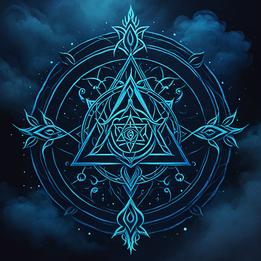
Sigil
A magical symbol designed to represent a specific intent, often used in ritual and personal empowerment to manifest desires or protection.
Sigil Dream Meaning
A magical symbol designed to represent a specific intent, often used in ritual and personal empowerment to manifest desires or protection.
Interpretive Themes
Mythological Resonance
Austin Osman Spare
Chaos MagicThe 20th-century artist and occultist developed sigil magic by condensing desires into abstract symbols, then forgetting them to bypass conscious resistance.
Runes
NorseAncient alphabetic symbols carved for protection, divination, and manifestation, believed to channel cosmic forces when activated.
Cultural Lenses
Jungian Perspective
View Context →Represents archetypal symbols from the collective unconscious, serving as mandalas for individuation. Modern context sees them as tools for accessing deeper self-knowledge and integrating shadow aspects.
Freudian Perspective
View Context →Symbolizes repressed desires or sexual energy given symbolic form. The act of creating sigils represents sublimation of unconscious drives into acceptable creative or spiritual outlets.
Gestalt Perspective
View Context →Represents unfinished business or unmet needs seeking completion. The sigil's form reveals what the dreamer is trying to organize or make whole in their experience.
Cognitive Perspective
View Context →Functions as mental shorthand for complex intentions or beliefs. The brain creates symbolic representations to process abstract goals and reinforce neural pathways associated with desired outcomes.
Evolutionary Perspective
View Context →Stems from pattern recognition and agency detection mechanisms. Early humans used symbols to influence perceived supernatural forces, with modern sigils serving similar psychological functions for control.
European Perspective
View Context →Historical roots in medieval grimoires and hermetic traditions, used for protection and summoning. Modern practice continues in occult circles, blending historical methods with contemporary spirituality.
Middle Eastern Perspective
View Context →Connected to ancient Mesopotamian cylinder seals and Islamic talismanic traditions using geometric patterns. Modern use persists in protective amulets and calligraphic art with spiritual significance.
East Asian Perspective
View Context →Relates to Daoist fu talismans and Buddhist mandalas used for healing and protection. Contemporary practice maintains ritual use while influencing modern meditation and energy work techniques.
South Asian Perspective
View Context →Linked to yantras in Hindu and Tantric traditions—geometric representations of deities used for meditation. Modern context preserves ritual use while influencing New Age visualization practices.
African Perspective
View Context →Associated with adinkra symbols and nsibidi script, conveying proverbs and spiritual concepts. Contemporary use maintains cultural identity while influencing diaspora spiritual practices.
Modern Western Perspective
View Context →Popularized by chaos magic as personalized symbols for manifestation. Current context emphasizes individual creation over traditional forms, often using digital or artistic methods.
Global/Universal Perspective
View Context →Cross-cultural human tendency to create meaningful symbols for influence and understanding. Modern globalization blends traditions while maintaining core function of representing intention through form.
Historical Authorities
Want a deeper analysis?
Get a personalized interpretation of your entire dream including this symbol.
Interpret My DreamThe Oracle's Prediction
Combine multiple symbolsA breakthrough in personal manifestation or magical practice.
Timeframe
Lunation (~29 Days)
Intensity
Deep
Common Appearances & Contexts
| Context | Emotion | Interpretation |
|---|---|---|
| Context Drawing a sigil | Emotion Focused | Interpretation Active manifestation attempt. |
| Context Seeing glowing sigil | Emotion Awe | Interpretation Powerful revelation occurring. |
| Context Sigil on door | Emotion Secure | Interpretation Boundary protection needed. |
| Context Forgotten sigil meaning | Emotion Frustrated | Interpretation Lost personal knowledge. |
| Context Sigil burning away | Emotion Relieved | Interpretation Release of old intent. |
| Context Sigil in water | Emotion Calm | Interpretation Emotional cleansing process. |
| Context Multiple sigils overlapping | Emotion Overwhelmed | Interpretation Conflicting desires present. |
| Context Sigil on skin | Emotion Empowered | Interpretation Personal identity marking. |
| Context Sigil fading | Emotion Anxious | Interpretation Weakening of resolve. |
| Context Sigil in darkness | Emotion Mystified | Interpretation Hidden subconscious workings. |
| Context Sigil breaking apart | Emotion Shocked | Interpretation Intent failure realization. |
| Context Sigil given by other | Emotion Trusting | Interpretation External guidance accepted. |
Interpret Your Full Dream
Beyond this symbol, every dream carries a unique story. Share your dream for a personalized AI-powered interpretation.