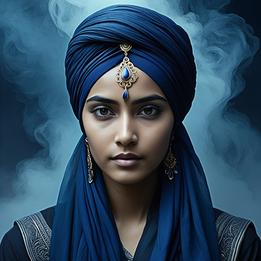
Turban
A head covering symbolizing authority, spirituality, and cultural identity, often representing dignity, wisdom, or social status.
Turban Dream Meaning
A head covering symbolizing authority, spirituality, and cultural identity, often representing dignity, wisdom, or social status.
Interpretive Themes
Cultural Lenses
Jungian Perspective
View Context →Represents the crown chakra or spiritual enlightenment; the Self integrating higher consciousness. Historically, head coverings symbolize connection to divine wisdom across traditions.
Freudian Perspective
View Context →Phallic symbol representing masculine power and authority; may indicate preoccupation with social dominance or unresolved father-figure dynamics in modern psychological contexts.
Gestalt Perspective
View Context →The part representing the whole self; how one 'wraps' identity for the world. In modern therapy, explores self-presentation versus authentic being.
Cognitive Perspective
View Context →Mental schema for authority or tradition; brain processing cultural symbols during sleep. Modern neuroscience studies how familiar objects trigger memory networks.
Evolutionary Perspective
View Context →Head protection signaling status within group hierarchy; evolved display of fitness for leadership roles. Modern equivalent of status markers in social structures.
South Asian Perspective
View Context →In Sikhism, the dastar is sacred, representing equality, sovereignty, and devotion. Historically worn by royalty and warriors, now a religious requirement showing commitment to faith.
Middle Eastern Perspective
View Context →Keffiyeh or shemagh historically protected from desert elements; signifies tribal affiliation, age, and social standing. Modernly represents Arab identity and sometimes political symbolism.
African Perspective
View Context →Gele or headwrap indicates marital status, wealth, and cultural pride in West Africa. Historically denoted royalty; in modern contexts worn for ceremonies and as fashion statement.
East Asian Perspective
View Context →Limited historical use except in Tibetan Buddhism where ceremonial crowns represent enlightenment. Modern associations often through cultural exchange rather than indigenous tradition.
European Perspective
View Context →Historically worn by medieval nobility and scholars; later associated with Orientalism in art. Modern view often exoticized or linked to costume rather than living tradition.
Modern Western Perspective
View Context →Primarily seen as religious garb (Sikhism) or cultural appropriation in fashion. Represents multiculturalism debates and religious freedom issues in contemporary society.
Global/Universal Perspective
View Context →Cross-cultural symbol of dignity, wisdom, and spiritual connection. Historically, head coverings universally denote respect, with modern variations reflecting globalization of cultural symbols.
Want a deeper analysis?
Get a personalized interpretation of your entire dream including this symbol.
Interpret My DreamCommon Appearances & Contexts
| Context | Emotion | Interpretation |
|---|---|---|
| Context Receiving a turban | Emotion Honored | Interpretation Accepting new responsibility. |
| Context Losing a turban | Emotion Vulnerable | Interpretation Identity crisis or shame. |
| Context Wearing ornate turban | Emotion Proud | Interpretation Achievement recognized. |
| Context Turban unraveling | Emotion Anxious | Interpretation Control slipping away. |
| Context Choosing a turban | Emotion Contemplative | Interpretation Deliberating self-presentation. |
| Context Turban too tight | Emotion Restricted | Interpretation Burdened by expectations. |
| Context Turban in water | Emotion Purified | Interpretation Spiritual cleansing occurring. |
| Context Multiple turbans | Emotion Confused | Interpretation Conflicting roles or identities. |
| Context Turban as gift | Emotion Loved | Interpretation Blessing or inheritance received. |
| Context Turban changing color | Emotion Transformed | Interpretation Evolving beliefs or status. |
| Context Turban in battle | Emotion Courageous | Interpretation Defending principles fiercely. |
| Context Turban too large | Emotion Overwhelmed | Interpretation Role exceeds capacity. |
Interpret Your Full Dream
Beyond this symbol, every dream carries a unique story. Share your dream for a personalized AI-powered interpretation.