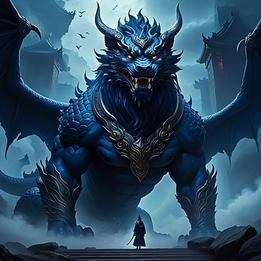
Haetae Guardian
A mythical Korean chimera that wards off evil, judges the righteous, and symbolizes justice, protection, and divine law.
Haetae Guardian Dream Meaning
A mythical Korean chimera that wards off evil, judges the righteous, and symbolizes justice, protection, and divine law.
Interpretive Themes
Mythological Resonance
Maat
EgyptianThe goddess of truth, justice, and cosmic order, who weighs hearts against a feather in the afterlife.
Themis
GreekThe Titaness of divine law, order, and prophecy, often depicted blindfolded and holding scales.
Cultural Lenses
East Asian Perspective
View Context →In Korean mythology, the Haetae (also Haechi) is a stone-eating chimera that wards off fire and natural disasters, judges officials, and symbolizes Seoul. Historically placed at palaces and courts as a protector and emblem of royal justice.
Jungian Perspective
View Context →An archetype of the Self or the protective aspect of the psyche (the Self as guardian). Represents the integration of instinct (animal form) and spirit (divine function), guiding toward individuation and moral wholeness.
Freudian Perspective
View Context →Could symbolize the superego—the internalized moral authority and conscience that judges and restrains the id's impulses. May represent paternal protection or fear of punishment for transgressive desires.
Gestalt Perspective
View Context →A projection of the dreamer's own protective or judgmental qualities. Ask: 'What part of me is the Haetae?' It may represent an aspect of yourself that seeks to control, defend, or morally evaluate your actions.
Cognitive Perspective
View Context →A mental schema for 'protection' or 'justice' activated during sleep. May reflect waking concerns about safety, fairness, or decision-making, processed through a culturally familiar mythical framework.
Evolutionary Perspective
View Context →Manifests an evolved threat-detection and coalitional psychology. The guardian figure represents group protection mechanisms, social monitoring for cheaters, and the adaptive benefit of believing in supernatural justice.
Global/Universal Perspective
View Context →Fits the cross-cultural motif of the protective hybrid beast (e.g., chimera, griffin). Taps into universal human needs for security, moral order, and intervention against chaos or evil.
Modern Western Perspective
View Context →Often encountered in pop culture (games, anime) as a cool monster or guardian spirit. Can symbolize personal resilience, social justice activism, or a stylized form of spiritual protection divorced from original ritual context.
South Asian Perspective
View Context →Comparable to vahanas (divine mounts) like Nandi or Garuda, which are both protectors and symbols of dharma (cosmic law). Seen as a manifestation of divine will ensuring cosmic and social order.
European Perspective
View Context →Parallels to heraldic beasts (like lions or griffins) symbolizing nobility, courage, and guardianship of realm or lineage. Also echoes mythical guardians like the Sphinx, which poses tests and judges.
African Perspective
View Context →Resonates with guardian spirits or totemic animals in many traditions that protect communities, mediate with ancestors, and enforce taboos. Embodies the intersection of natural and spiritual law.
Middle Eastern Perspective
View Context →Echoes composite guardian figures like lamassu or cherubim, which protect sacred spaces and represent divine authority. Symbolizes the power to ward off evil and uphold divine decree.
Historical Authorities
Want a deeper analysis?
Get a personalized interpretation of your entire dream including this symbol.
Interpret My DreamThe Oracle's Prediction
Combine multiple symbolsYou will be called to act as a protector or mediator in a situation requiring moral clarity.
Timeframe
Seasonal (~3 Months)
Intensity
Deep
Common Appearances & Contexts
| Context | Emotion | Interpretation |
|---|---|---|
| Context Being chased by a threat | Emotion Fear | Interpretation Haetae may appear to intervene, offering protection. |
| Context Witnessing an injustice | Emotion Anger | Interpretation Symbolizes inner call for fairness and moral action. |
| Context Feeling lost or vulnerable | Emotion Anxiety | Interpretation Represents a need for guidance and security. |
| Context Making a difficult decision | Emotion Uncertainty | Interpretation Encourages trusting inner moral compass. |
| Context Experiencing spiritual doubt | Emotion Confusion | Interpretation Signifies connection to higher principles. |
| Context Facing a personal failure | Emotion Shame | Interpretation May urge self-forgiveness and ethical renewal. |
| Context Protecting someone else | Emotion Determination | Interpretation Reflects your own guardian instincts. |
| Context In a chaotic environment | Emotion Overwhelm | Interpretation Symbolizes desire for order and stability. |
| Context Receiving an award or recognition | Emotion Pride | Interpretation Could affirm righteous actions or integrity. |
| Context Confronting a powerful figure | Emotion Defiance | Interpretation Represents standing up for what is right. |
| Context At a crossroads or gateway | Emotion Anticipation | Interpretation Guarding a new phase, ensuring safe passage. |
| Context In a ritual or sacred space | Emotion Reverence | Interpretation Connects to spiritual tradition and ancestry. |
Interpret Your Full Dream
Beyond this symbol, every dream carries a unique story. Share your dream for a personalized AI-powered interpretation.