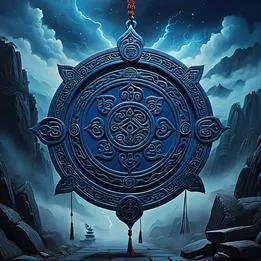
Taoist Talisman Dream Meaning
A ritual object used in Taoism for protection, healing, or spiritual empowerment, often inscribed with esoteric symbols and characters.
Common Appearances & Contexts
| Context | Emotion | Interpretation |
|---|---|---|
| Receiving a talisman from a master | reverence | May indicate spiritual initiation or guidance entering your life. |
| A talisman glowing with light | awe | Suggests awakening spiritual power or protection activating. |
| A talisman burning or breaking | anxiety | Could symbolize protection failing or spiritual crisis. |
| Creating a talisman yourself | focus | May represent taking control of your spiritual path. |
| A talisman with unfamiliar symbols | confusion | Suggests encountering unknown aspects of your psyche. |
| Multiple talismans arranged in pattern | wonder | Could indicate complex spiritual systems influencing you. |
| Losing a talisman | panic | May symbolize feeling spiritually vulnerable or disconnected. |
| A talisman repelling darkness | relief | Suggests overcoming negative influences or fears. |
| Ancient talisman in modern setting | curiosity | May represent integrating traditional wisdom into current life. |
| Talisman with moving characters | amazement | Could indicate dynamic spiritual forces at work. |
| Giving a talisman to someone | compassion | May symbolize offering protection or spiritual support. |
| Talisman changing form | bewilderment | Suggests evolving spiritual understanding or identity. |
Interpretive Themes
Spiritual Protection
highCore function in traditional Taoist practice.
Inner Harmony
mediumReflects Taoist principles of yin-yang balance.
Hidden Knowledge
mediumTalismans contain encoded spiritual information.
Transformation
lowSome talismans aim to transform circumstances.
Ancestral Connection
mediumOften created through ritual transmission.
Cultural Lenses
Jungian Perspective
View Context →Represents a symbol of the Self or wholeness, connecting conscious and unconscious. May indicate individuation process or archetypal protection emerging from the collective unconscious.
Freudian Perspective
View Context →Could symbolize paternal authority or superego, representing rules and protection. May relate to childhood magical thinking or wish-fulfillment for security against threats.
Gestalt Perspective
View Context →Represents a part of self trying to integrate or protect. The dreamer may be projecting their need for security or power onto this external object in their field.
Cognitive Perspective
View Context →May represent mental schemas for protection or problem-solving. Could indicate the brain processing concepts of agency, control, or spiritual beliefs during sleep consolidation.
Evolutionary Perspective
View Context →Could symbolize adaptive mechanisms for perceived threat reduction. May represent deep-seated human need for symbolic protection against uncertainties or invisible dangers.
East Asian Perspective
View Context →In Taoist tradition, talismans (fu) are ritual tools for healing, exorcism, or blessing, created by masters through meditation and calligraphy. Modernly, they remain in religious practice but also appear in popular culture.
Global/Universal Perspective
View Context →Found in many cultures as amulets or charms for protection. Represents universal human desire for symbolic objects that mediate between visible and invisible realms for safety or empowerment.
Modern Western Perspective
View Context →Often viewed through lens of cultural appropriation or exoticism. In secular contexts, may represent search for meaning or tools for mindfulness, divorced from original religious context.
South Asian Perspective
View Context →Parallels to yantras or protective amulets in Hindu and Buddhist traditions. While different in form, share function as geometric/mantric tools for spiritual protection and concentration.
Middle Eastern Perspective
View Context →Resonates with Islamic talismanic traditions using Quranic verses or divine names for protection (hirz). Both traditions employ sacred writing as conduit for spiritual power, though theological bases differ.
European Perspective
View Context →Echoes medieval Christian protective amulets or Jewish kabbalistic practices. While distinct, all use inscribed symbols to access divine protection, reflecting cross-cultural patterns in folk spirituality.
African Perspective
View Context →Parallels to protective charms in various African traditional religions, where objects are empowered through ritual. Both traditions view material objects as vessels for spiritual forces that protect or heal.
Interpret Your Full Dream
Beyond this symbol, every dream carries a unique story. Share your dream for a personalized AI-powered interpretation.