Leisure & Games

Polygon Dream Meaning

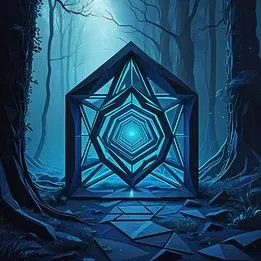
A geometric shape with multiple straight sides, representing structure, complexity, and boundaries in games and leisure.

Common Appearances & Contexts

Context Emotion Interpretation
Building a polygon focused Creating order.
Polygon collapsing anxious Structure failing.
Counting polygon sides curious Analyzing complexity.
Polygon transforming shape amazed Adapting to change.
Trapped in polygon frustrated Feeling constrained.
Polygon in game playful Engaging with rules.
Polygon glowing awe Revealing insight.
Polygon floating away peaceful Releasing structure.
Polygon puzzle determined Solving challenges.
Polygon as shield protected Defining boundaries.
Polygon melting confused Losing form.
Polygon multiplying overwhelmed Complexity increasing.

Interpretive Themes

Cultural Lenses

Jungian Perspective

View Context →

Represents archetypal patterns of order and the Self's geometric structure in the collective unconscious. Polygons symbolize mandala-like wholeness, integration, and the psyche's inherent organization toward individuation.

Freudian Perspective

View Context →

May symbolize repressed desires for control or sexual imagery through angular forms. The rigid edges could represent defense mechanisms or sublimated aggression in structured, socially acceptable ways.

Gestalt Perspective

View Context →

The whole (polygon) is greater than its parts (sides). Dreams highlight perception of patterns, closure needs, or how the mind organizes fragmented experiences into coherent shapes for meaning-making.

Cognitive Perspective

View Context →

Reflects mental schemas, problem-solving processes, or memory consolidation. Polygons may represent how the brain structures information, processes spatial relationships, or practices cognitive tasks during sleep.

Evolutionary Perspective

View Context →

Taps into ancient pattern recognition for survival—identifying shapes in nature (honeycombs, crystals). May signal adaptive processing of environmental structures or social boundaries for group cohesion.

Modern Western Perspective

View Context →

Strongly associated with digital technology, gaming, and CGI. Represents innovation, virtual reality, and the blending of mathematics with entertainment in contemporary leisure culture.

East Asian Perspective

View Context →

Influenced by Feng Shui and sacred geometry; polygons like octagons symbolize harmony and protection. Historically seen in pagoda architecture, representing cosmic order and balance in design.

European Perspective

View Context →

Rooted in classical geometry from Greek philosophy (Platonic solids) and Renaissance art. Polygons symbolize rational thought, divine proportion, and the pursuit of perfect form in cultural history.

African Perspective

View Context →

Appears in traditional patterns (e.g., Adinkra symbols) and architecture. Polygons often represent community unity, ancestral wisdom, or the interconnectedness of life through geometric storytelling.

Middle Eastern Perspective

View Context →

Central to Islamic art and architecture as non-representational geometric patterns (girih). Symbolizes infinite divine creation, mathematical beauty, and spiritual transcendence beyond figurative forms.

South Asian Perspective

View Context →

Linked to mandalas and yantras in Hinduism and Buddhism. Polygons (like hexagons) represent cosmic diagrams, meditation tools, and the structured path to enlightenment in ritual contexts.

Global/Universal Perspective

View Context →

A cross-cultural symbol of structure, appearing in nature (snowflakes, basalt columns) and human creation. Universally represents order, complexity, and the human urge to quantify and shape reality.

AI-Powered

Interpret Your Full Dream

Beyond this symbol, every dream carries a unique story. Share your dream for a personalized AI-powered interpretation.