Spiritual & Myth

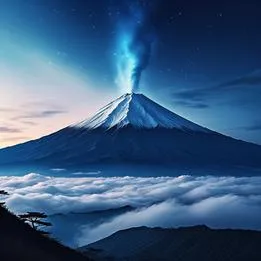
Mount Fuji Dream Meaning

A sacred, symmetrical volcano in Japan representing spiritual ascent, perfection, and the connection between earth and heaven.

Common Appearances & Contexts

Context Emotion Interpretation
Climbing Mount Fuji easily elation Suggests smooth progress toward a major life goal.
Seeing Mount Fuji from afar longing May represent an admired but distant aspiration.
Mount Fuji erupting terror Warns of suppressed anger or sudden life change.
Living on Mount Fuji peace Indicates contentment with spiritual or isolated path.
Failing to climb Mount Fuji frustration Highlights obstacles in achieving an important ambition.
Painting or photographing Mount Fuji inspiration Suggests a desire to capture or share beauty.
Mount Fuji covered in clouds confusion Symbolizes unclear goals or hidden truths.
Protecting Mount Fuji from harm determination Shows commitment to preserving values or traditions.
Flying over Mount Fuji freedom Represents transcending limitations or gaining perspective.
Mount Fuji shrinking or disappearing anxiety Fears about losing stability or identity.
Guiding others to Mount Fuji pride Indicates a mentorship or teaching role.
Mount Fuji in a storm awe Suggests enduring challenges with resilience.

Interpretive Themes

Cultural Lenses

Jungian Perspective

View Context →

An archetype of the Self, representing wholeness, individuation, and the connection between conscious and unconscious. The climb symbolizes the psychic journey toward integration.

Freudian Perspective

View Context →

A phallic symbol representing masculine power, ambition, or sexual energy. The volcano may symbolize repressed desires or explosive emotional release.

Gestalt Perspective

View Context →

Represents the self in its environment—how you relate to something monumental, stable, or awe-inspiring. The dreamer's interaction with it reveals self-perception.

Cognitive Perspective

View Context →

A mental schema for 'perfection' or 'challenge,' activated during problem-solving or goal-setting. Reflects cognitive processes about aspirations and achievements.

Evolutionary Perspective

View Context →

Taps into innate awe for large, stable landmarks, offering survival advantages like navigation, resource location, or group cohesion around shared symbols.

East Asian Perspective

View Context →

In Japan, a sacred Shinto site where deities dwell; climbing it is a pilgrimage for purification. Historically, it symbolizes national identity and artistic inspiration in ukiyo-e prints.

Global/Universal Perspective

View Context →

A universal symbol of majestic natural beauty and spiritual ascent, akin to other sacred mountains like Olympus or Kailash, representing humanity's awe of nature.

Modern Western Perspective

View Context →

Often seen as an exotic travel destination or aesthetic icon, representing adventure, cultural appreciation, or a bucket-list achievement divorced from religious context.

European Perspective

View Context →

Historically, viewed through colonial lenses as an 'Oriental' mystery; in modern times, it symbolizes Japanese craftsmanship, tranquility, and geometric perfection in design.

South Asian Perspective

View Context →

May parallel sacred mountains like Mount Meru in Hinduism/Buddhism, seen as an axis mundi connecting earthly and divine realms, or a site for meditation.

Middle Eastern Perspective

View Context →

Could be associated with distant, mythical mountains in Islamic or pre-Islamic lore, symbolizing a journey to wisdom or a test of faith and endurance.

North American Perspective

View Context →

Often perceived through pop culture or tourism as a symbol of Japanese resilience and beauty, sometimes evoking comparisons to natural wonders like Mount Rainier.

AI-Powered

Interpret Your Full Dream

Beyond this symbol, every dream carries a unique story. Share your dream for a personalized AI-powered interpretation.