Spiritual & Myth

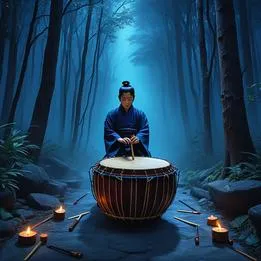
Moktak Drum Dream Meaning

A Korean Buddhist wooden percussion instrument used to regulate chanting rhythm, symbolizing spiritual discipline, awakening, and the heartbeat of practice.

Common Appearances & Contexts

Context Emotion Interpretation
Temple chanting Peaceful Spiritual alignment achieved.
Broken drum Anxious Disrupted spiritual practice.
Silent drum Lonely Spiritual stagnation present.
Loud drumming Urgent Awakening call needed.
Teaching drumming Joyful Spiritual transmission occurring.
Drum in nature Connected Harmony with cosmos.
Forgotten drum Guilty Neglected spiritual duties.
Multiple drums Overwhelmed Conflicting spiritual voices.
Gifted drum Grateful Spiritual inheritance received.
Drum repair Hopeful Spiritual renewal possible.
Drum competition Competitive Spiritual ego emerging.
Ancient drum Awed Timeless wisdom accessible.

Interpretive Themes

Cultural Lenses

Jungian Perspective

View Context →

Represents the Self's rhythmic integration of consciousness and unconsciousness. The drumbeat symbolizes individuation process, connecting personal rhythm to archetypal patterns of wholeness and spiritual development.

Freudian Perspective

View Context →

Phallic symbol representing repressed sexual energy sublimated into spiritual practice. The rhythmic beating suggests primal impulses finding disciplined, socially acceptable expression through religious ritual.

Gestalt Perspective

View Context →

Represents the figure-ground relationship between spiritual discipline (figure) and daily life (ground). The drum's sound creates awareness of what needs attention in the present moment of spiritual practice.

Cognitive Perspective

View Context →

Mnemonic device for ritual sequences, representing structured thought patterns in spiritual practice. The rhythm serves as cognitive scaffolding for meditation and mindfulness techniques.

Evolutionary Perspective

View Context →

Extension of primal rhythmic communication for group cohesion. Represents evolved adaptation for synchronized spiritual practices that enhance social bonding and reduce anxiety through predictable patterns.

East Asian Perspective

View Context →

Korean Buddhist instrument for regulating chanting rhythm since Goryeo Dynasty. Represents monastic discipline, the heartbeat of practice, and the sound that awakens beings from spiritual slumber in temple rituals.

South Asian Perspective

View Context →

Related to damaru drums in Hindu and Buddhist traditions. Symbolizes the rhythm of creation and destruction, Shiva's cosmic dance, and the sound vibration (nada) that manifests reality in tantric practices.

Global/Universal Perspective

View Context →

Universal shamanic drum representing altered states of consciousness. Across cultures, drum rhythms facilitate trance, healing journeys, and connection to spiritual realms through their hypnotic, heartbeat-like patterns.

Middle Eastern Perspective

View Context →

Connected to Sufi dhikr ceremonies where rhythmic repetition induces mystical states. Represents the heartbeat of divine remembrance, helping practitioners transcend ego through synchronized spiritual practice.

Modern Western Perspective

View Context →

Symbol of mindfulness and stress reduction techniques. Represents the search for rhythm in chaotic modern life, often incorporated into meditation apps and wellness practices as focus tool.

African Perspective

View Context →

Related to talking drums and ritual percussion. Represents ancestral communication, community rhythm, and the heartbeat of cultural memory in ceremonies that connect living and spiritual realms.

North American Perspective

View Context →

In Indigenous traditions, represents heartbeat of Mother Earth. Used in healing ceremonies and vision quests to connect with natural rhythms and spiritual guidance through sustained drumming patterns.

AI-Powered

Interpret Your Full Dream

Beyond this symbol, every dream carries a unique story. Share your dream for a personalized AI-powered interpretation.