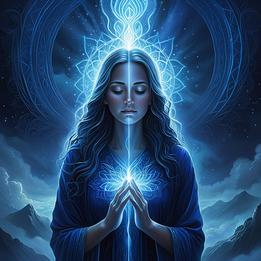
Inner Light
A spiritual symbol representing divine presence, consciousness, enlightenment, or the soul's essence, often associated with awakening and inner wisdom.
Inner Light Dream Meaning
A spiritual symbol representing divine presence, consciousness, enlightenment, or the soul's essence, often associated with awakening and inner wisdom.
Interpretive Themes
Mythological Resonance
Buddha
BuddhistAchieved enlightenment under the Bodhi tree, symbolizing the awakening of inner light and wisdom.
Holy Spirit
ChristianDescended as tongues of fire at Pentecost, representing divine presence and inner guidance.
Cultural Lenses
Global/Universal Perspective
View Context →A cross-cultural symbol of spiritual essence, often representing the soul, divine spark, or consciousness, found in myths, religions, and modern spirituality as a metaphor for inner truth and connection to the cosmos.
Jungian Perspective
View Context →Symbolizes the Self, the central archetype of wholeness, and the process of individuation. It represents the integration of conscious and unconscious aspects, leading to psychological enlightenment and personal transformation.
East Asian Perspective
View Context →In Taoism and Buddhism, it relates to qi or prana, the life force, and enlightenment (e.g., Buddha's inner light). In modern contexts, it's associated with mindfulness and energy practices like qigong.
South Asian Perspective
View Context →In Hinduism, it signifies Atman (the true self) and divine light (Jyoti), linked to rituals like Diwali. In yoga and meditation, it represents inner awakening and connection to Brahman.
Middle Eastern Perspective
View Context →In Sufism, it symbolizes divine light (Nur) and the heart's illumination, as in Rumi's poetry. In Zoroastrianism, it represents Ahura Mazda's wisdom, with modern ties to spiritual seeking.
European Perspective
View Context →In Christian mysticism, it denotes God's presence within (e.g., inner light of Quakers). In folklore, it can signal fairy or supernatural encounters, with modern links to New Age spirituality.
African Perspective
View Context →In traditions like Yoruba, it relates to Ashe (life force) and ancestral connection. In modern Afro-spirituality, it symbolizes inner power, resilience, and community healing practices.
North American Perspective
View Context →In Indigenous beliefs, it represents spirit or life essence, as in vision quests. In contemporary culture, it's tied to self-help, wellness movements, and personal enlightenment narratives.
Latin American Perspective
View Context →In syncretic religions like Santería, it signifies Orisha energy and spiritual protection. In modern contexts, it relates to curanderismo healing and community spiritual practices.
Oceanian Perspective
View Context →In Māori and Aboriginal cultures, it connects to mana (spiritual power) and Dreamtime essence. Today, it's part of cultural revival and holistic health approaches.
Modern Western Perspective
View Context →Often viewed through secular lenses as mindfulness, intuition, or psychological insight, popular in therapy and self-development. It symbolizes personal growth, creativity, and holistic well-being.
Freudian Perspective
View Context →May represent repressed desires or libidinal energy, symbolizing unconscious wishes for purity or enlightenment. It could indicate a sublimation of primal urges into spiritual or creative pursuits.
Gestalt Perspective
View Context →Seen as a projection of the self's wholeness or unmet needs, emphasizing present awareness. It encourages exploring what the light represents in one's current life context for integration.
Cognitive Perspective
View Context →Interpreted as a mental schema for clarity, problem-solving, or insight. It reflects cognitive processes like awareness or decision-making, often tied to memory consolidation during sleep.
Evolutionary Perspective
View Context →May stem from adaptive responses to light as a survival cue, symbolizing safety, consciousness, or social bonding. It could relate to evolved traits for spiritual or group cohesion benefits.
Historical Authorities
Want a deeper analysis?
Get a personalized interpretation of your entire dream including this symbol.
Interpret My DreamThe Oracle's Prediction
Combine multiple symbolsA moment of sudden insight or awakening that clarifies a long-standing confusion.
Timeframe
Immediate (Next 48h)
Intensity
Deep
Improved mental clarity and emotional balance.
Timeframe
Lunation (~29 Days)
Intensity
Deep
Common Appearances & Contexts
| Context | Emotion | Interpretation |
|---|---|---|
| Context Darkness to light | Emotion Relief | Interpretation Overcoming confusion. |
| Context Light within body | Emotion Peace | Interpretation Inner harmony found. |
| Context Shining from heart | Emotion Love | Interpretation Emotional openness. |
| Context Guiding light path | Emotion Hope | Interpretation Direction provided. |
| Context Light expanding outward | Emotion Joy | Interpretation Sharing positivity. |
| Context Flickering inner light | Emotion Anxiety | Interpretation Uncertainty present. |
| Context Bright light overwhelming | Emotion Awe | Interpretation Profound experience. |
| Context Light in meditation | Emotion Calm | Interpretation Spiritual practice. |
| Context Light dimming | Emotion Sadness | Interpretation Loss of connection. |
| Context Multiple inner lights | Emotion Wonder | Interpretation Complex awakening. |
| Context Light as voice | Emotion Clarity | Interpretation Inner wisdom speaking. |
| Context Light resisting darkness | Emotion Courage | Interpretation Inner strength shown. |
Interpret Your Full Dream
Beyond this symbol, every dream carries a unique story. Share your dream for a personalized AI-powered interpretation.