Sai
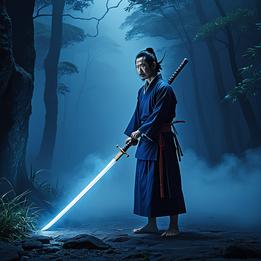
A traditional Okinawan three-pronged truncheon or dagger, symbolizing martial discipline, spiritual balance, and cultural heritage.
Sai Dream Meaning
A traditional Okinawan three-pronged truncheon or dagger, symbolizing martial discipline, spiritual balance, and cultural heritage.
Interpretive Themes
Conflict Resolution
highSai are defensive, not primarily killing tools.
Spiritual Discipline
mediumLinked to Okinawan martial arts philosophy.
Cultural Identity
highSymbol of Ryukyuan/Okinawan culture.
Personal Defense
highA tool for non-lethal protection.
Mastery and Skill
mediumRequires significant training to wield effectively.
Cultural Lenses
Jungian Perspective
View Context →The sai may represent the Self's defensive structures or the persona's tools for navigating conflict. Its three prongs could symbolize a trinity of consciousness aspects (thinking, feeling, sensing) requiring balance.
Freudian Perspective
View Context →The sai might symbolize phallic aggression sublimated into disciplined skill, or a defense mechanism against perceived threats. Its handling could relate to mastery of primal impulses.
Gestalt Perspective
View Context →The dreamer may be projecting parts of themselves onto the sai—perhaps their ability to 'parry' life's challenges or their 'points' of contention. How one interacts with it reveals unmet needs.
Cognitive Perspective
View Context →The sai likely represents schemas related to protection, skill acquisition, or cultural learning. Dreaming of it may consolidate memories of training or metaphorically process problem-solving strategies.
Evolutionary Perspective
View Context →The sai taps into ancestral adaptations for tool use and coalitional defense. It symbolizes non-lethal threat management, social status through skill display, and ingroup cultural signaling for survival.
East Asian Perspective
View Context →In Okinawan/Japanese context, the sai is a kobudo weapon symbolizing Ryukyuan martial heritage, spiritual discipline through arts like karate, and the principle of 'bujutsu' (martial science) for self-cultivation.
South Asian Perspective
View Context →While not native, similar trishula (trident) symbolism exists in Hindu/Buddhist iconography as a divine weapon representing destruction of ignorance or balancing three gunas (qualities of nature).
Modern Western Perspective
View Context →Largely viewed through pop culture (e.g., ninja media) as a cool, exotic weapon. It signifies niche martial arts dedication, cosplay, or a metaphor for specialized, non-conventional problem-solving skills.
European Perspective
View Context →Historically, similar truncheons were used by police or watchmen. The sai may symbolize lawful authority, civil defense, or the medieval concept of the 'catchpole' used to restrain without killing.
African Perspective
View Context →Analogous to throwing knives or ceremonial blades in some cultures, representing warrior status, ritual protection, or tools for hunting/defense that require precision and cultural knowledge to wield properly.
Global/Universal Perspective
View Context →A tool that transcends pure weaponry to represent skill, defense, and cultural tradition. Universally, it signifies human ingenuity in creating non-lethal instruments for protection and mastery.
Middle Eastern Perspective
View Context →While not traditional, the sai's trident shape may evoke symbolic connections to ancient Mesopotamian or Persian divine weapons representing sovereignty, protection of sacred order, or tripartite cosmic principles.
Want a deeper analysis?
Get a personalized interpretation of your entire dream including this symbol.
Interpret My DreamCommon Appearances & Contexts
| Context | Emotion | Interpretation |
|---|---|---|
| Context Wielding a sai | Emotion Confident | Interpretation Feeling prepared and capable. |
| Context Dropping a sai | Emotion Vulnerable | Interpretation Loss of protection or skill. |
| Context Receiving a sai | Emotion Honored | Interpretation Accepting responsibility or tradition. |
| Context Sai breaking | Emotion Shocked | Interpretation Foundation or defense failing. |
| Context Training with sai | Emotion Focused | Interpretation Dedication to self-improvement. |
| Context Fighting with sai | Emotion Determined | Interpretation Actively confronting a threat. |
| Context Displaying a sai | Emotion Proud | Interpretation Showcasing heritage or achievement. |
| Context Sai as gift | Emotion Grateful | Interpretation Valued mentorship or legacy. |
| Context Forging a sai | Emotion Purposeful | Interpretation Creating personal tools/defenses. |
| Context Sai in ritual | Emotion Reverent | Interpretation Connecting to spiritual practice. |
| Context Losing a sai | Emotion Anxious | Interpretation Fear of being unprepared. |
| Context Master wielding sai | Emotion Awed | Interpretation Witnessing high skill or wisdom. |
Interpret Your Full Dream
Beyond this symbol, every dream carries a unique story. Share your dream for a personalized AI-powered interpretation.