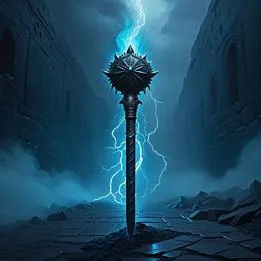
Mace Dream Meaning
A ceremonial or military weapon symbolizing authority, power, and the ability to enforce will or protect through force.
Common Appearances & Contexts
| Context | Emotion | Interpretation |
|---|---|---|
| Wielding a mace | Empowered | Feeling in control. |
| Being attacked | Terrified | Facing overwhelming force. |
| Ceremonial procession | Awed | Respect for authority. |
| Breaking something | Frustrated | Releasing pent-up anger. |
| Gifted a mace | Honored | Accepting responsibility. |
| Losing a mace | Vulnerable | Feeling powerless. |
| Ancient battlefield | Aggressive | Primitive conflict. |
| Museum display | Reflective | Historical power. |
| Guard holding mace | Secure | Protected by authority. |
| Rusty mace | Nostalgic | Past strength faded. |
| Forging a mace | Determined | Crafting personal power. |
| Mace as trophy | Proud | Achievement recognized. |
Interpretive Themes
Authority and Control
highSymbolizes personal or external control.
Aggression and Defense
highMay indicate conflict or self-preservation.
Ceremonial Power
mediumLinked to formal roles or status.
Masculine Energy
mediumCan represent assertiveness or dominance.
Transformation Through Force
lowSuggests breaking barriers or obstacles.
Cultural Lenses
Jungian Perspective
View Context →Represents the archetype of the warrior or king, symbolizing the ego's ability to assert itself and integrate shadow aspects through disciplined force.
Freudian Perspective
View Context →A phallic symbol denoting masculine aggression, sexual potency, or repressed violent impulses seeking expression in dream symbolism.
Gestalt Perspective
View Context →An aspect of the self that is forceful or authoritative; dreaming of a mace may indicate the dreamer's own unrecognized power or aggression.
Cognitive Perspective
View Context →A mental schema for authority or threat, activated during sleep to process real-life power dynamics, conflicts, or feelings of vulnerability.
Evolutionary Perspective
View Context →Rooted in survival mechanisms, symbolizing dominance, resource protection, or social hierarchy, reflecting innate responses to threats or competition.
European Perspective
View Context →Historically a knightly weapon and royal scepter, representing feudal authority, chivalric virtue, and judicial power in medieval courts and ceremonies.
Middle Eastern Perspective
View Context →Used in ancient Persian and Mesopotamian warfare and rituals, symbolizing divine kingship, celestial authority, and the crushing of enemies.
South Asian Perspective
View Context →Associated with Hindu deities like Hanuman or Durga, representing divine strength, destruction of evil, and spiritual discipline in iconography and myths.
East Asian Perspective
View Context →In Chinese and Japanese history, a military weapon and ceremonial object symbolizing martial prowess, authority, and the yang principle of active force.
African Perspective
View Context →Used in some traditional kingdoms as a symbol of chieftaincy or warrior status, representing communal protection, justice, and ancestral power.
Modern Western Perspective
View Context →Seen in parliamentary maces as symbols of democratic authority, or in fantasy genres as an emblem of brute strength and heroic conquest.
Global/Universal Perspective
View Context →A cross-cultural symbol of authority, force, and protection, often linked to leadership, conflict resolution, and the human drive for power and security.
Interpret Your Full Dream
Beyond this symbol, every dream carries a unique story. Share your dream for a personalized AI-powered interpretation.