
The Dream Theme of Defense: From Fortress to Foundation
The Somatic Echo
It begins not as a thought, but as a posture. A clenching in the solar plexus, a subtle drawing-in of the shoulders, a hardening at the back of the neck. The breath becomes shallow, held in the upper chest, as if preparing for an impact that has not yet been named. This is the body’s ancient language of vigilance, a somatic echo of a psyche sensing a frontier under pressure. You feel it as a low hum of readiness, a tension in the jaw that whispers of a coming argument, a stiffness in the spine that anticipates a burden. It is the physical prelude to a dream of walls, weapons, and watchtowers—the architecture of the self preparing for a siege.
The Dreamer's Log (Case Vignette)
I am alone in a windowless concrete bunker, deep underground. My only companion is a radar screen, its green sweep endlessly scanning the empty grey static. I know, with absolute certainty, that something is coming. But the screen shows nothing. My task is to wait, and to watch the nothing forever.
Alchemical Interpretation: The dreamer’s psyche has mobilized immense resources to guard against a threat it has not yet defined, creating a life-sustaining system around the anticipation of an attack that may never arrive.

The False Lead
A dream of defense is not a prophecy of external catastrophe. To interpret it as a simple warning of “bad luck” or an incoming personal disaster is to mistake the map for the territory. The fortified walls in your dreamscape are not primarily about the outside world; they are a rendering of your internal boundaries, your psychic immune system. The dream is not showing you what will happen, but revealing the immense energy you are currently spending on what might. It highlights a structural stance, not a future event. The true threat is often the cost of the garrison itself—the vitality spent on perpetual readiness, the life not lived beyond the ramparts.
Psychological Architecture
To dream of defense is to encounter the Shadow work of sovereignty. Individuation is not a gentle unfolding; it is often a series of conscious fortifications and subsequent, deliberate demolitions. We first build walls out of necessity—against childhood wounds, societal expectations, or our own unintegrated shadows. These walls serve a purpose: they create a container, a provisional self. But the psyche does not wish to live in a bunker forever. The dream of defense appears when that old architecture, once life-saving, has become life-limiting.
The work here is one of profound discernment. Which walls protect a sacred, vulnerable core—your values, your creative spirit, your capacity for love? And which walls merely imprison an old version of you, keeping out not only harm but also growth, connection, and novelty? The dream invites you to become the architect of your own inner landscape, to feel along the mortar of your defenses and ask: does this stone guard my essence, or merely my fear? The shift is from a paranoid rigidity to a conscious, fluid permeability. Sovereignty is not impenetrability; it is the secure, inner knowing of what you are, which allows you to choose what you let in and what you let go.
Mythic Resonance
Consider the myth of the Garden of Eden, not as a story of sin, but as a story of boundaries. The garden is a perfect, defended space—a walled paradise. The expulsion is not merely a punishment, but the necessary, devastating breach of that defense. The angel with the flaming sword does not just guard the garden; it seals the old world shut. The lifelong human journey that follows is the arduous task of building a different kind of sacred space—one not from divine grant, but from human experience, one that incorporates the knowledge of both innocence and the world beyond the wall. Our dreams of defense replay this eternal moment at our own personal gates.
Or witness Hestia, the Greek goddess of the hearth. Her domain is the oikos, the household—the original defended space. Her power lies not in armies, but in the centering flame. To neglect Hestia is to have a house that is physically secure but psychically cold, a fortress without a home. Defense, in its deepest sense, is not about keeping things out, but about tending the sacred fire within the walls you maintain.
Symbolic Nodes
- Walls, Fences, Shields: The architecture of separation.
- Locks, Keys, Passwords: Mechanisms of controlled access.
- Weapons (held, not used): Potential for aggression, held in readiness.
- Guards, Soldiers, Watchdogs: Personified aspects of vigilance.
- High Ground, Towers, Bunkers: Positions of strategic oversight and isolation.
- Alarms, Sirens, Radar Screens: Systems of early warning, often scanning for undefined threats.
- Suit of Armor (empty): A rigid identity or posture that has been abandoned, but its shape remains.
Archetypal Resonance
The energy of defense most powerfully resonates with The Ruler Archetype, specifically in its shadow manifestation of The Shadow Ruler.
The Shadow Ruler’s core energy is control, order, and stability, twisted by fear into tyranny, rigidity, and isolation. This archetype is the master builder of the bunker, the author of the uncompromising law, the psyche that mistakes a fortress for a kingdom. Its somatic echo is that stiffened spine and clenched jaw—the body armored against chaos. Yet, within this shadow lies the alchemical potential for true sovereignty. The heat of this dream theme forces a confrontation: is your rulership based on fear of invasion, or on the confident, calm authority that can afford to be generous? To transmute the Shadow Ruler is to move from building walls to establishing natural, resilient borders; from enforcing control to cultivating authentic order from within. The defended space becomes not a prison, but a well-ordered domain from which you can engage the world with purpose, not paranoia.
The Alchemical Process
The alchemy of defense requires the heat of honest self-confrontation and the pressure of sustained inner observation. The prima materia is the raw terror of vulnerability, the grief for a world that felt unsafe. The process begins in the nigredo, the blackening: you must sit in the dark of your bunker and feel the full weight of its isolation. You must acknowledge the exhaustion of perpetual vigilance.
The albedo, the whitening, is the moment of insight—seeing the blueprint of your own defenses. Why was this wall built here? What historical invasion does this moat remember? This is not an intellectual exercise, but a felt sense of your own psychological history.
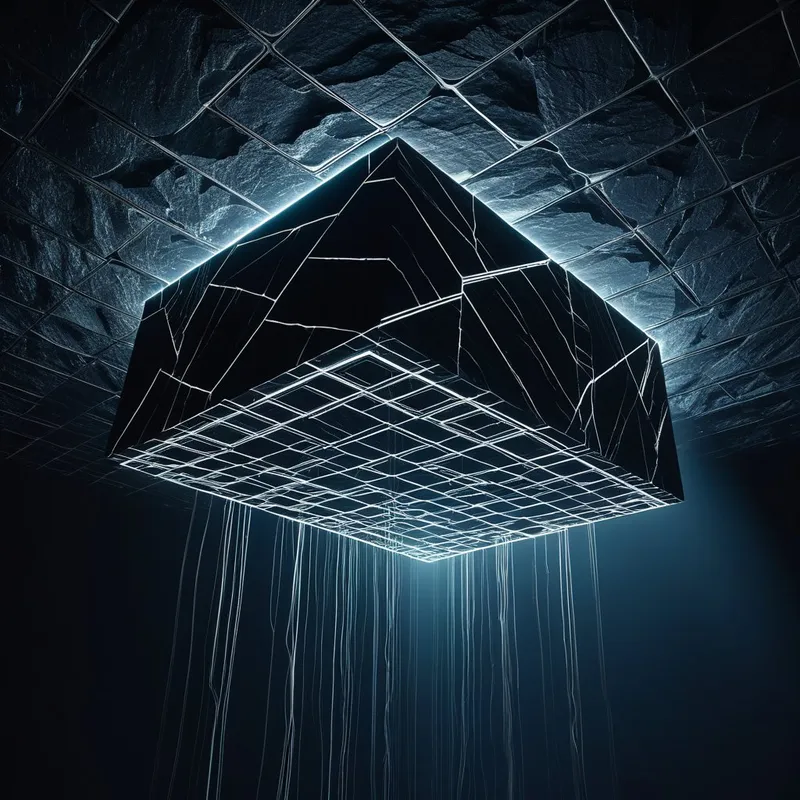
The final transmutation into the rubedo, the reddening, is the dissolution of the obsolete fortification. This is not destruction, but integration. The energy bound up in maintaining the wall is reclaimed. The stone of "never again" is ground down and reconstituted as the cornerstone of "I am here, and I am able." Sovereignty is born when defense is no longer a reactive posture, but a conscious, chosen stance that comes from a center so solid it no longer needs to be barricaded. The wall becomes a threshold.
The Integration Protocol
Question 1: In the dream, what was I defending? Was it a person, a place, a feeling, or an idea? Can I name the specific treasure inside the fortress?
Question 2: What is the cost of this defense in my waking life? What energy, relationship, or possibility is being spent on garrison duty?
Question 3: If I were to design a gate in this wall—a conscious, intentional opening—what would it look like, and what single, small thing would I first allow to pass through it?
Action 1 (Somatic De-escalation): For one minute, place your hands on your lower abdomen. Breathe deeply into your palms, consciously softening the muscles you find there. This is the body’s command center for "fight or flight." Your simple act is to stand down the inner guard at its physical post.
Action 2 (Cartography of the Border): Take a large piece of paper. In the center, draw or write a symbol of what feels most core, precious, and vulnerable in you. Now, intuitively draw the layers of defense around it—lines, shapes, textures. Don’t think, just let your hand map your inner landscape. Where are the walls thickest? Where might there be a hidden door?
Action 3 (Ritual of Conscious Permeability): Go outside. Find a natural boundary—a shoreline, the edge of a woods, a garden fence. Stand there for a few minutes. Feel the difference between the spaces. Then, consciously step across it and back again. Acknowledge that you have the power to define, cross, and redefine your own borders. You are not the wall; you are the one who chooses its placement.
Final Validation
To have these dreams is to feel the profound weight of your own guardianship. It is exhausting, this work of constant vigilance. Honor that fatigue; it is the sign of a psyche that has taken its own survival seriously. But hear the deeper invitation within the dream’s static: the fortress was a necessary stage, not a final destination. The power you have used to build walls is the same power that can now design bridges, cultivate gardens, and light hearths. Your sovereignty awaits not in higher battlements, but in the courageous, quiet knowledge of what resides, unassailable, at your very center. The defense can now stand down. The self can begin to reign.