The Dream of Succession: The Alchemy of the Inner Throne
The Somatic Echo
Before the mind conjures images of crowns or boardrooms, the body knows. It is a hollowing in the solar plexus, a tectonic quiet. The familiar ground of the self—the internal governance you’ve known—feels suddenly provisional. There is a vertigo, not of height, but of depth, as if the floor of your identity has become a membrane stretched over a chasm. Your breath catches not in fear, but in a strange, anticipatory suspension. The old rhythms of ambition or anxiety fall silent. In their place is a resonant emptiness, a chamber waiting for a new frequency. This is the somatic prelude to succession: the visceral knowledge that an internal regime is ending, and the successor—whether a liberated aspect of yourself or a terrifying shadow—is already in the antechamber, waiting to be acknowledged.
The Dreamer's Log
She stands at the threshold of a cavernous, abandoned corporate headquarters. Dust motes dance in slanted light from broken windows. At the end of the silent hall, in the CEO’s office, the leather chair is empty, but still warm. Her own reflection in the dark window shows not her face, but the calm, assessing eyes of a stranger she somehow recognizes. A brass key, older than the building itself, rests in her palm, humming with a low, magnetic charge.
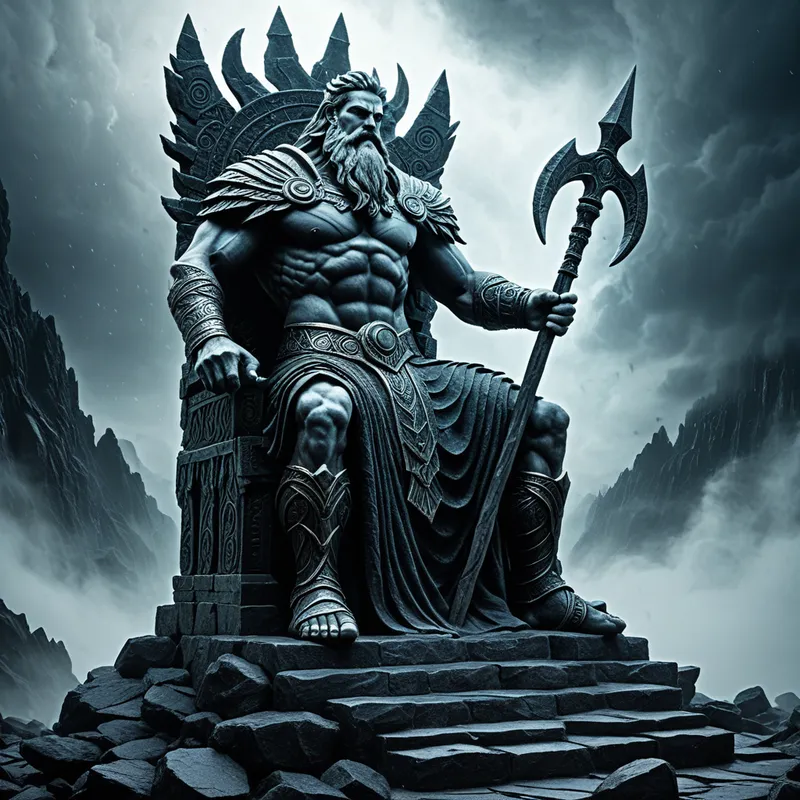
This dream is not about a promotion; it is the psyche presenting the key to its own empty command center, the old ruler having departed without ceremony, leaving only the resonant potential of the throne.

The False Lead
This theme is not about worldly ambition, envy, or mere anxiety over change. To mistake a dream of succession for a simple desire for power or a fear of being replaced is to read the symphony as a single note. It is not the ego’s campaign for a better office. It is the soul’s necessary coup. The terror or grief present is not about loss of status, but the terrifying dissolution of a familiar self-structure. The dream does not warn of external rivals; it heralds the arrival of an internal successor—an exiled part of you, a matured potential, or a buried truth—demanding its rightful place in your psychic governance.
Psychological Architecture
Succession is the ultimate shadow work of sovereignty. It is the moment when the internal family system of the psyche undergoes a revolution. The part of you that has been ruling—the inner Critic as tyrant, the Pleaser as benevolent dictator, the Orphan as permanent regent—is found to be an interim government. Its term is up. The pressure you feel is the weight of its outdated policies straining against the soul’s need for expansion.
This is Individuation in its most political form. You are not just adding a new room to the house of self; you are dissolving the foundation and rebuilding from the bedrock. The grief is for the ruler who must abdicate, even if it was a cruel one, for its rule provided a known, if painful, order. The terror is for the successor, who is unknown. Is it the wild Rebel, the cold Sage, the passionate Lover? To integrate this theme is to hold the council of yourself, to listen to the claims of all exiled aspects, and to consciously participate in the transfer of power from an autocracy of habit to a sovereignty of the whole self.
Mythic Resonance
We see this eternal process in the myth of King Arthur and the Sword in the Stone. The stone is not a test of strength, but a resonance lock. The true king is not the strongest, but the one in whom the land’s deep pattern—the sovereignty of the Self—vibrates in harmony. The pulling of the sword is not an act of conquest, but of recognition. The land (the psyche) is in chaos because the rightful ruler is unseated, living as a ward in another’s house (Arthur as Wart). The dream of succession is that moment when the stone appears in your inner landscape, and you are called to see if the pattern of your essence aligns with the throne that awaits.
Symbolic Nodes
- Empty Thrones, Abandoned Desks, Vacant Driver’s Seats: The architecture of authority, waiting.
- Being Handed a Key, Scepter, or Seal: Receiving the mandate of sovereignty, often with dread.
- A Former Leader Vanishing or Peacefully Abdicating: The non-violent end of an internal era.
- A Mirror Reflecting an Unknown but Familiar Face: The successor is you, but not you-as-you-know-you.
- A Council Chamber, Empty but Echoing: The internal parliament, awaiting its new speaker.
- A Bridge Under Construction to a New Palace: The fragile, forming connection to a new mode of being.
Archetypal Resonance
The core energy of succession is most potently expressed by The Ruler Archetype and its shadow. The dream’s entire drama is one of governance, legitimacy, and order. The somatic hollow is the throne room emptying. The psychological architecture is the kingdom in transition. The shadow Ruler—the Tyrant or Control-Freak—is the old regime fighting to maintain power through fear and rigidity, creating the crisis that necessitates succession. The integrated Ruler is not about dominating the self, but about establishing conscious, compassionate, and effective order from within. The alchemical potential here is the transformation of internal chaos or tyranny into authentic self-governance, where you become the legitimate sovereign of your own vast and complex territory.
The Alchemical Process
The alchemy of succession is Calcination followed by Coagulation—the reduction to essence and the reforming into a new body. The heat is applied by life itself: a failure of the old ways, a burnout of the ruling complex, a profound irrelevance that cracks the crown. The pressure is the silent, accumulating truth of your own potential, pressing against the confines of the persona you’ve outgrown.
You are not melting down a trait; you are dissolving an entire internal government. This is a terrifying, lonely fire. The old ruler—perhaps your inner Perfectionist or your inner Victim—will scream its legitimacy, list its sacrifices, and warn of the anarchy to come. You must hold the flame. The transmutation occurs in the moment of surrender, when you stop propping up the empty throne and turn to face the unknown successor in the shadows. You give it the key. The grief of the old order’s passing is the prima materia; the courage to endorse the new is the Philosopher’s Stone. From the ashes of the known self, a more authentic sovereignty coalesces.

The Integration Protocol
Question 1: What internal "ruler" or governing part of me has been in power for too long? What was its original, perhaps useful, purpose that has now become obsolete?
Question 2: If that ruler were to peacefully abdicate tonight, what exiled or neglected part of myself would naturally step forward to take its place? What is its name and its primary quality?
Question 3: What is one small, outdated "law" or rule this old internal regime enforces that I am ready to repeal for the sake of my soul's expansion?
Action 1 (The Empty Chair): Sit in meditation and visualize your inner council chamber. See the seat of the old ruler now empty. Do not rush to fill it. Spend five minutes simply feeling the quality of that emptiness—its silence, its potential, its slight vertigo. Breathe into that space.
Action 2 (Letter of Abdication): Engage in unstructured, stream-of-consciousness writing. Let it take the form of a letter from the outgoing internal ruler (the Critic, the Pleaser, the Hero) to the rest of your psyche. Let it express its fatigue, its reasons for clinging, and its final, gracious (or reluctant) surrender of authority. Then, write the brief, accepting reply from the collective Self.
Action 3 (Ritual of the Key): Find a physical object—a stone, a ring, an actual key—to serve as a token of this transition. At a chosen moment, hold it and formally, aloud, acknowledge the change in your inner governance. State: "The rule of [Old Pattern] is ended. I accept the sovereignty of my whole self." Place the token on your altar or in a significant place, marking the new regime.
Final Validation
To dream of succession is to stand in the most profound loneliness—the space between kings, between selves. It is a legitimate and terrifying crisis. The ground is giving way because it was never the true bedrock. This grief for the familiar prison is real. Honor it. And then, feel for the humming key in your palm. The successor is not an invader. It is the part of you that knows how to rule this new, vaster territory of your becoming. The throne is empty because it has always been yours. The difficult work is not in claiming it, but in dissolving the illusion that you were ever anything less than its destined sovereign.