Yima the Golden Age King Myth Meaning & Symbolism
A myth of a radiant king who ruled a perfect world, then built an underground sanctuary to preserve all life from a divine winter of destruction.
The Tale of Yima the Golden Age King
Listen, and let the firelight carry you back to the First Time, when the world was young and the air was sweet with immortality.
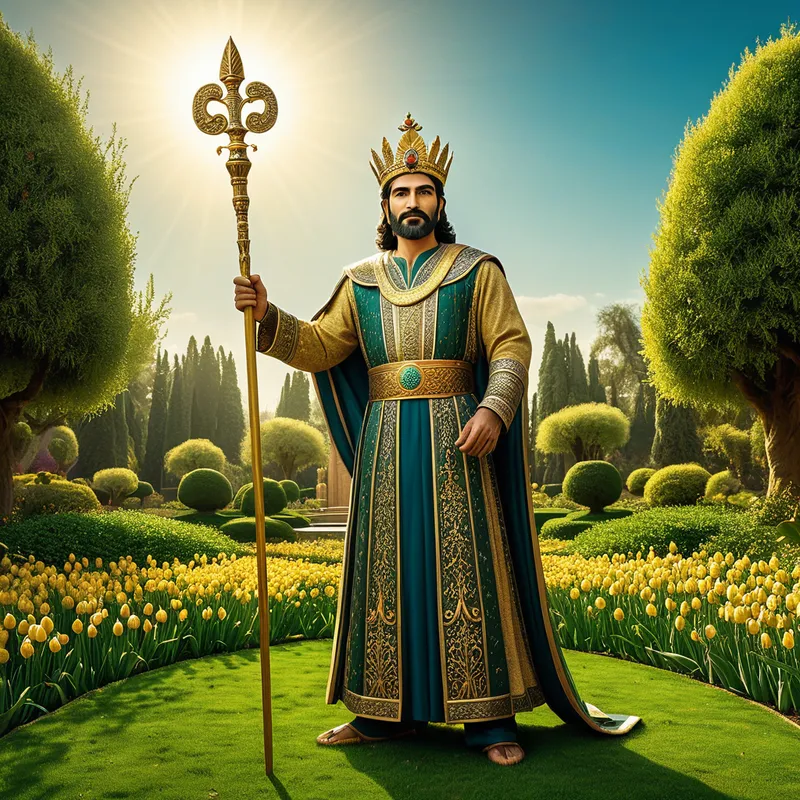
In the beginning, there was no death, no cold, no hunger. The sun was a constant friend, and the earth gave forth its bounty without toil. This was the realm of Yima, the Shining One, the shepherd of all creatures. He walked the world with a golden scepter in hand, a gift from the Wise Lord, Ahura Mazda. Where Yima stepped, the ground grew fertile. Where he spoke, harmony blossomed. Men and beasts lived without fear, and the world expanded at his command to hold the joyous multitudes. For three hundred winters, he ruled this paradise, a king not of conquest, but of perfect Asha.
But the shadow gathers where the light is brightest.
The great Angra Mainyu, the Lie, beheld this perfection with a corrosive envy. He could not tolerate such wholeness. A terrible corruption began to seep into creation—not of violence, but of increase. The very success of Yima’s reign became its peril. The immortal flocks multiplied beyond counting; the happy peoples swelled beyond measure. The earth, even under Yima’s expanding rule, groaned under the weight of its own flawless abundance.
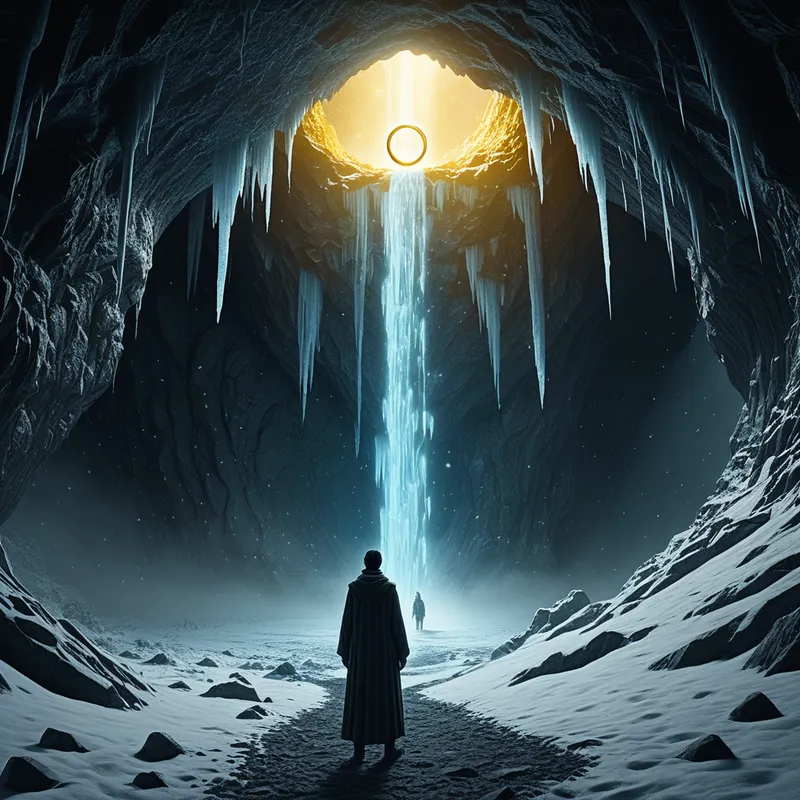
Then came the fateful summons. Ahura Mazda appeared to Yima, his radiance dimmed by sorrow. He spoke of a coming doom, a weapon forged by the Lie: a fierce, destroying winter, a Fimbulwinter of the Persian soul. It would be a winter of snow and ice, falling thick and relentless from the peaks to the valleys, killing every living thing that walked upon the open earth. No kingdom, however golden, could stand against this celestial scourge.
The Wise Lord offered not a sword, but a shovel. He commanded Yima: “Build a sanctuary. A Vara, an enclosure, sealed and long as a riding-ground on each side. Gather there the seeds of every living thing, the greatest and best of every species, two of every kind. Gather the fires, the waters, the plants. Gather the singers, the artisans, the makers. Lead them all into this ark of earth, that life may not be strangled by the Lie’s bitter frost.”
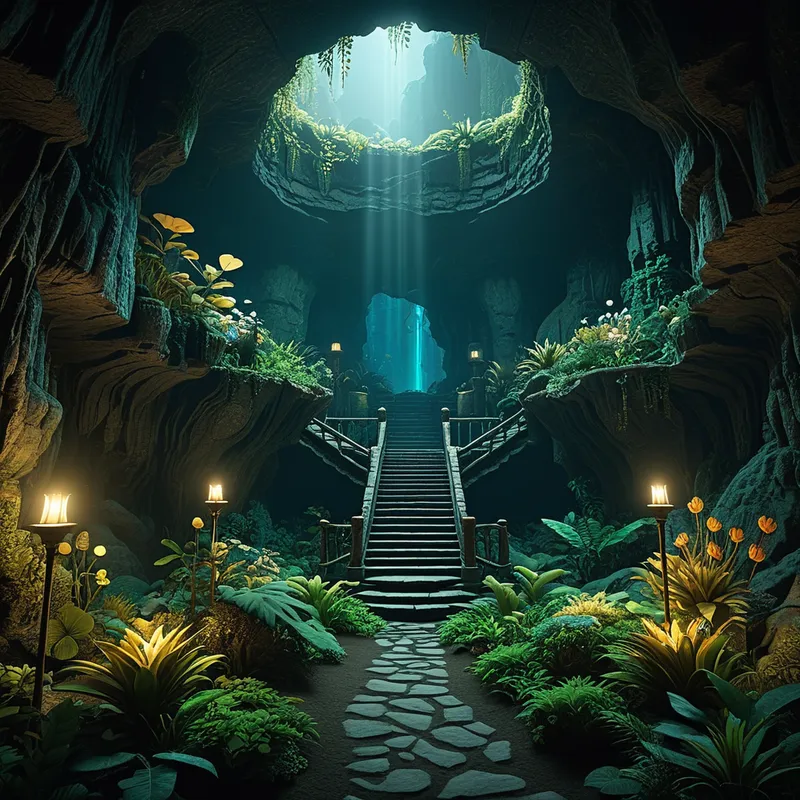
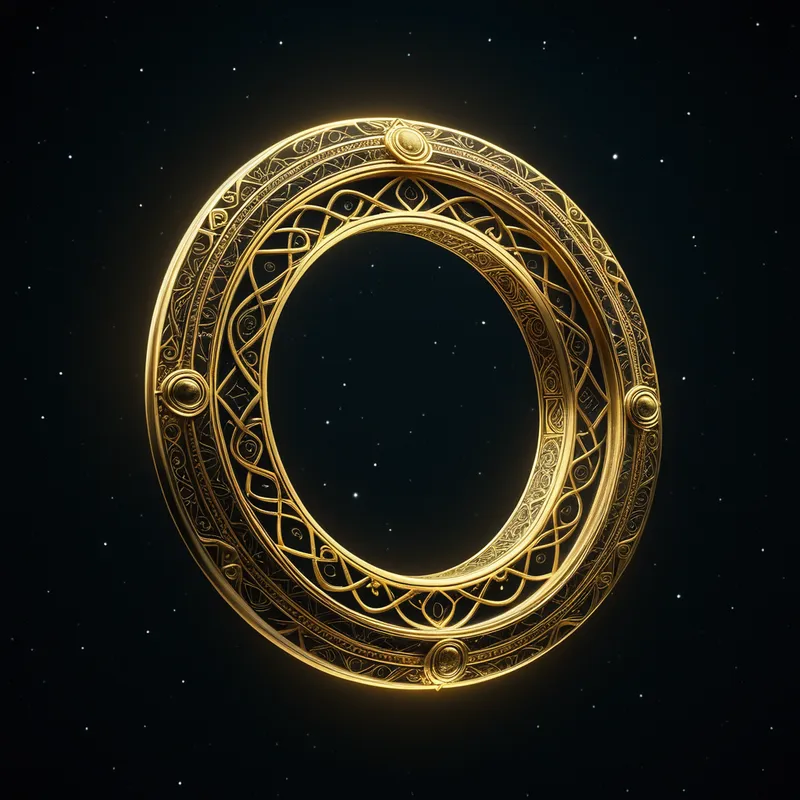
Yima, the king of the open sky and sun-drenched meadows, obeyed. He struck the earth with his golden ring, and the soil parted like water. He fashioned a world beneath the world, a cavernous city with streets and levels, lit by its own inner light. With great sorrow and greater resolve, he became the guide not of expansion, but of retreat. He shepherded the essence of his golden age down, down into the protective dark, sealing the great door with his seal just as the first lethal wind began to howl across the desolate plains above.
There, in the womb of the earth, the seeds of life waited. And Yima the King, who once ruled the sun, now stood guardian over the fragile, glowing ember of the world, waiting for the winter above to spend its rage, and for the command to open the door once more.
Cultural Origins & Context
The myth of Yima, known in later Persian tradition as Jamshid, is one of the most ancient and foundational narratives of the Indo-Iranian world. Its earliest written form is found in the Avesta, particularly in the Vendidad. It was preserved for millennia by the priestly class, the Magi, and recited not merely as a story of the past, but as a paradigm of cosmic cycles and human responsibility.
Societally, the myth functioned on multiple levels. For kings, it presented the ideal of the righteous ruler (Farr) who is a shepherd to his people and a partner with the divine in maintaining order. For the common person, it explained the imperfection of the current world—a fallen age following the golden one—while offering a profound hope: that the seeds of paradise are preserved, not lost. It is a myth of collective salvation, where the king’s primary duty is not glory in battle, but the preservation of the totality of life (Getig) from existential chaos. The story bridges the legendary past with an eschatological future, suggesting that the Vara’s contents will one day repopulate a renewed, perfected world.
Symbolic Architecture
At its heart, the myth of Yima is a profound drama of consciousness facing the limits of its own perfect creation. Yima begins as the embodiment of the Self in its primordial, unconscious wholeness. His golden age represents a state of psychic integration where desire and fulfillment are identical, where the inner and outer worlds are in perfect alignment. There is no shadow, no conflict, no differentiation.
The first paradise is always unconscious; it must be lost to be truly found.
The threat of the winter, sent by the Adversary, symbolizes the inevitable emergence of the Shadow into this perfect system. It is the recognition of finitude, of entropy, of the reality of death and suffering that shatters the innocent, static paradise. The divine command to build the Vara is the call to a higher, more conscious form of rulership. Yima must now actively choose what to save, to discern the “best of every kind.” This is the movement from unconscious containment to conscious curation of the soul’s contents.
The Vara itself is a stunning symbol of the protective, nurturing aspect of the psyche—the inner sanctuary or temenos we must construct when the outer world (or our conscious identity) becomes uninhabitable. It is not an escape, but a purposeful retreat for incubation and preservation. The golden scepter becomes the ring that opens the earth, transforming his authority from external rule to internal guardianship.
The Dreamer's Resonance
When this myth stirs in the modern soul, it often manifests in dreams of profound transition and sanctuary-building. One might dream of:
- Finding or constructing a vast, hidden room or basement in one’s house, filled with precious, living things.
- Leading a solemn procession of animals or people into a cave or underground complex as a storm rages outside.
- Holding a simple, powerful object (a key, a ring, a staff) that has the authority to open or seal a passage in the earth.
- Watching a beautiful, eternal summer landscape suddenly be overtaken by silent, encroaching ice or ash.
Somatically, this can feel like a deep, instinctual pull inward—a “sinking stomach” sense of a coming crisis, paired with a calm, determined focus on what is essential. Psychologically, the dreamer is undergoing the process of “Yima’s Choice.” Some aspect of their life—a relationship, a career, a long-held identity—has reached its “golden age” and is now facing an inevitable winter, a death or dissolution. The psyche is initiating a necessary retreat from the outer world to consciously identify and preserve the core seeds of identity, talent, and vitality before a destructive phase sweeps the old structures away. It is the ego learning to serve the Self’s imperative for survival and future rebirth.
Alchemical Translation
The alchemical journey mirrored in Yima’s myth is the process of nigredo followed by a protected albedo. The initial golden age is the unconscious gold—valuable but untested. The divine winter is the necessary nigredo, the dissolution of that naive state.
The Vara is the alchemical vessel, the sealed vase where the soul’s scattered elements are gathered to avoid annihilation and are allowed to quietly reconstitute.
Yima’s active obedience—his descent into the earth—is the crucial act of the ego aligning itself with the Self’s transcendent purpose. He does not fight the winter (a heroic, egoic battle he would lose); he outlasts it through wisdom and containment. This is the alchemical solve et coagula: he dissolves the old, expansive paradise (solve) and coagulates its essential quintessence into a compact, protected form in the Vara (coagula).
For the individual, this translates to the often-painful process of “individuation under duress.” When life circumstances force a collapse of our outer world, the myth instructs us to:
- Accept the end of the current “age.” (The paradise cannot be saved in its current form.)
- Heed the inner command to preserve. (Listen for what the soul deems truly essential.)
- Build an inner sanctuary. (Through reflection, therapy, art, or ritual, create a psychic space where these essentials are protected.)
- Become the guardian of that space. (Hold the tension of waiting, trusting that the winter will pass, and the preserved seeds will one day be needed for a new life.)
The gold Yima seeks at the end is not the unconscious gold of the beginning, but the philosopher’s stone of a consciousness that has integrated the reality of death and winter, and in doing so, has mastered the art of preserving life’s eternal flame within.
Associated Symbols
Explore related symbols from the CaleaDream lexicon:
- King — The archetype of conscious order and responsibility, representing the ego’s potential to rule the inner kingdom in service to the greater Self.
- Goldenrod — Symbolizes the radiant, flourishing life of the initial Golden Age, a perfection that is beautiful but ultimately unsustainable in its static form.
- Circle — Represents the Vara itself as a sealed, complete, and protective enclosure, as well as the cyclical nature of world ages from golden to fallen to renewed.
- Door — The threshold between the upper world of destruction and the inner world of preservation, sealed by Yima’s ring, representing a conscious choice to enter a transformative space.
- Seed — The essential, condensed potential of every living thing that Yima gathers, representing the core truths and talents we must preserve within ourselves during times of crisis.
- Earth — The substance of the Vara and the realm into which Yima descends, symbolizing the grounding, nurturing, and hidden aspects of the unconscious that provide sanctuary.
- Winter — The destroying frost sent by Angra Mainyu, representing the necessary phase of dissolution, despair, and psychic death that forces a retreat inward.
- Mountain — Often the mythical location for hidden realms and sanctuaries, symbolizing the enduring, stable foundation upon which (or within which) the Vara is built.
- Order — The divine principle of Asha that Yima initially embodies and later protects in microcosm within the Vara, representing the innate psychic structure that persists through chaos.
- Rebirth — The ultimate promise of the myth, that the preserved seeds will emerge to populate a new world, symbolizing the new consciousness and life that follows a period of incubation and survival.
- Cave — The womb-like entrance to the Vara, a universal symbol of descent into the unconscious for the purpose of profound transformation and safeguarding.
- Ring — Yima’s tool and seal, representing the covenant with the divine, the authority to enact preservation, and the wholeness of the contained sanctuary.