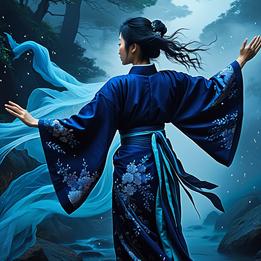
Kimono Sleeves
Traditional Japanese garment sleeves representing spiritual connection, cultural identity, and the flow of energy between inner and outer worlds.
Kimono Sleeves Dream Meaning
Traditional Japanese garment sleeves representing spiritual connection, cultural identity, and the flow of energy between inner and outer worlds.
Interpretive Themes
Cultural Identity
highSleeves as markers of social and spiritual status.
Spiritual Containment
mediumSleeves as vessels for prayers or intentions.
Transition and Flow
highSleeves represent life's flowing changes.
Artistic Expression
mediumPatterns and colors as personal symbolism.
Ritual Boundaries
lowSleeves marking ceremonial space.
Mythological Resonance
Amaterasu
JapaneseThe sun goddess who retreated into a cave, plunging the world into darkness, and was lured out by a ritual dance where sleeves played a key role in restoring light and balance.
The Fates
GreekThe three goddesses who spin, measure, and cut the thread of life, with robes flowing like kimono sleeves, controlling destiny's weave.
Cultural Lenses
Jungian Perspective
View Context →Kimono sleeves represent the persona - the social mask that contains and presents the self. The flowing fabric symbolizes the fluid boundary between conscious and unconscious, with patterns reflecting archetypal imagery.
Freudian Perspective
View Context →Sleeves symbolize phallic or womb-like containment, representing sexual energy and repression. The act of putting arms through sleeves suggests penetration fantasies or birth symbolism in traditional contexts.
Gestalt Perspective
View Context →The sleeves represent parts of the self seeking integration - the empty space within them symbolizes potential, while the fabric represents boundaries. How the sleeves move reveals current life dynamics.
Cognitive Perspective
View Context →Kimono sleeves serve as memory schemas for cultural learning and social scripts. The brain processes them as complex symbols encoding rules about propriety, beauty, and spiritual practice.
Evolutionary Perspective
View Context →Sleeves represent extended phenotype signaling - displaying cultural fitness and group belonging. The impractical length historically signaled surplus resources, while patterns served as costly signals of attention to detail.
East Asian Perspective
View Context →In Japanese tradition, furisode (long swinging sleeves) marked unmarried women and spiritual availability. Sleeve length indicated social status, while patterns held specific spiritual meanings in Shinto and Buddhist contexts.
Global/Universal Perspective
View Context →Across cultures, sleeves represent the extension of self into the world - the interface between body and environment. They universally symbolize protection, expression, and the containment of personal energy.
South Asian Perspective
View Context →Similar to dupatta or sari pallu, kimono sleeves represent modesty and spiritual covering. In Hindu-Buddhist contexts, they symbolize the veiling of divine truth that can be revealed through proper ritual action.
Middle Eastern Perspective
View Context →Parallel to abaya sleeves or prayer garment extensions, they represent submission to divine will. The flowing fabric suggests the breath of spirit moving through disciplined practice in Islamic mystical traditions.
Modern Western Perspective
View Context →Kimono sleeves represent cultural appropriation concerns or aesthetic appreciation. They symbolize the globalization of tradition, often detached from original spiritual meanings and reinterpreted as fashion statements.
African Perspective
View Context →Similar to bogolanfini mud cloth or kente extensions, sleeves represent ancestral connection. The patterns tell stories of lineage, while the fabric's flow represents the movement of ancestral spirits in traditional African cosmology.
Latin American Perspective
View Context →Like rebozo or poncho extensions, sleeves represent mestizaje - cultural blending. They symbolize the weaving together of indigenous, European, and African spiritual traditions into new hybrid forms of expression.
Historical Authorities
Want a deeper analysis?
Get a personalized interpretation of your entire dream including this symbol.
Interpret My DreamThe Oracle's Prediction
Combine multiple symbolsA reconnection with cultural or familial roots will bring profound peace and identity clarity.
Timeframe
Seasonal (~3 Months)
Intensity
Deep
Emotional or energetic blockages will begin to release, leading to improved flow and well-being.
Timeframe
Lunation (~29 Days)
Intensity
Deep
Common Appearances & Contexts
| Context | Emotion | Interpretation |
|---|---|---|
| Context Wearing flowing kimono sleeves | Emotion peaceful | Interpretation Indicates harmony with tradition and spiritual alignment. |
| Context Torn or damaged sleeves | Emotion anxious | Interpretation Suggests cultural disconnection or spiritual vulnerability. |
| Context Sleeves catching the wind | Emotion joyful | Interpretation Symbolizes freedom within traditional structures. |
| Context Rolling up kimono sleeves | Emotion determined | Interpretation Preparing for spiritual work or practical action. |
| Context Sleeves too long or cumbersome | Emotion frustrated | Interpretation Traditional expectations feeling restrictive. |
| Context Gifting kimono sleeves | Emotion loving | Interpretation Passing down wisdom or spiritual blessings. |
| Context Sleeves changing colors | Emotion awed | Interpretation Spiritual transformation or evolving identity. |
| Context Holding objects in sleeves | Emotion protective | Interpretation Safeguarding important spiritual or emotional contents. |
| Context Sleeves in water | Emotion calm | Interpretation Emotional purification or spiritual cleansing. |
| Context Sleeves as wings | Emotion inspired | Interpretation Spiritual elevation through traditional wisdom. |
| Context Empty sleeves hanging | Emotion lonely | Interpretation Loss of cultural connection or spiritual void. |
| Context Sleeves touching others | Emotion connected | Interpretation Spiritual bonds and interpersonal harmony. |
Interpret Your Full Dream
Beyond this symbol, every dream carries a unique story. Share your dream for a personalized AI-powered interpretation.