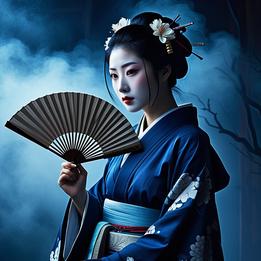
Geisha Fan
A traditional Japanese fan symbolizing artistry, concealment, and refined feminine energy, often representing hidden emotions or performative aspects of the self.
Geisha Fan Dream Meaning
A traditional Japanese fan symbolizing artistry, concealment, and refined feminine energy, often representing hidden emotions or performative aspects of the self.
Interpretive Themes
Artistic Expression
highDream may highlight creative talents.
Concealed Identity
highSuggests unexpressed emotions or roles.
Feminine Power
mediumNon-confrontational authority or grace.
Cultural Tradition
highMay reflect respect for customs.
Transient Beauty
mediumReminder of life's impermanence.
Mythological Resonance
Ame-no-Uzume
JapaneseThe goddess who used dance and theatrical performance (with implied fan work) to lure the sun goddess from her cave, demonstrating how art reveals truth.
The Muses
GreekDivine patrons of the arts who inspire creative expression, with Terpsichore specifically governing dance and choral poetry often accompanied by fans or veils.
Cultural Lenses
Jungian Perspective
View Context →Anima symbol representing refined feminine aspects of the psyche; the fan conceals and reveals the shadow self, integrating artistry with persona performance in individuation.
Freudian Perspective
View Context →Phallic symbol representing sexual repression and sublimation; the opening/closing motion suggests hidden desires, with the fan as a displacement object for intimate fantasies.
Gestalt Perspective
View Context →Projection of the self's hidden parts; the fan represents what the dreamer conceals or reveals in relationships, asking 'What part of me is this fan?'
Cognitive Perspective
View Context →Mental schema for social performance and emotional regulation; the fan represents cognitive scripts for managing impressions and processing cultural symbols in memory.
Evolutionary Perspective
View Context →Display mechanism signaling social status and mate quality; the fan represents evolved behaviors for non-verbal communication, group cohesion, and cultural adaptation.
East Asian Perspective
View Context →Traditional symbol of geisha artistry representing discipline, beauty, and social grace; historically used in rituals and performances, now emblematic of cultural heritage and feminine ideals.
Global/Universal Perspective
View Context →Cross-cultural symbol of concealment/revelation, artistry, and femininity; appears in various forms worldwide as tool for communication, ritual, and personal expression across societies.
Modern Western Perspective
View Context →Often exoticized symbol of Japanese culture; represents aesthetic appreciation, sometimes reduced to decorative object, while also symbolizing mindfulness and refined simplicity in contemporary contexts.
European Perspective
View Context →Historical symbol of aristocracy and courtship; in Renaissance, fans conveyed coded messages, representing social grace, flirtation, and class distinction through elaborate etiquette.
African Perspective
View Context →Ritual object in ceremonies representing ancestral communication; in some cultures, fans cool sacred spaces, symbolize authority, and connect living with spiritual realms through motion.
Middle Eastern Perspective
View Context →Traditional cooling tool with social significance; represents hospitality, modesty, and poetic expression, often decorated with calligraphy and used in ceremonial contexts.
Latin American Perspective
View Context →Flamenco accessory representing passion and rhythm; symbolizes fiery expression, cultural identity, and dramatic communication through dance, blending indigenous and Spanish influences.
Historical Authorities
Want a deeper analysis?
Get a personalized interpretation of your entire dream including this symbol.
Interpret My DreamThe Oracle's Prediction
Combine multiple symbolsA significant romantic or artistic partnership will develop through subtle communication.
Timeframe
Lunation (~29 Days)
Intensity
Deep
Common Appearances & Contexts
| Context | Emotion | Interpretation |
|---|---|---|
| Context Receiving fan | Emotion honored | Interpretation Acceptance of refined role. |
| Context Opening fan | Emotion revealing | Interpretation Unveiling hidden aspects. |
| Context Closing fan | Emotion protective | Interpretation Shielding vulnerability. |
| Context Broken fan | Emotion distressed | Interpretation Loss of grace. |
| Context Dancing with fan | Emotion joyful | Interpretation Artistic self-expression. |
| Context Hiding behind fan | Emotion secretive | Interpretation Concealing true feelings. |
| Context Fanning others | Emotion nurturing | Interpretation Providing comfort subtly. |
| Context Ancient fan | Emotion reverent | Interpretation Connection to ancestors. |
| Context Modern fan | Emotion adaptable | Interpretation Tradition in new context. |
| Context Gifting fan | Emotion generous | Interpretation Sharing cultural appreciation. |
| Context Losing fan | Emotion anxious | Interpretation Fear of losing grace. |
| Context Fan in water | Emotion flowing | Interpretation Emotions in motion. |
Interpret Your Full Dream
Beyond this symbol, every dream carries a unique story. Share your dream for a personalized AI-powered interpretation.