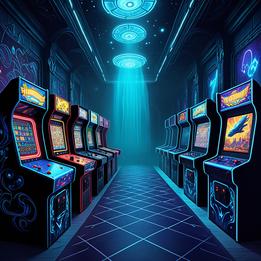
Arcade
A space of entertainment, skill, and nostalgia, often representing childhood, competition, and escapism through games and flashing lights.
Arcade Dream Meaning
A space of entertainment, skill, and nostalgia, often representing childhood, competition, and escapism through games and flashing lights.
Interpretive Themes
Nostalgia and Regression
highOften reflects desire to escape adult responsibilities.
Skill and Mastery
mediumCan indicate personal growth challenges.
Competition and Status
mediumMay reveal insecurities or ambitions.
Escapism and Avoidance
highSuggests avoidance of real-life issues.
Social Connection
lowCould indicate loneliness or desire for belonging.
Mythological Resonance
The Labyrinth of Daedalus
GreekA constructed maze of challenges and illusions, where skill and wit determine survival, much like navigating an arcade's games.
Valhalla's Feasting Hall
NorseA hall where warriors engage in eternal combat by day and revelry by night, echoing the arcade's blend of competition and social gathering.
Cultural Lenses
Jungian Perspective
View Context →Represents the 'puer aeternus' (eternal child) archetype, symbolizing avoidance of adult responsibilities through playful regression. The flashing lights may indicate shadow aspects seeking integration through play.
Freudian Perspective
View Context →Symbolizes phallic competition and mastery through joystick manipulation. The insertion of tokens represents sexual exchange, while high scores reflect achievement anxiety and performance pressure.
Gestalt Perspective
View Context →The dreamer IS the arcade - all machines represent different aspects of self. Each game shows how you 'play' with different life challenges and what rules you impose on yourself.
Cognitive Perspective
View Context →Represents problem-solving schemas and reward systems. The brain processes life challenges as games, with flashing lights stimulating dopamine responses similar to real achievement scenarios.
Evolutionary Perspective
View Context →Modern manifestation of ancient play behavior for skill development. The competitive scoring mimics social hierarchy establishment, while flashing lights trigger primal alertness responses.
Modern Western Perspective
View Context →Nostalgia for 1980s-90s youth culture, representing escape from digital overload into tactile experiences. Often symbolizes resistance to adult responsibilities through retro gaming culture.
East Asian Perspective
View Context →In Japan, 'game centers' represent social harmony through shared play (especially rhythm games). Historically tied to post-war economic boom, now symbolizes technological mastery and community leisure.
European Perspective
View Context →In UK, seaside arcades represent working-class leisure and holiday escapism. Historically penny arcades offered brief entertainment for poor, now symbolize nostalgic working-class culture.
North American Perspective
View Context →1980s mall culture symbol representing teenage independence and consumerism. The quarter-operated machines taught early economic transactions, now represents Gen X nostalgia.
Latin American Perspective
View Context →Plaza arcades represent family social spaces where generations gather. The coin-operated nature reflects economic realities, while games teach resilience through repeated attempts.
Global/Universal Perspective
View Context →Universal symbol of play transcending age. The exchange of currency for temporary entertainment reflects basic human trade concepts, while competition satisfies innate comparison needs.
African Perspective
View Context →Urban centers show Western influence adaptation, while rural areas may lack arcades entirely. Where present, represents modernity's intrusion and youth culture globalization through technology access.
Historical Authorities
Want a deeper analysis?
Get a personalized interpretation of your entire dream including this symbol.
Interpret My DreamThe Oracle's Prediction
Combine multiple symbolsA playful collaboration will lead to unexpected success.
Timeframe
Lunation (~29 Days)
Intensity
Deep
Common Appearances & Contexts
| Context | Emotion | Interpretation |
|---|---|---|
| Context Winning high score | Emotion Pride | Interpretation Achievement recognition desire. |
| Context Broken machines | Emotion Frustration | Interpretation Efforts feeling futile. |
| Context Empty arcade | Emotion Loneliness | Interpretation Isolation or abandonment fears. |
| Context Crowded arcade | Emotion Overwhelm | Interpretation Social pressure anxiety. |
| Context Playing alone | Emotion Contentment | Interpretation Self-sufficiency or independence. |
| Context Losing repeatedly | Emotion Defeat | Interpretation Persistent failure feelings. |
| Context Finding hidden game | Emotion Curiosity | Interpretation Discovery of new potential. |
| Context Arcade on fire | Emotion Panic | Interpretation Chaos destroying comfort. |
| Context Teaching someone | Emotion Confidence | Interpretation Sharing knowledge leadership. |
| Context Time running out | Emotion Anxiety | Interpretation Pressure deadlines looming. |
| Context Winning prize | Emotion Joy | Interpretation Reward for effort. |
| Context Arcade transforming | Emotion Confusion | Interpretation Reality shifting unexpectedly. |
Interpret Your Full Dream
Beyond this symbol, every dream carries a unique story. Share your dream for a personalized AI-powered interpretation.