Vodun and the Loa Myth Meaning & Symbolism
A cosmology where the divine Loa, born from the primal Mawu-Lisa, descend through the sacred tree to dance with humanity in the crossroads of existence.
The Tale of Vodun and the Loa
Listen. Before the world had a name, there was the Great Mystery, Mawu-Lisa. From the silence of its own being, it dreamed a twinness: Mawu, the vast, cool womb of the moon and night; Lisa, the fierce, generative fire of the sun and day. Their breath became the sky. Their heartbeat became the drum of the deep earth.
And from this primal rhythm, the Loa were born. Not as distant, cold stars, but as vital forces—the very essence of river, thunder, forest, and iron. They were the personality of the cosmos. Yet, a chasm lay between the realm of these radiant spirits and the clay-formed world of humanity. The Loa yearned to touch, to shape, to feel the pulse of life they had helped conceive. Humanity, sensing these great presences in storm and harvest, trembled in awe and longing, unable to bridge the divide.
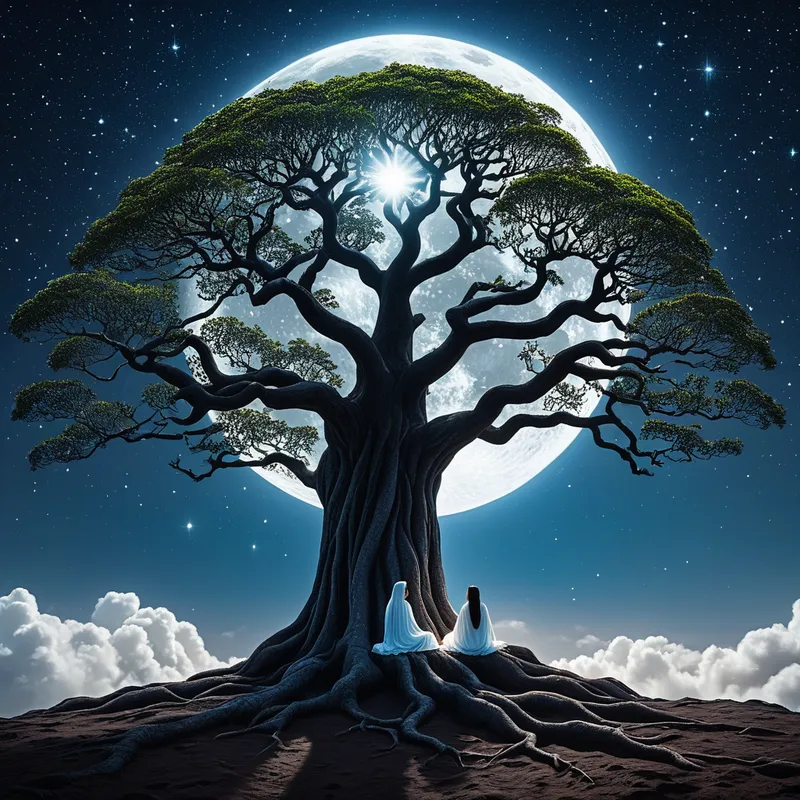
Then, Legba, the eldest, the one who walks with a limp and sees all paths, spoke. He went to the foot of the first and greatest Tree of Life, its roots drinking from the well of the ancestors, its crown brushing the abode of Mawu-Lisa. With a staff carved from wisdom and desire, he struck the trunk. The sound was not of wood, but of a door unlatching.
A pathway opened—not a road, but a descent, a flowing. The Loa, in their multitudes, began their journey. Ogou came down like a meteor, his essence settling in the forge and the battlefield. Erzulie flowed down as a cascade of rose and pearl, her presence in the calm lagoon and the tender heart. [Baron Samedi](/myths/baron-samedi “Myth from African Diaspora culture.”/) descended through the roots, his laughter the rustle of dry leaves in a graveyard. Shango rode down on the lightning, his voice the crack that splits the sky.
They did not come to rule from afar. They came to the crossroads, the market, the hearth. They sought the vessel of the human soul. When the drums beat the right rhythm, when the songs held the right truth, the Loa would ride their devotees. A dancer would become the mountain-steady presence of Azaka; a singer would channel the oceanic sorrow and joy of Damballa Wedo. The chasm was bridged not by stone, but by spirit; not by plea, but by partnership. The cosmos danced in the human body, and the human heart beat in the core of the cosmos. The world became a conversation, sacred, alive, and eternally unfolding.
Cultural Origins & Context
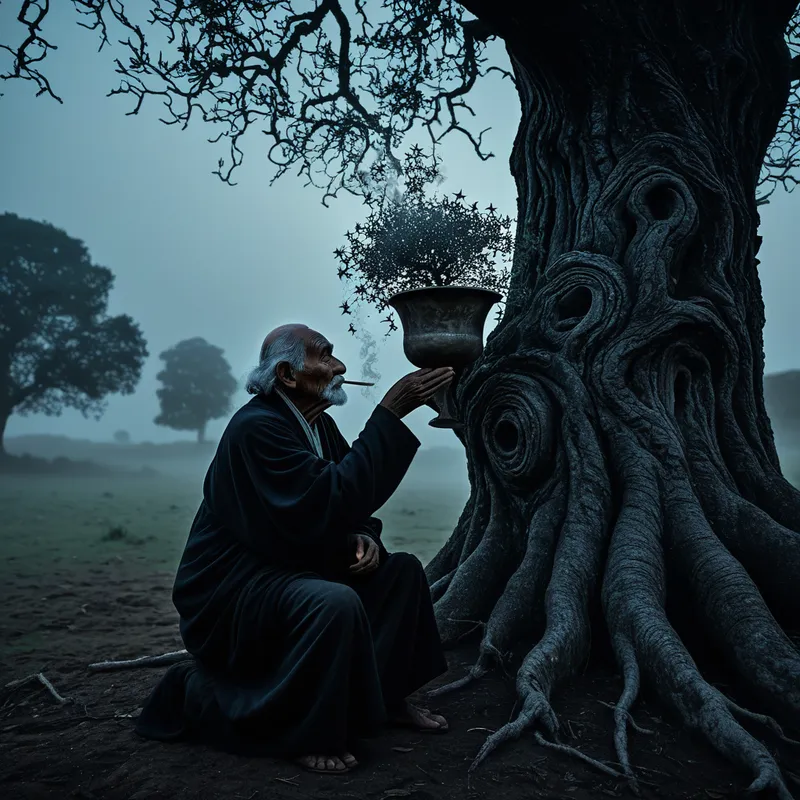
This is not a myth confined to a single, forgotten tome. It is the living, breathing cosmological framework of Vodun (Vodou, Voodoo), originating among the Fon, Ewe, and other peoples of West Africa—specifically the region that is now Benin, Togo, and Ghana. It was never a static “story” to be told from beginning to end, but a dynamic reality performed and experienced. The myth was passed down through elaborate ritual ceremonies, drum languages, sacred dances, and the oral teachings of priests (Houngan) and priestesses (Mambo).
Its societal function was profound and integrative. It explained the nature of existence (a continuum from the supreme creator, to the Loa, to the ancestors, to the living, to the natural world). It provided a protocol for engaging with reality—through offerings, ritual, and possession—to maintain balance (Aché), ensure community health, and navigate life’s complexities. The myth established that divinity was not authoritarian but relational, requiring reciprocity and correct conduct from humanity.
Symbolic Architecture
At its core, the myth presents a [universe](/symbols/universe “Symbol: The universe symbolizes vastness, interconnectedness, and the mysteries of existence beyond the individual self.”/) in intimate [dialogue](/symbols/dialogue “Symbol: Conversation or exchange between characters, representing communication, relationships, and narrative flow in games and leisure activities.”/). The Mawu-Lisa duality symbolizes the fundamental unity of complementary opposites: feminine/masculine, [night](/symbols/night “Symbol: Night often symbolizes the unconscious, mystery, and the unknown, representing the realm of dreams and intuition.”/)/day, receptive/active, potential/manifestation. The Loa represent the archetypal [fragmentation](/symbols/fragmentation “Symbol: The experience of breaking apart, losing cohesion, or being separated into pieces. Often represents disintegration of self, relationships, or reality.”/) of this unity into the myriad forces that constitute lived experience—love, war, [death](/symbols/death “Symbol: Symbolizes transformation, endings, and new beginnings; often associated with fear of the unknown.”/), craft, [nature](/symbols/nature “Symbol: Nature symbolizes growth, connectivity, and the primal forces of existence.”/).
The sacred is not a monolithic peak to be summited, but a vibrant ecosystem of consciousness with which one must learn to commune.
The [Tree of Life](/symbols/tree-of-life “Symbol: Embodies the interconnectedness of all living things and the cycle of life, death, and rebirth.”/) is the central [symbol](/symbols/symbol “Symbol: A symbol can represent an idea, concept, or belief, serving as a powerful tool for communication and understanding.”/) of the [axis](/symbols/axis “Symbol: A central line or principle around which things revolve, representing stability, orientation, and the fundamental structure of reality or consciousness.”/) mundi, the connective pillar that allows [energy](/symbols/energy “Symbol: Energy symbolizes vitality, motivation, and the drive that fuels actions and ambitions.”/) and [consciousness](/symbols/consciousness “Symbol: Consciousness represents the state of awareness and perception, encompassing thoughts, feelings, and experiences.”/) to flow between the celestial, terrestrial, and chthonic realms. Legba, the opener of the gate, is the archetypal threshold figure, the psychic function that makes [connection](/symbols/connection “Symbol: Connection symbolizes relationships, communication, and bonds among individuals.”/) and communication possible. Most crucially, the act of “possession” or “mounting” is not one of erasure, but of sacred alignment. It symbolizes the ego’s temporary surrender to a greater transpersonal power, allowing the individual to become a [conduit](/symbols/conduit “Symbol: A passage or channel that transfers energy, information, or substance from one place to another, often hidden or structural.”/) for archetypal [energy](/symbols/energy “Symbol: Energy symbolizes vitality, motivation, and the drive that fuels actions and ambitions.”/).
The Dreamer’s Resonance
When this mythic pattern stirs in the modern dreamer, it often signals a profound somatic and psychological process: the yearning for authentic connection with the transpersonal Self, and the fear or awe of that encounter. Dreams of being approached by powerful, ambiguous figures at a crossroads; of ancient, rhythmic drumming that vibrates in the bones; of trees that are simultaneously neural networks and cosmic maps—these are visitations from the personal Loa of the psyche.
The somatic process is one of preparation to be moved. There may be dreams of learning new dances, of the body contorting or flowing in unfamiliar ways, or of a powerful energy rising from the base of the spine. Psychologically, this is the ego grappling with the imminent dissolution of its isolated sovereignty. The “possession” in the dream-state is the psyche’s way of dramatizing the influx of content from the collective unconscious—a transformative energy that feels both “other” and deeply, fundamentally true. The fear is of disintegration; the promise is of profound reintegration at a higher level of complexity.
Alchemical Translation
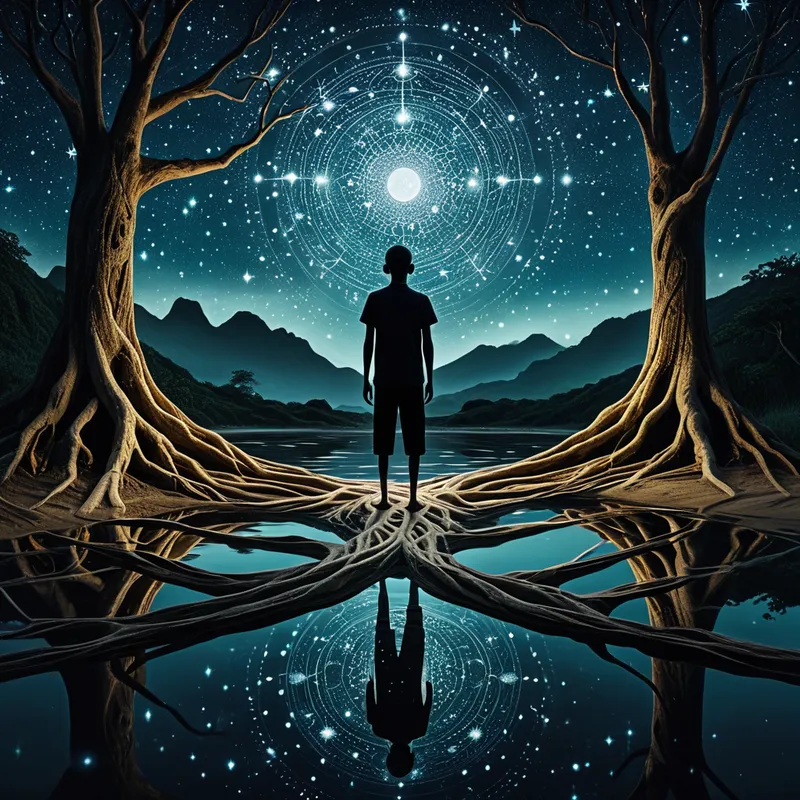
For the modern individual, the myth of Vodun and the Loa models the alchemy of individuation as a sacred, relational technology. It reframes the journey toward wholeness not as a solitary hero’s quest, but as the establishment of a functional pantheon within.
The first step is recognizing the Legba function—cultivating an inner witness or mediator that can stand at the crossroads of consciousness and the unconscious and “open the gate.” This is the work of introspection, active imagination, and dream analysis. Next comes the difficult, ethical work of making “offerings”—giving due attention, respect, and expression to the various archetypal forces (the inner Loa) that constitute one’s psyche: the warrior (Ogou), the lover (Erzulie), the sovereign (Shango), the ancestor (the Baron).
Individuation is the ritual by which the ego learns to be ridden by the Self, not as a passive victim, but as a conscious, consenting vessel for a greater destiny.
The climax of this psychic alchemy is the ritual of sacred alignment—the temporary “possession” by a transpersonal content. In psychological terms, this is the transformative moment when an archetypal insight, long gestating in the unconscious, finally breaks through into conscious life with such force that it reorganizes the personality. The ego does not die; it becomes the horse for the rider, the vessel for the god. It learns to hold the tension of being both itself and a channel for something vastly greater. The final product is not a perfected, static self, but a fluid, resilient psyche capable of navigating the crossroads of life in constant, sacred dialogue with the depths.
Associated Symbols
Explore related symbols from the CaleaDream lexicon:
- Tree — The Tree of Life is the central axis connecting all realms of being, symbolizing the psyche’s structure that links consciousness, the personal unconscious, and the collective unconscious.
- Crossroads — The domain of Legba, representing critical moments of choice, the intersection of different life paths, and the threshold where the human and divine meet.
- Dance — The physical enactment of the myth, representing the surrender of the ego to a greater rhythm and the embodiment of archetypal forces through movement and trance.
- Drum — The heartbeat of the cosmos and the ritual technology that calls the Loa, symbolizing the primal pulse that synchronizes individual consciousness with transpersonal rhythms.
- Ancestor — The revered dead who reside just beyond the Loa, representing the personal and collective past that informs and guides the living, forming a chain of spiritual continuity.
- Spirit — The essential nature of the Loa as non-material intelligences, representing the archetypal forces and autonomous complexes that inhabit the deep psyche.
- Ritual — The prescribed ceremony of offering, song, and dance, representing the conscious, structured practices necessary to safely engage with and integrate powerful unconscious contents.
- Mask — The vessel or “face” assumed by a Loa when riding a devotee, symbolizing the persona through which an archetype manifests, both concealing and revealing its true nature.
- River — The flowing path of many Loa like Damballa Wedo, symbolizing the continuous, cleansing, and sometimes dangerous flow of psychic energy and life force.
- Fire — The attribute of Ogou and Shango, representing transformative energy, will, passion, and the purifying force of conflict and justice.
- Earth — The realm of Azaka and Baron Samedi, symbolizing the grounded, material world, the body, fertility, and the final destination of physical decay and rebirth.
- Moon — The aspect of Mawu, representing the feminine, receptive, intuitive, and cyclical nature of consciousness, the cool light that illuminates the depths of the night psyche.