The True Cross Myth Meaning & Symbolism
A sacred relic's legendary journey from a forgotten tree to the instrument of salvation, embodying sacrifice, hidden divinity, and ultimate redemption.
The Tale of The True Cross
The world had forgotten. The hill of skulls, Golgotha, lay silent under a pagan sun, its sacred dust trodden by indifferent feet. Over it, the Emperor Hadrian had built a temple to Venus, a marble seal upon the memory of a god who died. The wood—the terrible, blessed wood—was lost, swallowed by the earth and time.
But memory has roots deeper than stone.
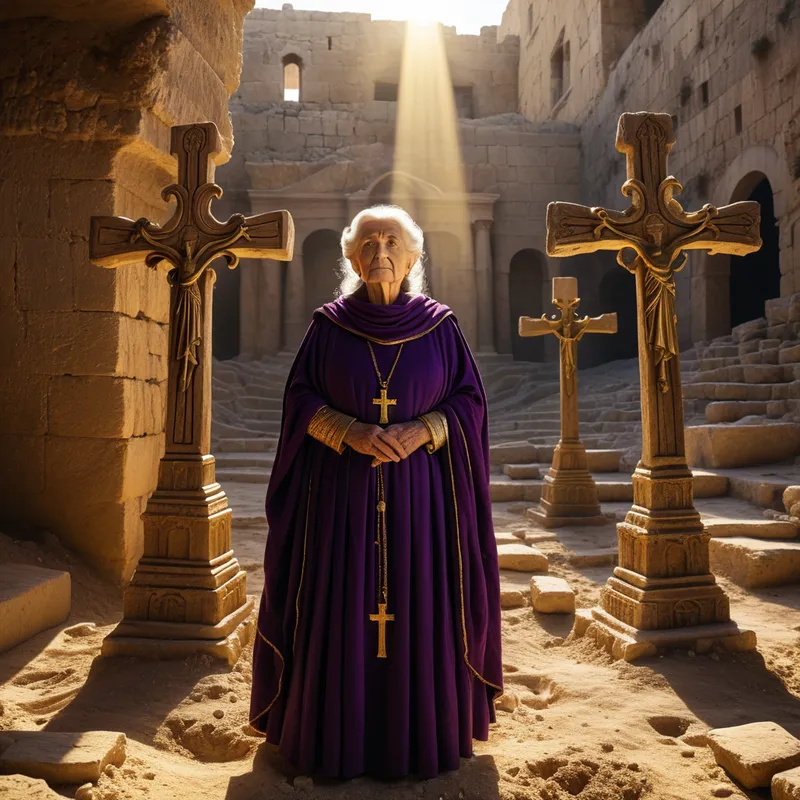
Centuries turned. A mother’s heart, fierce with faith and imperial power, would not let the world forget. Helena, mother of Constantine, now an old woman with the fire of youth in her spirit, journeyed to Jerusalem. She came not as a conqueror but as a seeker, a pilgrim-empress. She ordered the temple of Venus razed, the earth beneath it pierced. The diggers toiled in the shadow of the city, their shovels scraping against history’s bones.
Then, in the deep ground, they found them: three crosses, rough-hewn and aged to the color of sorrow, tangled with rusted nails. The instrument of the world’s salvation lay among the tools of common criminals. But which was His? The question hung in the dusty air, a sacred riddle.
The wise Bishop Macarius proposed a test of divine truth. A noblewoman of the city lay dying. They carried her to the place of the three trees. The first cross was brought to her pallid form—no change. The second touched her still brow—a faint sigh, but no life. Then they lifted the third, its grain seeming to hold the twilight. As its shadow fell upon her, a color returned to her cheeks, a light to her eyes. She rose, whole. Life had borne witness to the Tree of Death.
But the quest was not complete. With the True Cross identified, a further mystery remained. The titulus, the plaque of accusation, was found separate. And then, the greatest treasure of all: the nails. Helena, in a vision of profound symbolism, had some forged into a bridle for her son’s war horse, and others into a diadem—transforming the instruments of torture into a helm of protection and a crown of sacred authority. The Cross itself was enshrined, a fragment sent to Rome, the rest a radiant heart in the new Church of the Holy Sepulchre.
Its power did not sleep. It was said that over the years, the sacred wood, like a living relic, would occasionally shed fragments—miraculous splinters that healed the sick, defended cities, and became the most coveted relics in Christendom. The wood that bore the weight of heaven became a bridge between earth and the divine.
Cultural Origins & Context
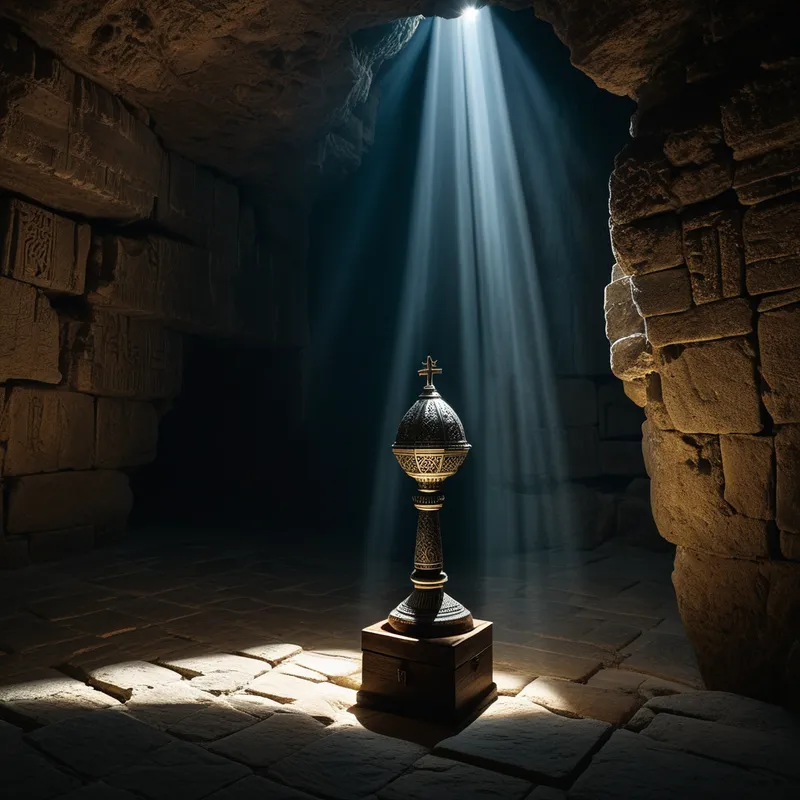
The legend of the True Cross’s discovery, or Invention (from the Latin invenire, “to find”), crystallized in the 4th century, following Emperor Constantine’s legalization of Christianity. Its most famous accounts come from historians like Eusebius of Caesarea and, later, Sulpicius Severus. This was not a myth born in the apostolic age, but one forged in the moment when a persecuted faith became an imperial religion. It served a crucial societal function: to physically anchor the cosmic drama of salvation to a specific, tangible place—Jerusalem—and to legitimize the newly powerful Church with a direct, material link to its foundational event.
The story was propagated by pilgrims, preachers, and poets. It transformed Jerusalem into the spiritual capital of the world and turned relic veneration into a central practice of medieval piety. The myth provided a narrative that connected the humble, suffering origins of the faith with its triumphant, worldly present. The Cross was no longer just a symbol; it was a historical artifact with continuing miraculous power, a piece of eternity embedded in time.
Symbolic Architecture
At its core, the myth is an archetypal story of the lost sacred object recovered. The Cross represents the ultimate symbol of paradox: an instrument of shameful execution transformed into the emblem of glorious victory.
The deepest truth is often buried beneath the monuments of its denial.
Psychologically, the True Cross symbolizes the Self, the central, transcendent core of the personality. It is that which is both foundational and hidden, carrying the full weight of our suffering and our potential for wholeness. Its burial under the temple of Venus speaks to how our deepest, most sacred potential—our unique purpose or essence—can be forgotten, covered over by the worldly values of pleasure, power, or vanity (Venus in her mundane aspect).
The three crosses represent choice and discernment. Not every burden we bear is sacred; not every suffering leads to transformation. The myth insists that the true, transformative core must be discerned through a test of life-giving power. It must prove itself by its fruits—by its ability to heal and restore.
The nails, refashioned into a bridle and a crown, perform a profound alchemy. They represent the integration of our most painful experiences (the “nails” of trauma, failure, or limitation) into the guiding structures of our lives. The bridle directs raw power (the warhorse) with wisdom, and the crown transforms authority into sacred service.
The Dreamer's Resonance
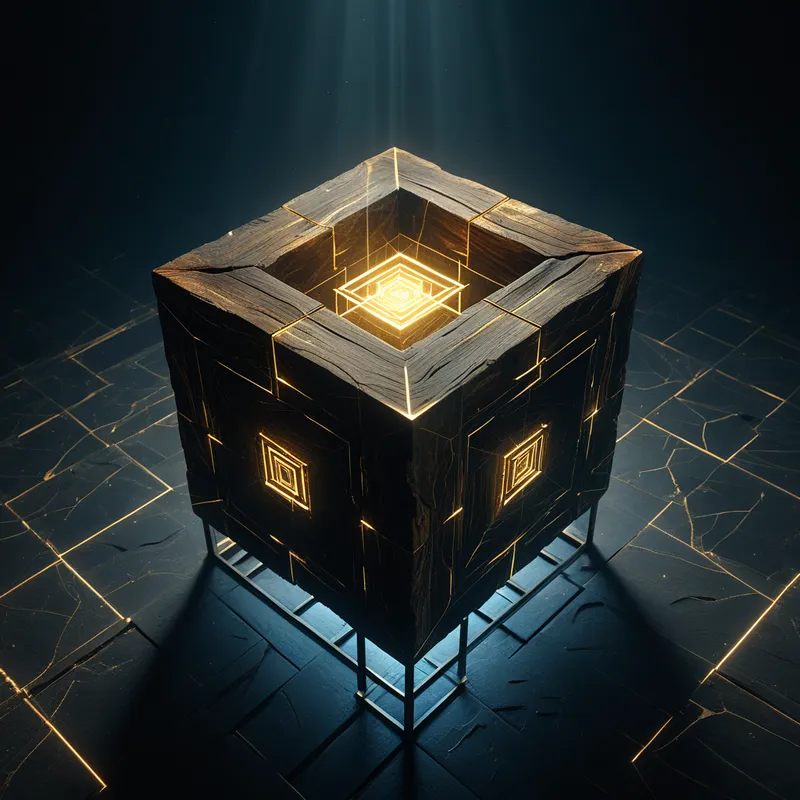
When this myth pattern stirs in the modern unconscious, it may manifest in dreams of excavation: digging in a backyard, cleaning out a cluttered basement, or discovering a hidden room in a familiar house. There is a somatic sense of uncovering something long-buried but critically important. The dreamer is engaged in a process of psychological archaeology, seeking the foundational truth beneath the accumulated layers of persona, adaptation, and forgotten pain.
A dream of finding a simple, powerful object of wood—a staff, a specific plank, a carved token—amidst rubble or junk can resonate with this myth. The emotional tone is one of solemn recognition, awe, or profound relief. This is the dream-ego contacting a core aspect of the Self that has been lost or repressed. Conversely, dreaming of failing to find the object, or of it crumbling to dust when touched, may reflect a fear of confronting this core truth or a sense of unworthiness. The psychological process is one of re-membering—literally putting the fragmented self back together around its central, enduring axis.
Alchemical Translation
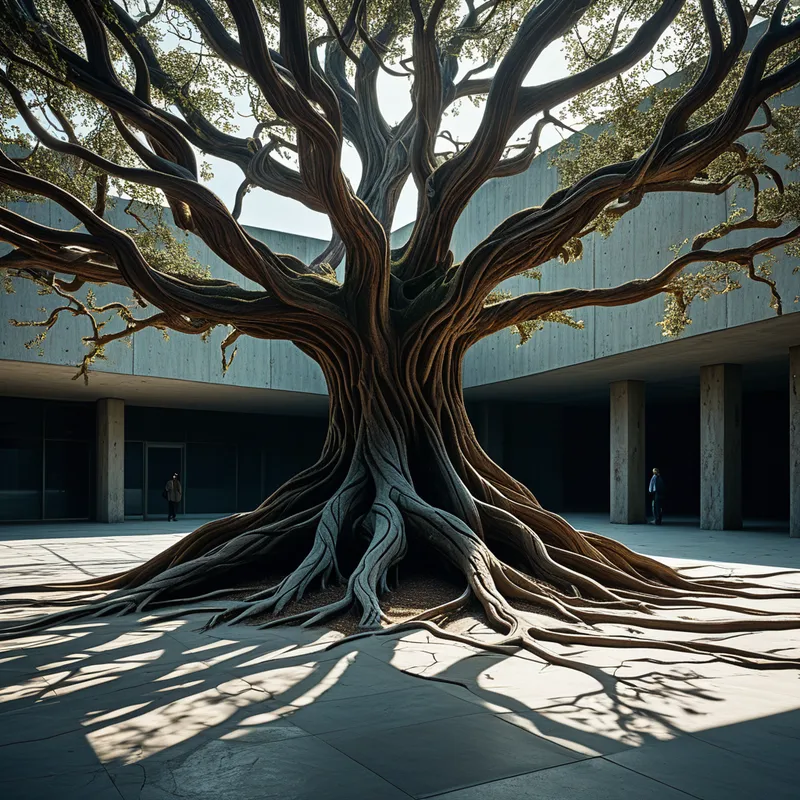
The journey of the True Cross is a perfect map for the individuation process. It begins with the nigredo, the blackening: the Cross is buried, lost, associated with death and oblivion. This is the initial state of the unexamined life, where one’s deepest purpose is unconscious.
Helena’s quest represents the conscious ego’s decision to seek meaning, to dig into the depths of one’s personal history and psyche (solutio—dissolving the structures that hide the truth). The unearthing of the three crosses is the albedo, the whitening, where contents of the unconscious are brought to light, but confusion remains. Which path, which suffering, which core identity is the true one?
The crucible of choice is where the soul’s metal is tested.
The healing test is the rubedo, the reddening. It is the application of living, feeling value (the dying woman as anima, the soul) to discern what is truly life-giving. This is the moment of integration, where the symbol proves its transformative power by enacting healing. The ego aligns itself with the Self.
Finally, the dispersal of the relics symbolizes the multiplicatio, the multiplication. Once the central Self is integrated, its influence (the “fragments” of wisdom, compassion, strength) naturally radiates into all aspects of life. The once-buried truth becomes a generative, healing force in one’s relationships, work, and worldview. The individual becomes a living reliquary, carrying and sharing the transformative principle discovered in their own depths. The wood of the gallows becomes the tree of life.
Associated Symbols
Explore related symbols from the CaleaDream lexicon: