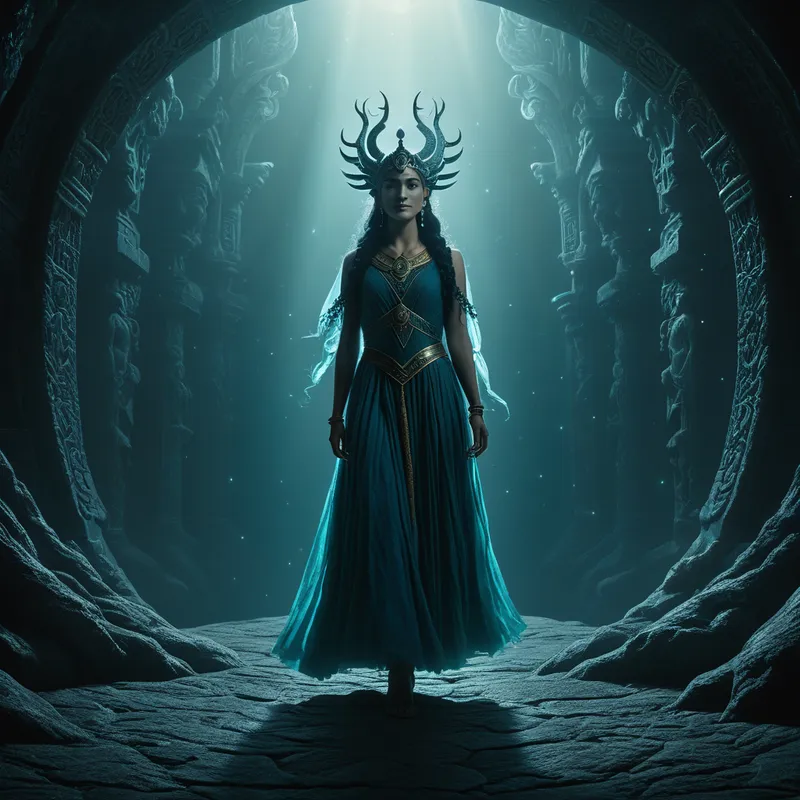
The Shaman's Drum Journey
An Inuit shaman uses a sacred drum to journey between worlds, connecting with spirits to heal, guide, and maintain balance in the Arctic.
The Tale of The Shaman’s Drum Journey
In the blue twilight of the long Arctic night, when [the wind](/myths/the-wind “Myth from Various culture.”/) howls like a forgotten spirit and the ice groans with the memory of creation, the angakkuq prepares. The community’s breath hangs in the air, a collective cloud of hope and fear. [The shaman](/myths/the-shaman “Myth from Siberian culture.”/) has been called—a sickness lingers in a child’s body, the caribou have vanished from their known paths, a malevolent shadow whispers on [the wind](/myths/the-wind “Myth from Various culture.”/). [The world](/myths/the-world “Myth from Tarot culture.”/) is out of balance.
Alone, or witnessed by the trusting few, the angakkuq takes up the qilaun, the sacred drum. Its frame, carved from driftwood that has journeyed farther than any human, is stretched with the taut skin of a caribou or a walrus, a membrane between worlds. The beater, often of bone or antler, feels heavy with purpose. The shaman begins, a soft, insistent tap that echoes the heartbeat of the world. The rhythm is not mere music; it is a summons, a vehicle, a road made of sound.
As the tempo deepens, the familiar world of snow and stone begins to waver. The drumbeat becomes the gallop of a spirit-horse, the wingbeat of a guiding loon, the very pulse of Sila, the world’s breath and weather-spirit. The angakkuq’s consciousness slips from its bodily anchor. The physical body may tremble or lie still, but the soul—the tarneq—is now voyaging.
The journey is perilous. The shaman descends through [the sea](/myths/the-sea “Myth from Greek culture.”/) to the abode of [Sedna](/myths/sedna “Myth from Inuit culture.”/), the fearsome and sorrowful Mother of Sea Beasts. Her hair, matted with the sins of humanity, must be combed with patience and courage to appease her wrath and release the seals and whales. Or the path leads upward, climbing the silaqqaneq, the bridge of stars, to [the moon](/myths/the-moon “Myth from Tarot culture.”/)-god Anningan, to seek wisdom or bargain for a lost soul. The shaman might travel across the endless tundra of the spirit world, confronting [tuurngait](/myths/tuurngait “Myth from Inuit culture.”/)—helper spirits who can be capricious, or tupilak—monstrous creations sent to harm.
In these realms, the shaman speaks, pleads, wrestles, and negotiates. They see the hidden causes of imbalance: a broken taboo, a neglected offering, a soul-piece stolen by a trickster spirit. The drumbeat is the lifeline, the vibrating thread that ensures the traveler can find their way back. When the task is done—a healing retrieved, a prophecy heard, a pact made—the rhythm shifts, pulling the voyaging soul back across the thresholds. With a final, shuddering beat, the angakkuq returns, often gasping, sweating in the frozen air, bearing the weight of [the otherworld](/myths/the-otherworld “Myth from Celtic culture.”/) in their eyes. The message is delivered, the remedy prescribed. Balance, however fragile, is restored.
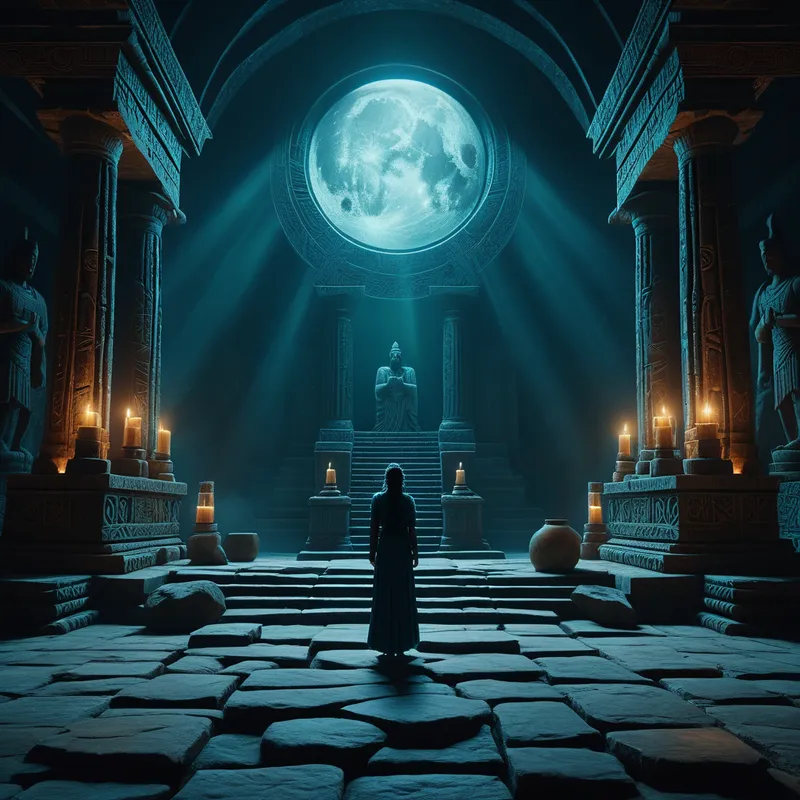
Cultural Origins & Context
[The drum](/myths/the-drum “Myth from West African / Diasporic culture.”/) journey is not a myth of a distant past but a living, breathing technology of survival woven into the very fabric of traditional Inuit life across the circumpolar world. In an environment of extreme scarcity and profound beauty, where the line between life and [death](/myths/death “Myth from Tarot culture.”/) is drawn by the thinnest sheet of ice, human control is an illusion. Survival depends on maintaining right relationship with the sentient, conscious forces of the world: the animals who give themselves, the weather that can provide or destroy, the ancestors whose wisdom lingers.
The angakkuq, therefore, is not a remote mystic but a vital social functionary—the psychologist, doctor, mediator, and cosmic diplomat of the community. Their authority derives not from political power but from proven ability to navigate these non-ordinary realities and return with tangible results. The practice, suppressed during colonial Christianization, is experiencing a cultural revival, not as superstition, but as a core element of Indigenous identity and ecological philosophy. The drum journey embodies the fundamental Inuit worldview: that humanity is not above nature, but within a vast, interconnected network of persons, only some of whom are human.
Symbolic Architecture
The [architecture](/symbols/architecture “Symbol: Architecture in dreams often signifies structure, stability, and the framing of personal identity or life’s journey.”/) of this [journey](/symbols/journey “Symbol: A journey in dreams typically signifies adventure, growth, or a significant life transition.”/) is built from the stark, potent symbols of the Arctic [landscape](/symbols/landscape “Symbol: Landscapes in dreams are powerful symbols representing the dreamer’s emotional state, personal journey, and the broader context of life situations.”/), transformed into psychic gateways.
The drum itself is the cosmos in miniature: the circular frame is the cyclical, encompassing nature of time and space; the taught membrane is the liminal plane, the veil that both separates and connects the seen and unseen worlds. To strike it is to send ripples through all layers of reality.
The journey beneath the sea to Sedna’s realm is a descent into the collective, instinctual unconscious. Sedna represents the ultimate, often-wounded Source—the deep, nourishing, yet terrifying feminine from which all life emerges and to which it returns. Combing her hair is an act of tending to the tangled, neglected complexes of the community soul.
The ascent via the silaqqaneq mirrors the individual’s quest for consciousness and perspective. To climb toward the moon is to seek the cool, reflective light of understanding in the darkness of the unknown, to gain a view from above one’s limited earthly situation.
The helper spirits, the tuurngait, symbolize those autonomous complexes of the [psyche](/myths/psyche “Myth from Greek culture.”/)—powers, talents, or traumatic fragments—that can be encountered, related to, and ultimately integrated into the service of the whole self. The negotiation is never one of domination, but of respectful [relationship](/symbols/relationship “Symbol: A representation of connections we have with others in our lives, often reflecting our emotional state.”/), reflecting a [psychology](/symbols/psychology “Symbol: Psychology in dreams often represents the exploration of the self, the subconscious mind, and emotional conflicts.”/) of [integration](/symbols/integration “Symbol: The process of unifying disparate parts of the self or experience into a cohesive whole, often representing psychological wholeness or resolution of internal conflict.”/) rather than repression.
The Dreamer’s Resonance
For the modern dreamer, the Shaman’s Drum Journey resonates as a profound metaphor for the inner work required to navigate a fractured world. The “harsh wilderness” is no longer just the Arctic, but the internal and external landscapes of crisis, alienation, and ecological dread. The drumbeat is the disciplined practice—therapy, meditation, art, ritual—that creates the rhythm and container for a journey into one’s own depths.
We are all called to become angakkuq of our own lives. The journey to the “Sea Mother” is our necessary confrontation with the depths of our personal and collective shadow, with the repressed grief, shame, and primal fears that tangle our vitality. The ascent to the “Moon” is the effort to find meaning, to gain a witnessing perspective on our own dramas. The helper spirits we meet are the unexpected insights, the creative impulses, the resilient parts of ourselves that emerge when we dare to travel inward. The ultimate goal is the same: retrieval and restoration. To bring back a piece of lost vitality, to heal a psychic wound, to restore balance between our inner nature and the outer world.
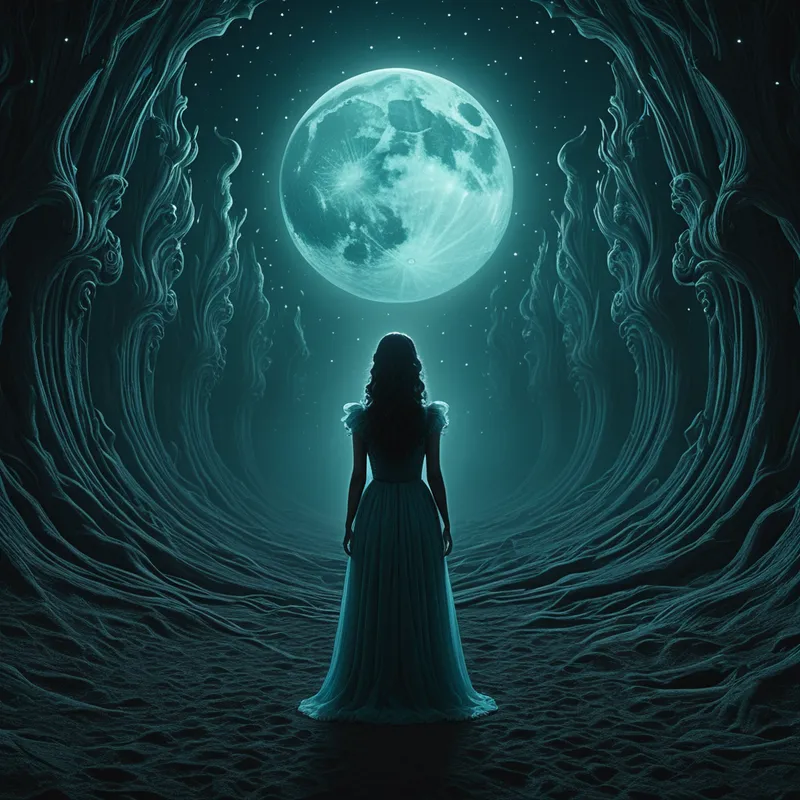
Alchemical Translation
In the alchemical vessel of the iglu or the solitary mind, the drum journey performs a sacred transformation. [The prima materia](/myths/the-prima-materia “Myth from Alchemical culture.”/)—the raw, suffering situation of the community—is subjected to the rhythmic fire of focused intention. The shaman is [the alembic](/myths/the-alembic “Myth from Alchemical culture.”/) through which this material passes into the spirit world and is reconfigured.
The operation is one of solve et coagula: to dissolve the rigid, literal, conscious understanding of a problem (“the caribou are gone”) into its spiritual, symbolic components (a broken covenant with the spirit of the caribou), and then to re-coagulate that understanding into a new, actionable form (a specific ritual of apology and respect).
The shaman returns not with a simple answer, but with a transformed relationship to the question. The illness is not just a pathogen, but a message; the scarcity is not just bad luck, but a dialogue. This is the alchemy of meaning. By traversing the non-ordinary, the ordinary is forever changed, infused with significance and connection. The community’s fear is transmuted, through the shaman’s ordeal, into renewed participation in a living, intelligent cosmos.
Associated Symbols
Explore related symbols from the CaleaDream lexicon:
- [Shamanic Journey](/myths/shamanic-journey “Myth from Siberian culture.”/) — The archetypal voyage beyond ordinary reality to retrieve knowledge, healing, or power, guided by rhythm and intent.
- Drum Circle — A communal ritual of unified rhythm, representing social harmony, shared intention, and the collective heartbeat.
- Spirit Drum — A sacred instrument serving as a conduit to the [otherworld](/myths/otherworld “Myth from Celtic culture.”/), its beat the hoof-fall of the soul’s steed across cosmic plains.
- Bridge — The connecting pathway between worlds, realms, or states of consciousness, often perilous and transformative to cross.
- Cave — A place of descent, incubation, and confrontation with the deep unconscious or primal sources of power.
- Sea — The vast, unconscious realm of emotion, instinct, and the primordial mother, home to both treasures and monsters.
- Moon — The reflective, cyclical light in the darkness governing intuition, the soul’s journey, and the hidden rhythms of life.
- Mask — The mediating face worn to interface with spirit forces, representing the adoption of a sacred role or the many selves within.
- Soul — [The immortal](/myths/the-immortal “Myth from Taoist culture.”/), journeying essence of a being, which can wander, become lost, or be retrieved through sacred acts.
- Transformation Cocoon — The liminal, ritual space—created by drumbeat and intent—where the old self dissolves so the new understanding can form.
- Root — The deep, ancestral connection to land, tradition, and the foundational sources of life and identity.
- Healing — The restoration of balance and wholeness, achieved not merely through remedy, but through the repair of fractured relationships.