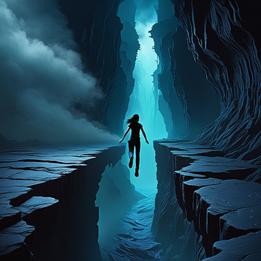
Chasm
A deep fissure in the earth representing a profound division, transition, or psychological gap between states of being.
Chasm Dream Meaning
A deep fissure in the earth representing a profound division, transition, or psychological gap between states of being.
Interpretive Themes
Mythological Resonance
Tartarus
GreekThe primordial chasm that existed before creation, representing the gap between being and non-being.
Ginnungagap
NorseThe great void that existed before creation, where fire and ice met to form the world.
Cultural Lenses
Jungian Perspective
View Context →Represents the shadow or collective unconscious—a divide between conscious ego and unknown psychic contents. Crossing symbolizes individuation, integrating repressed aspects for wholeness.
Freudian Perspective
View Context →Often symbolizes female genitalia or birth trauma, representing separation anxiety from the mother. The act of crossing may indicate sexual intercourse or psychological rebirth.
Gestalt Perspective
View Context →The chasm is an unintegrated part of the self. Dreamer is both the gap and the solid ground, representing internal conflict between opposing needs or feelings.
Cognitive Perspective
View Context →Manifests cognitive dissonance or problem-solving about a real-life 'gap.' The brain processes overwhelming challenges or logical inconsistencies through this spatial metaphor during sleep.
Evolutionary Perspective
View Context →Rooted in survival instinct—deep fissures were physical dangers. Dreams activate threat-assessment systems for navigating social/emotional 'gaps' like exclusion or resource scarcity in modern life.
Global/Universal Perspective
View Context →A near-universal symbol of division and transition. Appears in myths worldwide (e.g., River Styx) as a boundary between worlds, life stages, or states of consciousness.
East Asian Perspective
View Context →In Taoist/Buddhist context, represents the void (sunyata) or the gap between yin and yang. Crossing symbolizes achieving balance or enlightenment through non-attachment.
South Asian Perspective
View Context →In Hindu/Buddhist tradition, may represent samsara (cycle of suffering) or the divide between material and spiritual realms. Bridging it requires dharma or mindfulness.
Middle Eastern Perspective
View Context →In Islamic/Judaic contexts, often symbolizes the sirat (bridge to paradise) or trials from God. The chasm tests faith and moral integrity before crossing.
European Perspective
View Context →In Norse/Greek mythology, represents Ginnungagap or Tartarus—primordial voids. In modern interpretation, signifies historical divides (e.g., class, ideology) needing reconciliation.
African Perspective
View Context →In many traditions, symbolizes the divide between ancestors and living, or drought-caused earth cracks. Ritual crossings restore community harmony and connection to lineage.
North American Perspective
View Context →For Indigenous cultures, may represent a spiritual testing ground. In modern context, often reflects societal divides (political, economic) or personal identity gaps.
Historical Authorities
Want a deeper analysis?
Get a personalized interpretation of your entire dream including this symbol.
Interpret My DreamThe Oracle's Prediction
Combine multiple symbolsA profound psychological or spiritual breakthrough requiring courage.
Timeframe
Seasonal (~3 Months)
Intensity
Deep
Common Appearances & Contexts
| Context | Emotion | Interpretation |
|---|---|---|
| Context Standing at edge | Emotion Fear | Interpretation Facing a major decision. |
| Context Falling into chasm | Emotion Panic | Interpretation Loss of control. |
| Context Jumping across | Emotion Courage | Interpretation Taking a risk. |
| Context Building a bridge | Emotion Determination | Interpretation Creating a solution. |
| Context Chasm closing | Emotion Relief | Interpretation Conflict resolution. |
| Context Chasm widening | Emotion Despair | Interpretation Growing separation. |
| Context Seeing bottom | Emotion Clarity | Interpretation Understanding the depth. |
| Context Someone across it | Emotion Longing | Interpretation Desired connection. |
| Context Chasm in home | Emotion Anxiety | Interpretation Domestic division. |
| Context Flying over | Emotion Freedom | Interpretation Transcending obstacles. |
| Context Chasm with water | Emotion Awe | Interpretation Emotional depth. |
| Context Chasm in road | Emotion Frustration | Interpretation Blocked path forward. |
Interpret Your Full Dream
Beyond this symbol, every dream carries a unique story. Share your dream for a personalized AI-powered interpretation.