
The Legend of Yamato Takeru
A legendary Japanese prince embarks on perilous quests with divine weapons, battling monsters and spirits while grappling with his own destiny and mortality.
The Tale of The Legend of Yamato Takeru
The tale begins not with a prince’s birth, but with a father’s fear. Emperor Keikō looked upon his second son, Prince Ōsu, and saw not a successor but a threat—a youth of such fierce and untamed spirit that he was given the name Yamato Takeru, “The Brave of Yamato.” His first heroic act was born of this paternal rejection; sent to subdue the rebellious Kumaso brothers, the prince arrived not as a warrior, but in the silken robes of a maiden, his long hair loose. At the celebratory feast, he drew close to the drunken chieftains. In a flash of concealed steel, he slew them, earning his name through guile as much as strength. The sword he took from the dying leader, the Kusanagi-no-Tsurugi (Grass-Cutting Sword), would become both his divine instrument and his burden.
His father, perhaps still wary, then dispatched him east to pacify the Emishi. It was his aunt, the high priestess Yamatohime-no-mikoto, who saw the peril in his path. At the Great Shrine of Ise, she bestowed upon him another sacred blade, the Ame-no-Murakumo-no-Tsurugi (Sword of the Gathering Clouds of Heaven), and a simple bag. “Open this only in direst need,” she warned. Thus armed and cursed with a destiny he did not choose, Takeru descended into the crucible of the land.
His journey was a gauntlet of supernatural trials. In the pass of Fuji Moor, a local chieftain betrayed him, setting the grasslands ablaze to trap the prince. With fire closing in, Takeru remembered the bag. Opening it, he found a fire-striking flint. Wielding the Ame-no-Murakumo, he cut the burning grass around him, then used the flint to set a counter-fire, creating a barrier. In that moment of salvation, he renamed the sword Kusanagi—the Grass-Cutter. Yet this victory was not without cost; the act bound the sword’s spirit to his own fate.
Later, crossing the sea of Hashirimizu, a sudden storm, sent by a vengeful sea god, threatened to capsize his boat. His wife, Oto-tachibana-hime, saw the divine wrath. With a clarity born of absolute love and sacrifice, she declared, “I will take your place in the sea to calm the deity.” Before he could stop her, she leapt into the raging waves, which instantly stilled. Takeru watched, helpless, as the water that had been his enemy became the grave of his heart. He continued his quests, a conqueror hollowed by grief, his victories now tasting of ash.
The final act unfolded on the plain of Tagi. Weary and sick at heart, Takeru encountered the god of Mount Ibuki, who appeared to him not as a monster, but as a great white serpent blocking his path—a form of profound spiritual ambush. In his exhaustion and pride, he dismissed it as a mere “insect,” a fatal misrecognition. The god breathed out a poisonous mist, a miasma that seeped into the hero’s lungs. The mighty Yamato Takeru, slayer of men and demons, was felled not by a blade, but by a sickness, a spiritual venom.
In his dying moments, he transformed. The fierce warrior became a longing soul. He composed a poignant poem, gazing toward his home: “Yamato wa / Kuni no mahoroba / Tate-tsukuru / Aokaki-yama wo…” (Yamato, the most excellent land, framed by the green fence of mountains…). His spirit, it is said, took the form of a great white bird that flew from his burial mound, circling it three times before soaring toward the coast, finally free of the earthly burdens he had carried so heavily.
Cultural Origins & Context
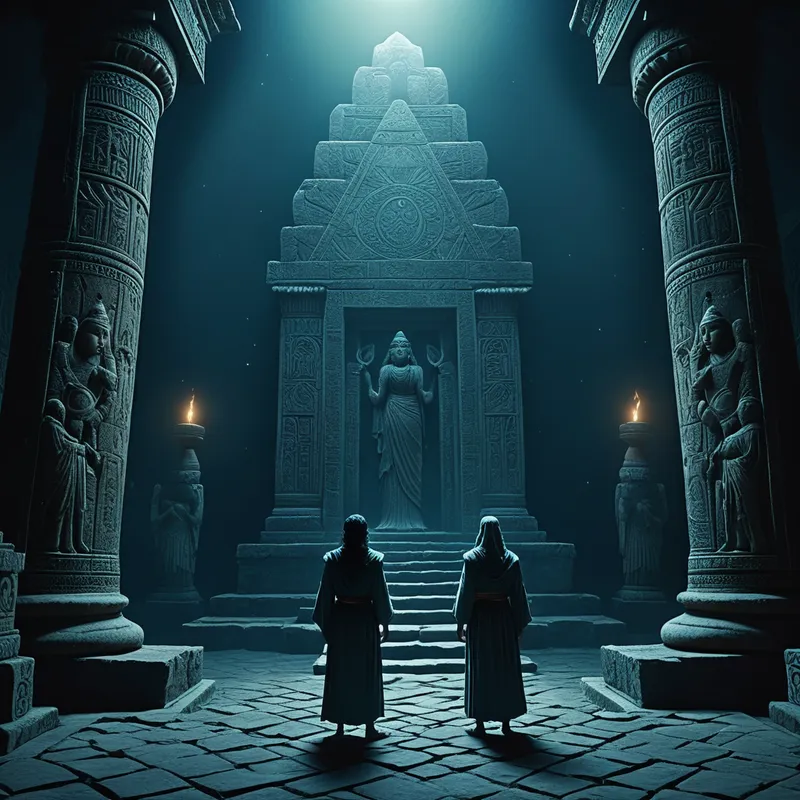
The legend of Yamato Takeru is preserved primarily in Japan’s earliest chronicles, the Kojiki (712 CE) and Nihon Shoki (720 CE). These texts were compiled to establish a divine lineage for the imperial house, tracing its authority back to the sun goddess Amaterasu. Takeru’s story serves as a crucial bridge in this narrative, moving the mythic past into a more historical, heroic age where semi-divine figures pacify the land and consolidate Yamato rule.
He is not a god, but a kami-no-ko, a scion of the gods, embodying the fraught transition from divine mandate to human action. His campaigns to subdue the Emishi and other “unruly” peoples reflect the historical expansion of the Yamato state from its heartland in the Kinai region. The supernatural foes he faces—the burning moor, the storm god, the mountain deity—personify the untamed, potentially hostile spirit (kami) of the land itself, which must be confronted, placated, or conquered to bring it into the fold of imperial order.
His tragic end and poetic lament also mark a pivotal development in the Japanese literary and spiritual consciousness. It represents the emergence of mono no aware—a deep, empathetic sensitivity to the impermanence of all things. Even the greatest hero is subject to fate, loss, and mortality. His story thus functions as a foundational national epic that intertwines political legitimization with profound psychological and spiritual themes, setting a template for the tragic hero in Japanese culture.
Symbolic Architecture
The myth is built upon a framework of sacred objects, elemental trials, and profound inversions. The divine swords are not mere tools but extensions of royal and spiritual authority, yet they cannot protect against spiritual malaise. The journey from west to east is a movement from the center of power into the chaotic fringe, a classic heroic trajectory of differentiation and ordeal.
The Kusanagi Sword symbolizes divine power entrusted to humanity. It is a tool of order that cuts through chaos (grass, fire), but its possession is a burden. It saves Takeru’s life yet cannot sever the thread of his fate, illustrating that divine gifts do not confer immunity from the human condition.
The sacrifice of Oto-tachibana-hime represents the ultimate kenosis—an emptying of self for the beloved. Her act calms the chaotic, feminine element (the sea) through a feminine sacrifice, allowing the masculine principle (the hero) to continue his linear quest. It is both a profound act of love and a stark reminder that the hero’s path is paved with the losses of others.
Takeru’s final sickness is the core of the tragedy. The hero who defeated armies and fire is undone by a mist, an insubstantial breath. This symbolizes the ultimate vulnerability of the physical self to spiritual or psychic poison—often one’s own pride or weariness. His dismissal of the god as an “insect” is a failure of perception, a fatal disconnect from the kami nature of the world he sought to unite.
The Dreamer's Resonance
For the modern psyche, Yamato Takeru is not a remote figure of conquest but an archetypal portrait of the gifted individual burdened by expectation. He is the child sent to fulfill a parent’s anxious ambitions, the talented person whose very prowess isolates them. His initial deeds are acts of violent brilliance meant to prove his worth to a distant, critical father—a dynamic echoing in countless personal histories.
His journey maps the interior process of individuation: leaving the paternal order (the Emperor), receiving wisdom from the feminine (his aunt), and facing the shadow elements of the world and the self. Yet, his tragedy lies in an incomplete integration. He masters the external foes but remains vulnerable to the internal ones—grief, loneliness, and the spiritual exhaustion that comes from a life lived primarily as a instrument of destiny, not as a sovereign self. His poignant, poetic end is the moment the persona of “The Brave” falls away, and the pure, homesick human soul is revealed. This resonates with anyone who has achieved external success only to confront a profound inner emptiness.

Alchemical Translation
In the alchemy of the soul, Yamato Takeru’s saga is a narrative of the nigredo and a failed albedo. His early victories represent the forceful application of will (solve—to dissolve), breaking down the structures of opposition. The sacrifice of his wife is the devastating mortificatio, the death of a cherished part of the self necessary for continuation.
The poisonous mist is the spiritus oppressus, the oppressed spirit. It is the return of all that was ignored or arrogantly dismissed—the subtle, environmental toxicity that the hardened ego believes it is immune to. His physical sickness is the manifestation of a psychic illness: the failure to honor the spirit of the mountain, the genius loci, is a failure to honor a part of his own inner landscape.
His final transformation into the white bird suggests a potential rubedo he could not achieve in life. The bird is spirit liberated from the leaden weight of earthly duty and tragic identity. It is the soul’s release, flying toward the eternal (the sea, the horizon) after the long, hard labor of the heroic life. The myth teaches that the ultimate conquest is not of others, but of the identification with the heroic persona itself, allowing for a more transcendent flight.
Associated Symbols
Explore related symbols from the CaleaDream lexicon:
- Legendary Sword — A divine weapon of order and authority, representing power entrusted to a mortal hand, which becomes both a tool for destiny and a weight upon the soul.
- Fate (Urðr / Wyrd) — The inexorable weave of destiny that guides and constrains the hero’s path, often felt as a divine mandate or a paternal decree that must be fulfilled.
- Sacrifice — The voluntary surrender of something of profound value, often a life or love, to appease a greater power or enable the continuation of a destined journey.
- Water — The elemental realm of the unconscious, emotion, and sacrifice; calmable yet ultimately consuming, representing both a barrier and a grave.
- Mountain — A symbol of enduring challenge, spiritual domain of the gods, and the site of the hero’s ultimate confrontation with a power he fatally underestimates.
- Bird — The liberated soul or spirit, often white, representing transcendence, release from earthly suffering, and the final flight after a life of toil.
- Wound — The spiritual and physical poisoning that brings low the mighty, representing vulnerability, the cost of pride, and the inescapable fragility of the body.
- Journey — The forced quest from the center to the fringe, a path of trials that shapes, hallows, and ultimately exhausts the traveler.
- Father — The distant source of authority and judgment whose approval is sought, often representing the internalized pressure of legacy and expectation.
- Poem — The crystallization of longing and mono no aware; the moment when action ceases and pure, poignant feeling is expressed, revealing the true heart beneath the hero’s armor.