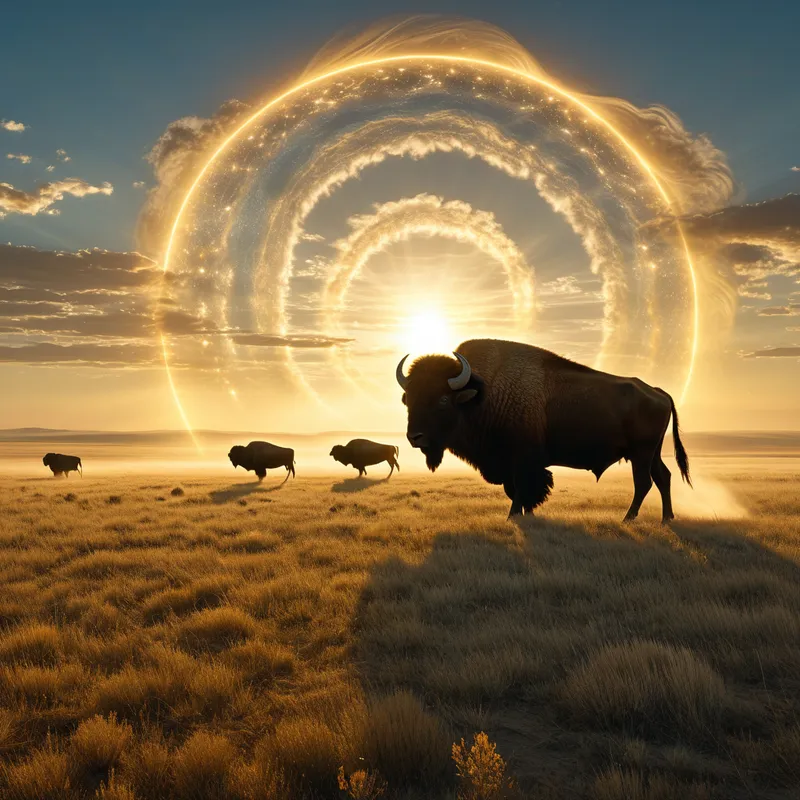
The Great Spirit's Breath Myth Meaning & Symbolism
The Great Spirit breathes life into the world, creating the sacred wind that connects all beings and carries the whispers of the ancestors.
The Tale of The Great Spirit's Breath
In the time before time, there was a silence so deep it was a presence. The world lay in a dreamless sleep—the great plains were dark, flat stone; the mountains were silent bones; the rivers were empty veins of dust. There was no rustle of grass, no call of bird, no beat of heart. Only the Great Spirit, a vast awareness in the stillness, contemplating the potential of form.
And in that eternal contemplation, a longing stirred. A longing for song, for movement, for relationship. The Great Spirit turned its awareness inward, gathering the essence of its own being—not from nothing, but from the infinite field of dreaming potential. It drew a breath, a gathering so profound it pulled the stars closer.
Then, it exhaled.
This was no ordinary wind. It was the First Breath, Woniya Wakan—the Holy Wind. It rushed across the sleeping stone plains with a sound like a thousand thunderstorms whispering a secret. Where it touched, the stone softened and cracked, and from the cracks sprang the first green tendrils of grass, thirsty for the wind’s moisture. The breath swept into the empty riverbeds, and water, singing, began to flow. It swirled around the mountain bones, and pine trees grew, their needles humming.
The breath did not stop. It fragmented into a billion gentle zephyrs, each a spark of the Great Spirit’s own life. One spark swirled into a pile of clay by a newborn river, and the clay shuddered, stretched, and became the first Tatanka, the buffalo, its deep breath misting in the new air. Another spark danced with dust and light, and from the vortex rose Wanbli Gleska, whose first cry was the wind itself given voice.
Finally, the Great Spirit shaped the finest clay with care, forming a being that stood on two legs. Into its nostrils, the Spirit breathed not just the animating wind, but a smaller, gentler version of that First Breath. This was Ni. The human’s eyes opened, seeing not just the world, but the sacred wind that connected the buffalo’s strength to the grass, the eagle’s sight to the sun, and its own heartbeat to the drum of the earth.
The First Breath became the ever-present wind of the world. It carries the songs of the rivers to the ears of the trees. It takes the prayers of the people from the smoke of the smudge bowl and delivers them to the stars. It is the whisper in the grass that tells the buffalo where to roam, and the sigh in the quiet lodge that carries the wisdom of the ancestors to a sleeping child. The world is not merely alive; it is in constant, breathed conversation, held in the one, endless exhalation of the Great Spirit.
Cultural Origins & Context
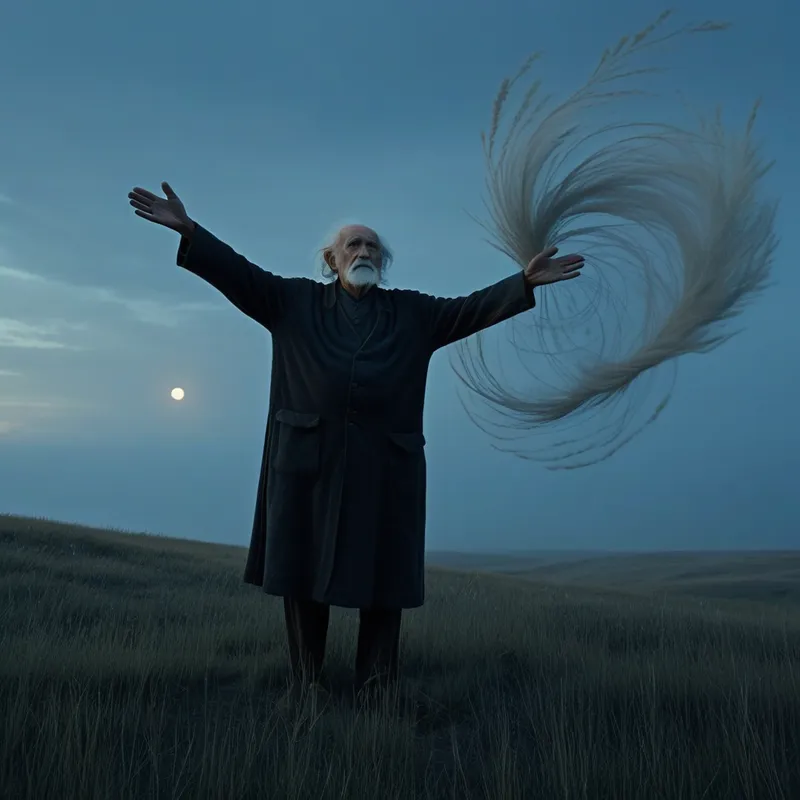
This myth, in its many nuanced variations, forms the foundational bedrock of the cosmological understanding for numerous Plains nations, including the Lakota, Dakota, Nakota, Cheyenne, and Arapaho. It was not a singular, fixed text but a living narrative passed down through oral tradition by Wicasa Wakan (Holy Men) and esteemed elders during long winter nights, ceremonies, and in the teaching of the young.
Its primary function was ontological—it explained the nature of existence itself. The myth established a universe based on sacred relationship (Mitakuye Oyasin) rather than separation. It taught that humans are not placed upon the earth, but are formed from it and animated by the same sacred breath as every other creature. This created a framework for profound ecological and ethical responsibility: to harm the web of life was to disrespect the very breath of the Great Spirit. The myth also validated spiritual practice; prayer, song, and the use of the sacred pipe were understood as conscious participation in this breathed network, sending one’s own breath (Ni) back into the holy circuit of Woniya Wakan.
Symbolic Architecture
The myth’s power lies in its elegant, non-hierarchical symbolism. The Great Spirit is not a distant king but the intimate, pervasive principle of animation. Its Breath is the archetypal symbol of the connective tissue of the universe.
The sacred breath is the invisible thread that stitches the quilt of creation; to see the world as separate pieces is to be blind to the weaving.
The Tatanka represents the embodied, physical sustenance provided by the breath—the body of the world. The Wanbli symbolizes the breath’s capacity for vision, perspective, and carrying messages between the earthly and the spiritual—the spirit of the world. Humanity, receiving Ni, embodies the self-reflective aspect of the breath—the consciousness of the connection. We are the part of the universe that can know it is breathed. This imposes not privilege, but a sacred duty of awareness and reciprocity.
The wind itself is the ultimate symbol of the paradoxical unity of all things: it is one, yet it touches all things separately; it is invisible, yet its effects are the most visible movements of life; it is a constant reminder that to be alive is to be in a state of perpetual exchange—inhaling the world, exhaling the self.
The Dreamer's Resonance
When this myth stirs in the modern psyche, it often manifests in dreams of powerful, transformative winds. To dream of a great, cleansing wind sweeping through a cluttered personal landscape—a childhood home, an office—suggests a deep psychological process of animation. The dreamer’s soul is calling for the stagnant air of old patterns, unresolved emotions, or a lifeless routine to be scoured away by the primal breath of spirit.
Dreams of breathing underwater, or of trees breathing in unison with the dreamer, point to a somatic recognition of the myth’s truth: the boundaries between self and environment are permeably thin. This can be a terrifying or ecstatic experience, correlating with the psyche’s struggle to integrate the reality of profound interconnection, often after a period of extreme isolation or intellectual alienation. The wind in these dreams is not an external force, but the dreamer’s own neglected inner vitality, the Ni, demanding to be acknowledged as part of the greater Woniya Wakan.
Alchemical Translation
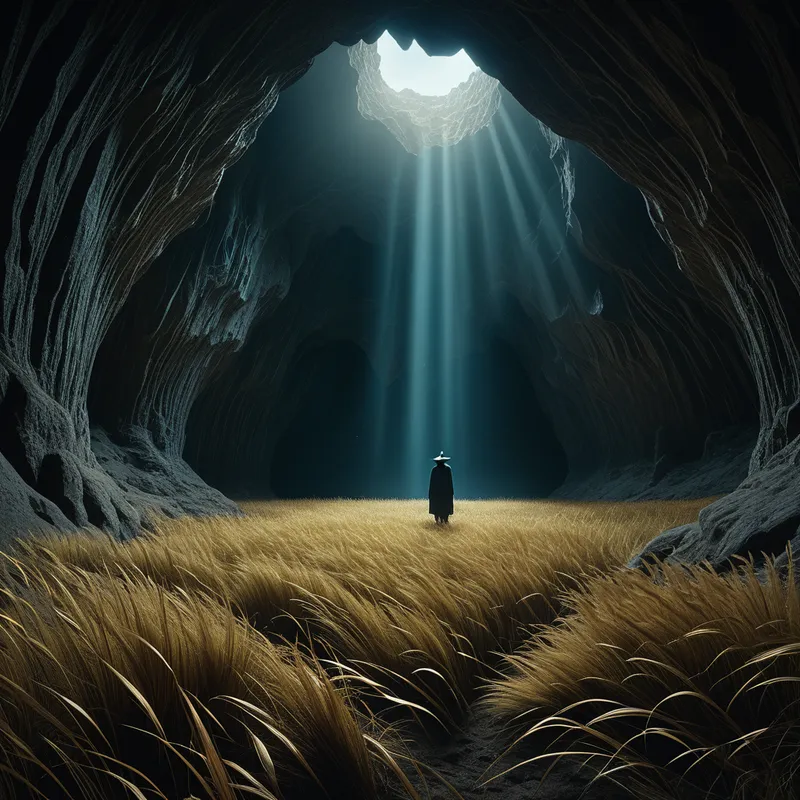
For the modern individual navigating a culture of hyper-individualism and alienation, the alchemy modeled by this myth is the transmutation of loneliness into sacred solitude, and isolation into conscious interconnection. The “hero’s journey” here is not one of conquest, but of attentive reception.
The first stage is the Recognitio—the painful awareness of the stone-like silence within, the feeling of being cut off from the animating flow of life. The alchemical work begins with the simple, profound act of conscious breathing. Each intentional breath becomes a ritual, a microcosm of the First Breath, inviting animation into a frozen part of the self.
The individuation process is the slow, patient learning of how to let the Great Spirit breathe you.
The next stage is Conjunctio—discovering the “breath” in all things. This is the practice of seeing the world not as a collection of objects, but as subjects in a breathed relationship. It is hearing the wind in the trees as a literal conversation and feeling one’s own heartbeat as a response to the drumming of a distant ceremony. This expands the ego’s identification from “I am a self” to “I am a nexus in a network of sacred exchange.”
The final transmutation is Circumambulatio—the realization that one’s life is not a linear path to a goal, but a circular offering. One’s thoughts, words, and actions are exhaled into the world-wind, affecting the whole. The purified individual understands themselves as a conscious point of inhalation and exhalation within the Great Spirit’s endless respiration. Their unique life becomes their specific note in the eternal song carried on the sacred wind, fulfilling the ultimate purpose of the myth: to live as a grateful, responsive, and animating part of the breathed-all.
Associated Symbols
Explore related symbols from the CaleaDream lexicon: