
Spirit Canoe Myth Meaning & Symbolism
A shamanic journey myth where a wounded healer navigates a spectral vessel through the underworld to retrieve a stolen soul, restoring cosmic balance.
The Tale of Spirit Canoe
Listen. The world is sick. The sun hangs pale, the rivers run thin, and the people move like shadows, their laughter a memory. A great soul-sickness has fallen, a theft in the night. The heart of the village, a child of pure spirit, lies still, breath shallow, eyes seeing a world beyond our own. Her soul has been taken, drawn into the Land of the Long Night.
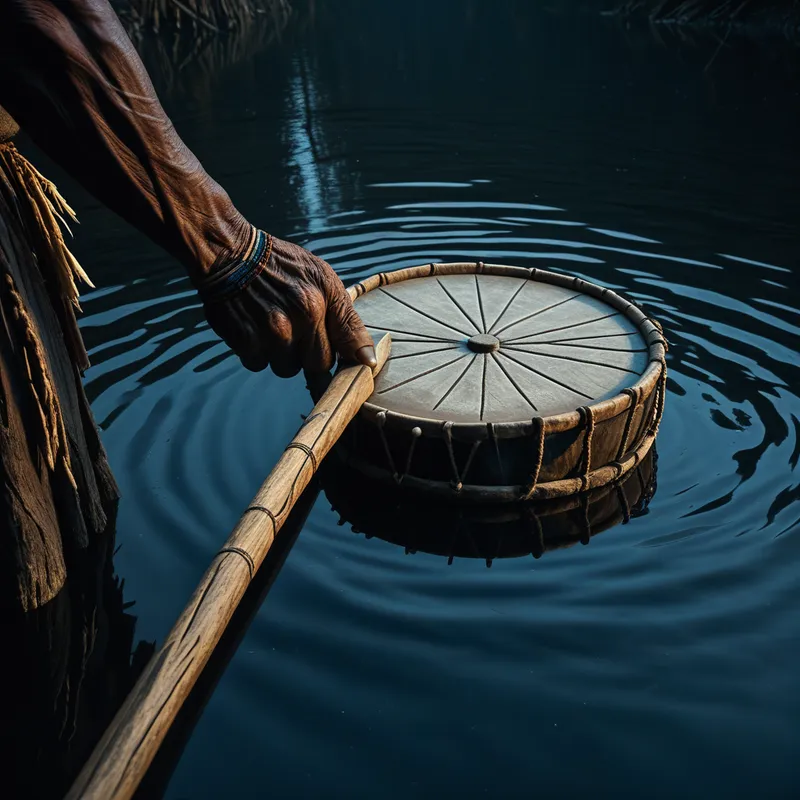
Into this silence steps the One-Who-Sees. Their own body bears the old wound, the limp that speaks of a past encounter with the dark. They do not come in glory, but in necessity. Before the gathered, trembling hope of the people, they begin the drum’s heartbeat. Thum-thum. Thum-thum. The sound is not just heard; it is felt in the belly, in the bones. The air thickens. Smoke from sacred herbs coils into shapes of memory and longing.
The One-Who-Sees sings, a low, weaving chant that calls not to the gods above, but to the spirits below. To the guardians of the threshold. And from the mist at the water’s edge, it responds. The Spirit Canoe manifests. It is not wood and pitch, but something older: the fossilized rib of a great beast, fused with living root and threaded with phosphorescent fungus. It glows with a soft, corpse-light. It is a vessel made of death and life intertwined.
The journey begins not on water, but on the drum’s rhythm. The One-Who-Sees steps into the canoe, and the shore of the waking world dissolves. They are on the Black River, a current of pure potential and forgotten things. The oar dips into waters that reflect not sky, but the inverted landscape of the underworld: twisted trees with eyes, mountains of silent grief. Shapes flit beneath the surface—soul-shards, regrets, the un-mourned dead. They whisper, they clutch, they seek passage.
The guardians are met. The Keeper of Bones, who demands a song of true sorrow. The Mist-Weaver, who offers comforting illusions of home to lure the traveler aground. The One-Who-Sees pays each toll not with coin, but with truth: a memory of their own wound, a tear shed into the black water, a refusal of easy solace.
Deeper. The river narrows into a gorge of whispering stone. Here, in a cavern lit by cold, bioluminescent fungi, the thief resides. It is no monster, but a Wraith of Lack, itself a hollow thing, clinging to the stolen child-soul like a drowning man to driftwood. There is no great battle of force. The One-Who-Sees stands in the rocking canoe and offers the drum’s steady heart, and a story. A story of the sun on the village, of the mother’s unfinished lullaby, of a life unlived. The story is a net of belonging. The Wraith of Lack, hearing of a world it can never have, loosens its grasp, not in defeat, but in a moment of remembered longing.
The soul, a flicker of gentle light, is gathered into a vessel of breath and song. The turn. The return journey is swifter, yet more perilous, for now the canoe carries precious cargo, a beacon in the gloom. The clutching shadows are more desperate. The One-Who-Sees rows with a fierce, aching strength, the old wound burning, the drum now a war-beat against the pull of the abyss.
They break the surface not at the shore, but in the center of the village lodge, the canoe dissolving into mist. The One-Who-Sees exhales over the child, the breath carrying the soul back to its anchor. Color returns. A breath deepens. The first cry is the sound of the world healing itself. And the healer slumps, exhausted, their own wound throbbing with a new, quiet ache—the price of the passage, the scar of the journey that forever binds them to both worlds.
Cultural Origins & Context
The myth of the Spirit Canoe is not the property of a single tribe, but a profound archetypal narrative found across shamanic traditions from the Pacific Northwest to the Amazon, from Siberia to Oceania. It is a core teaching story of the "Global Shamanic" culture—a term acknowledging the shared phenomenological bedrock of shamanic practice worldwide. This story was not "told" for entertainment, but performed, often during healing rituals or rites of passage, by the shaman or elder. Its transmission was somatic; the steady drumbeat that underpins the tale is the literal vehicle, the sonic canoe, that induces the altered state in both practitioner and community.
Societally, its function was multifaceted. It was a map of the non-ordinary reality, educating the community on the topography of the unseen. It was a legitimization of the shaman’s often-wounded authority—their power born from successful navigation of that same darkness. Most crucially, it was a narrative of collective resilience. In times of plague, famine, or spiritual malaise, the story of the Spirit Canoe re-enacted the possibility of restoration. It affirmed that what was lost (health, harmony, soul) could be retrieved, but only through a perilous, guided journey into the very heart of the crisis.
Symbolic Architecture
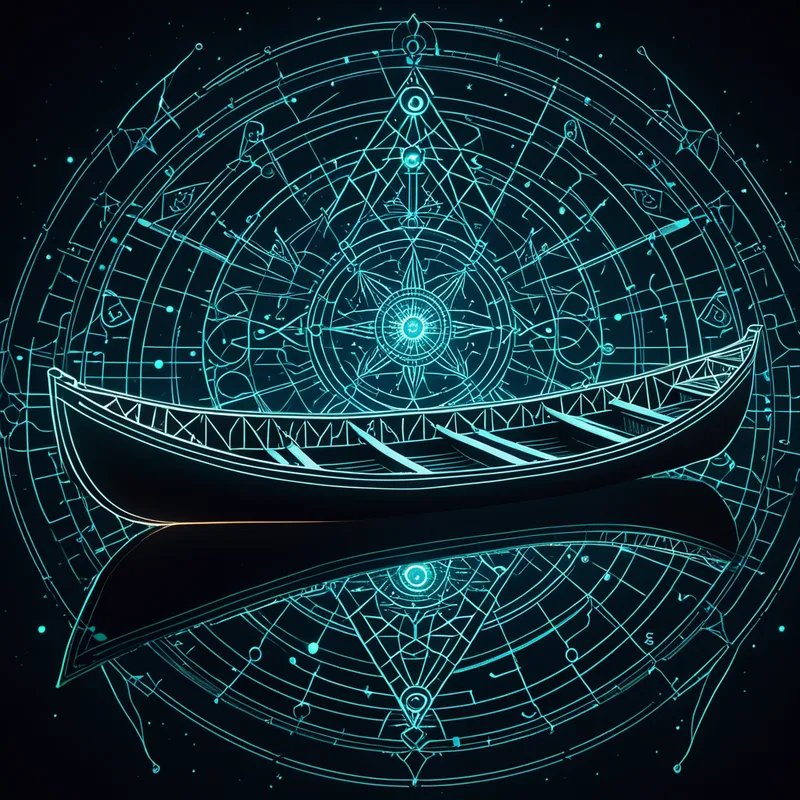
The myth’s power lies in its elegant symbolic architecture. The Spirit Canoe itself is the central symbol—the vehicle of the Self. It is crafted from death (bone) and life (root), representing the psyche’s structure, built from both our traumas and our innate, growing vitality. It is not a grand ship, but a fragile, purposeful vessel, implying the precarious, focused nature of consciousness undertaking deep introspective work.
The canoe is the body of the journey, the drum is its heartbeat, and the black river is the timeless flow of the unconscious itself.
The Black River is the collective unconscious, the dark, nourishing, and potentially overwhelming flow of psychic material. The stolen soul represents any vital part of the psyche that has been dissociated due to trauma, shock, or loss—our creativity, our joy, our capacity for connection. The Wraith of Lack is not mere evil, but the personified shadow of that loss, a psychic complex that feeds on our absence and resists reintegration. The shaman’s victory through story and presence, not force, reveals the core psychological truth: integration is achieved through recognition, witnessing, and the compassionate re-weaving of narrative.
The Dreamer's Resonance
When this mythic pattern stirs in the modern dreamer, it signals a profound somatic and psychological process: a call for soul retrieval. One may dream of fragile boats on dark water, of searching for a lost child or animal in labyrinthine basements (the modern Land of the Long Night), or of being a passenger in a vehicle steered by an unknown, authoritative figure (the inner shaman).
Somatically, this can coincide with feelings of chronic depletion, a "wound" that won’t heal, or a sense of being "not all here." The psyche is organizing itself for a descent. The dream images are the first manifestations of the Spirit Canoe—the nascent, fragile structure of a seeking consciousness preparing to navigate the inner darkness to recover what has been left behind. It is the psyche’s innate healing intelligence plotting its own course to wholeness.
Alchemical Translation
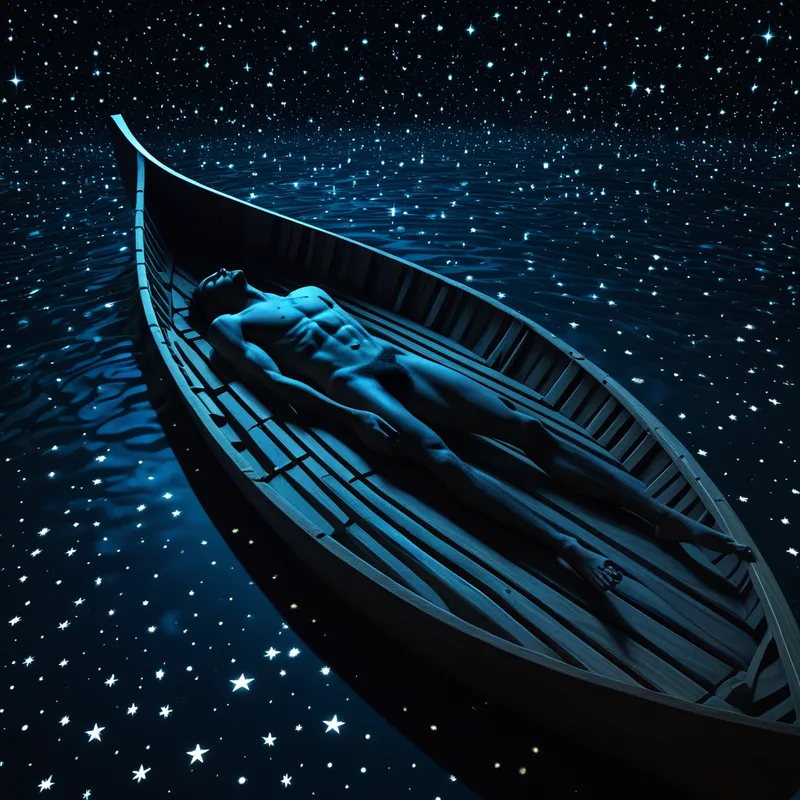
The myth models the complete arc of psychic transmutation, or individuation. First, the nigredo: the acknowledgment of the sickness, the "stolen soul"—our depression, alienation, or creative block. This is the necessary descent, the mortificatio.
The building of the canoe is the albedo: the creation of a conscious container (through therapy, art, ritual, or meditation) strong enough to hold the journey. The voyage down the Black River is the confrontation with the shadow, the separatio and solutio where old identities and complexes dissolve in the waters of the unconscious.
The retrieval is not a conquest, but a negotiation where the healer offers their own wound as collateral for the soul's release.
The encounter with the Wraith of Lack is the critical coniunctio. Here, the hero does not slay the shadow but engages it, offering the "story" of conscious life. This represents integrating the shadow’s energy, understanding the purpose of our pain. The return with the soul is the rubedo, the reddening, the return of vital energy and passion to the conscious personality. The healer’s enduring wound is the final seal: the integrated individual is not unscathed, but enlarged, bearing the sacred scar of their passage, now a living bridge between the deep self and the waking world. The Spirit Canoe, thus, is the enduring symbol of the psyche’s courageous, ongoing journey to become its own vessel of healing and completion.
Associated Symbols
Explore related symbols from the CaleaDream lexicon: