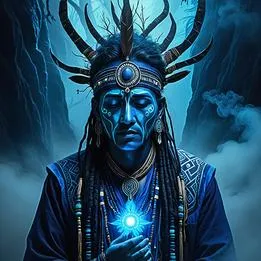
Shaman Dream Meaning
A spiritual mediator who bridges the human and spirit worlds, often through altered states, healing, and guidance.
Common Appearances & Contexts
| Context | Emotion | Interpretation |
|---|---|---|
| Healing ritual | Hope | Seeking restoration or cure. |
| Spirit journey | Awe | Exploring unknown realms. |
| Divination session | Anxiety | Fear of future outcomes. |
| Community ceremony | Belonging | Feeling part of group. |
| Animal transformation | Wonder | Connecting with nature. |
| Conflict resolution | Relief | Resolving inner turmoil. |
| Initiation rite | Fear | Facing a new phase. |
| Ancestor communication | Reverence | Honoring past wisdom. |
| Herbal gathering | Peace | Finding natural remedies. |
| Drumming trance | Ecstasy | Altered consciousness state. |
| Soul retrieval | Longing | Recovering lost parts. |
| Weather control | Power | Influencing external forces. |
Interpretive Themes
Cultural Lenses
Jungian Perspective
View Context →Represents the archetype of the wise old man or healer, guiding the dreamer toward individuation and integrating the unconscious, often through symbolic rituals and inner wisdom.
Freudian Perspective
View Context →May symbolize a paternal or authority figure, reflecting unresolved conflicts with father figures or societal norms, and the desire for guidance or rebellion against them.
Gestalt Perspective
View Context →Seen as a projection of the dreamer's own healing or guiding abilities, encouraging self-awareness and integration of fragmented parts of the personality for wholeness.
Cognitive Perspective
View Context →Reflects the mind's processing of problem-solving or decision-making, where the shaman acts as a metaphor for accessing internal resources or coping strategies during stress.
Evolutionary Perspective
View Context →Taps into ancient human adaptations for social cohesion and survival, symbolizing roles that historically provided healing, leadership, and spiritual reassurance in tribal contexts.
Global/Universal Perspective
View Context →A cross-cultural figure found in many indigenous traditions, serving as a mediator between humans and spirits, often involved in healing, divination, and maintaining cosmic balance.
East Asian Perspective
View Context →In cultures like Korea (Mudang) or Siberia, shamans are intermediaries who perform rituals to appease spirits, heal illnesses, and ensure harmony, blending animism with local beliefs.
South Asian Perspective
View Context →In Hindu and tribal contexts, shamans or sadhus may use trance, mantras, and herbs for healing, often seen as possessing divine powers or connecting to deities like Shiva.
Middle Eastern Perspective
View Context →Historically, figures like dervishes or seers in Sufism and pre-Islamic traditions, using ecstatic practices for spiritual insight and healing, though often marginalized in modern times.
European Perspective
View Context →Rooted in pagan traditions like Celtic druids or Norse seers, shamans were healers and seers, later suppressed by Christianity but revived in neo-pagan movements as spiritual guides.
African Perspective
View Context →In many African cultures, shamans or sangomas act as diviners and healers, using ancestral communication, herbs, and rituals to address community and personal issues, maintaining strong cultural roles.
North American Perspective
View Context →Among Native American tribes, shamans or medicine people conduct ceremonies, vision quests, and healing practices, emphasizing connection to nature, spirits, and tribal identity, often respected today.
Interpret Your Full Dream
Beyond this symbol, every dream carries a unique story. Share your dream for a personalized AI-powered interpretation.