
Si Kabayan Myth Meaning & Symbolism
The tale of a lazy, cunning Sundanese peasant whose apparent foolishness masks a deep, subversive wisdom that exposes the absurdities of authority.
The Tale of Si Kabayan
Listen, and let the humid air of the Parahyangan highlands settle around you. Here, where the tea plantations cling to the hills and the rice terraces step down to the valleys, there lived a man. He was not a king, nor a warrior, nor a priest. He was Si Kabayan, and his kingdom was a small, dilapidated hut, his throne a woven bamboo mat.
His greatest ambition, it seemed, was to do nothing at all. To lie in the dappled shade of a waringin tree, his belly full of simple rice, and watch the clouds conspire with the peaks of Mount Tangkuban Perahu. His wife, Iteung, would scold and plead, her voice the buzzing of a persistent fly he was too lazy to swat. “Kabayan! The field needs weeding! The roof is leaking!” And Kabayan would sigh, a long, drawn-out sound of profound inconvenience, and offer a solution so perfectly illogical it left the world tilted on its axis.
One day, the village headman, puffed up with borrowed authority, came to demand every household provide a chicken for a feast for the visiting Controleur. Kabayan listened, his face a picture of blank obedience. When the headman arrived at his hut, Kabayan was frantically pouring buckets of water into a small, cracked pond. “What are you doing, fool?” barked the headman. “Well, sir,” Kabayan replied, wiping imaginary sweat from his brow, “you asked for a chicken. My chicken is a water chicken. It can only be caught if the pond is full. I am just preparing it for you.” The headman, confused and irritated by such impeccable stupidity, stormed off, leaving Kabayan and his (non-existent) water chicken in peace.
His masterpiece, however, was reserved for the Controleur himself. Summoned to explain why his tax payments were always, curiously, “lost in calculation,” Kabayan appeared before the great man’s desk. The official, peering over spectacles, demanded a report written and sealed. Kabayan nodded eagerly. He took the official paper, folded it with exaggerated care into a tiny, tight square, and then, to the Dutchman’s horror, popped it into his mouth and swallowed it. “There, Tuan!” he beamed. “The report is now inside the seal. It is the safest place! You may retrieve it whenever you wish.” The colonial machinery, built on paperwork and procedure, ground to a halt before this act of literal consumption. The Controleur, unable to process this violation of all order, could only dismiss him with a sputtered command, defeated not by force, but by a joke that had turned itself inside out.
And so Si Kabayan would return to his mat, his belly empty of food but full of a quiet, unassailable victory. The world of power and demand continued to turn, but it always stumbled when it reached his doorstep, tripped by the banana peel of his perfect, inarguable folly.

Cultural Origins & Context
Si Kabayan is not a myth of the ancient classical era, but a folklore hero born from the soil and struggle of the Sundanese people of West Java. His stories are dongeng and carita lucu, passed down not in royal courts or temples, but in village gatherings, family compounds, and rice fields. He is a figure of the colonial and post-colonial period, a psychological response to systems of authority—be they the local aristocracy, Islamic religious teachers (kyai), or Dutch colonial administrators—that felt distant, arbitrary, and exploitative.
The teller of Kabayan’s tales was often the common person themselves, sharing stories that served as a pressure valve. In laughing at Kabayan’s absurd victories, the peasant, the laborer, and the subjugated could experience a cathartic inversion of the real-world power dynamic. He is the embodiment of what anthropologist James C. Scott calls “the weapons of the weak”: foot-dragging, false compliance, feigned ignorance, and cunning. His “laziness” is not mere indolence, but a strategic withdrawal of energy from systems that do not serve him, a preservation of the self against relentless extraction.
Symbolic Architecture
Si Kabayan is the [Trickster](/symbols/trickster “Symbol: A boundary-crossing archetype representing chaos, transformation, and the subversion of norms through cunning and humor.”/) in his most grounded, [human](/symbols/human “Symbol: The symbol of a human represents individuality, complexity of emotions, and social relationships.”/) form. He is not a godlike Loki causing cosmic [chaos](/symbols/chaos “Symbol: In Arts & Music, chaos represents raw creative potential, uncontrolled expression, and the breakdown of order to forge new artistic forms.”/), but a peasant using chaos as a tool for personal survival and subtle rebellion. His primary [weapon](/symbols/weapon “Symbol: A weapon in dreams often symbolizes power, aggression, and the need for protection or defense.”/) is the literal interpretation.
The literal mind, wielded as a weapon, reveals the absurdity hidden within the logic of power. It is a mirror held up to authority, reflecting not its grandeur, but its naked foolishness.
He symbolizes the indomitable, flexible intelligence of the oppressed [spirit](/symbols/spirit “Symbol: Spirit symbolizes the essence of life, vitality, and the spiritual journey of the individual.”/). His “stupidity” is a Mask of immense cunning. By appearing harmless and foolish, he disarms the vigilance of the powerful, who cannot conceive that such a profound subversion could come from such a simple [vessel](/symbols/vessel “Symbol: A container or structure that holds, transports, or protects something essential, representing the self, emotions, or life journey.”/). His hut is his Cave—a sanctuary of non-participation. The bureaucratic documents he “files” in his [stomach](/symbols/stomach “Symbol: The stomach can represent emotional processing, intuition, and the assimilation of experiences.”/) represent the consumption and nullification of oppressive, abstract systems by the raw, physical [reality](/symbols/reality “Symbol: Reality signifies the state of existence and perception, often reflecting one’s understanding of truth and life experiences.”/) of the human [body](/symbols/body “Symbol: The body in dreams often symbolizes the dreamer’s self-identity, personal health, and the relationship they have with their physical existence.”/).
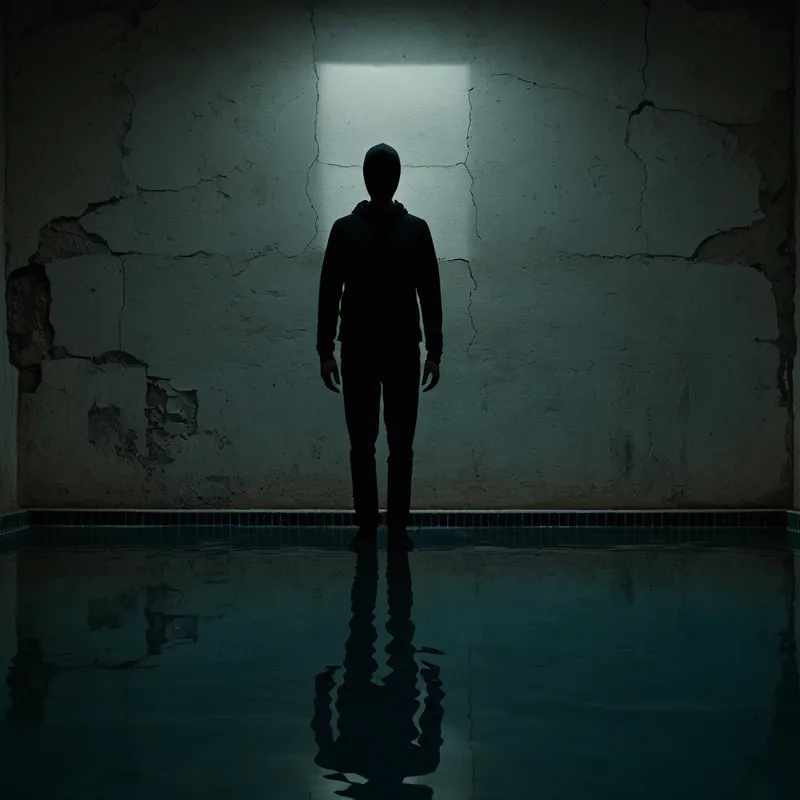
Psychologically, Kabayan represents the part of the psyche that refuses to be fully colonized by the inner “[authorities](/symbols/authorities “Symbol: This symbol often represents power, control, and societal structures that dictate behavior and beliefs.”/)“—the rigid super-ego, the demanding [persona](/symbols/persona “Symbol: The social mask or outward identity one presents to the world, often concealing the true self.”/), the internalized critic. He is the [shadow](/symbols/shadow “Symbol: The ‘shadow’ embodies the unconscious, repressed aspects of the self and often represents fears or hidden emotions.”/) that outsmarts the tyrant within.

The Dreamer’s Resonance
When the archetype of Si Kabayan stirs in the modern dreamscape, it often manifests in scenarios of absurd bureaucracy, illogical tasks, or facing an imposing, unreasonable authority figure. The dreamer may find themselves in an endless office building, asked to file a report that makes no sense, or to follow a rule that is patently ridiculous.
The somatic feeling is one of frustrated paralysis mixed with a bubbling, subterranean urge to laugh. This is the psyche signaling a situation where conventional engagement—fighting head-on, complying fully—is a trap. The Kabayan dream is an invitation to disengage from the literal conflict and to engage, instead, on the level of framework. It asks: How can I reframe this? What is the absurd premise here that I can accept, literally, to expose its emptiness? The process is one of psychic jiu-jitsu, using the weight of the opposing force (a demand, a criticism, an oppressive structure) to flip it into powerlessness.
Alchemical Translation
The individuation process modeled by Si Kabayan is not one of heroic conquest or glorious transformation, but of alchemical subversion and integration of the “lowly” self. It is the transmutation of shame (laziness, ignorance) into a secret strength, and of powerlessness into an unassailable position.
The first stage is withdrawal. Like Kabayan on his mat, one must consciously withdraw psychic energy from the internalized systems that demand endless production, perfect compliance, and rigid order—the inner Controleur. This is not passive collapse, but active conservation.
The second stage is the cultivation of the literal mind. This involves listening to the exact words of one’s inner critics or life’s demands and, instead of arguing with them on their terms, accepting them with a deadpan, literal faithfulness that reveals their inherent flaw. The inner command to “be perfect” might be met with, “I will begin by perfectly breathing this breath, and then the next.” The grandiose demand is dissolved into the manageable, physical present.
The fool’s gold he offers is often the real gold, for it buys the only currency that matters: the freedom of the self from the tyranny of borrowed meaning.
Finally, the stage is integration. One does not become Kabayan—chronically lazy and subversive. Instead, one integrates his spirit as a necessary function. The integrated psyche knows when to wield the sword of the Hero and when to deploy the mirror of the Trickster. It understands that some battles are won not by breaking down the wall, but by revealing that the wall, upon close inspection, is made of painted paper.
Associated Symbols
Explore related symbols from the CaleaDream lexicon:
- Mask — The face of foolishness and simplicity that Si Kabayan wears, a deliberate disguise that protects his cunning intelligence and disarms the vigilance of authority.
- Trickster — The core archetype Kabayan embodies, representing subversion, rule-breaking, and the use of humor and wit to disrupt established order and reveal hidden truths.
- Cave — His humble hut, representing a sanctuary of retreat, a place of non-participation in oppressive systems, and the womb of the unconscious where subversive strategies are born.
- Mirror — His literal interpretations act as a mirror to authority, reflecting back the absurdity and illogic inherent in its demands and procedures.
- Forest — The complex, untamed social and bureaucratic landscape he navigates, using his wits like paths known only to him to survive and outmaneuver those in power.
- Key — His unique, illogical perspective functions as a key that does not open locks by force, but by demonstrating that the lock itself was never truly locked, only perceived to be.
- Shadow — Kabayan represents the undervalued, “lazy,” and subversive part of the collective and individual psyche that holds the wisdom of resistance and self-preservation.
- Order — The rigid, often arbitrary systems of rule, bureaucracy, and social expectation that he constantly tests and exposes through his chaotic, literal-minded interventions.
- Fool — His apparent persona, the simpleton whose actions, though seeming ridiculous, consistently lead to a deeper wisdom and liberation from foolish constraints.
- Stone — The immovable, stubborn quality of his strategic laziness and his literal interpretations, against which the waves of demand break themselves.